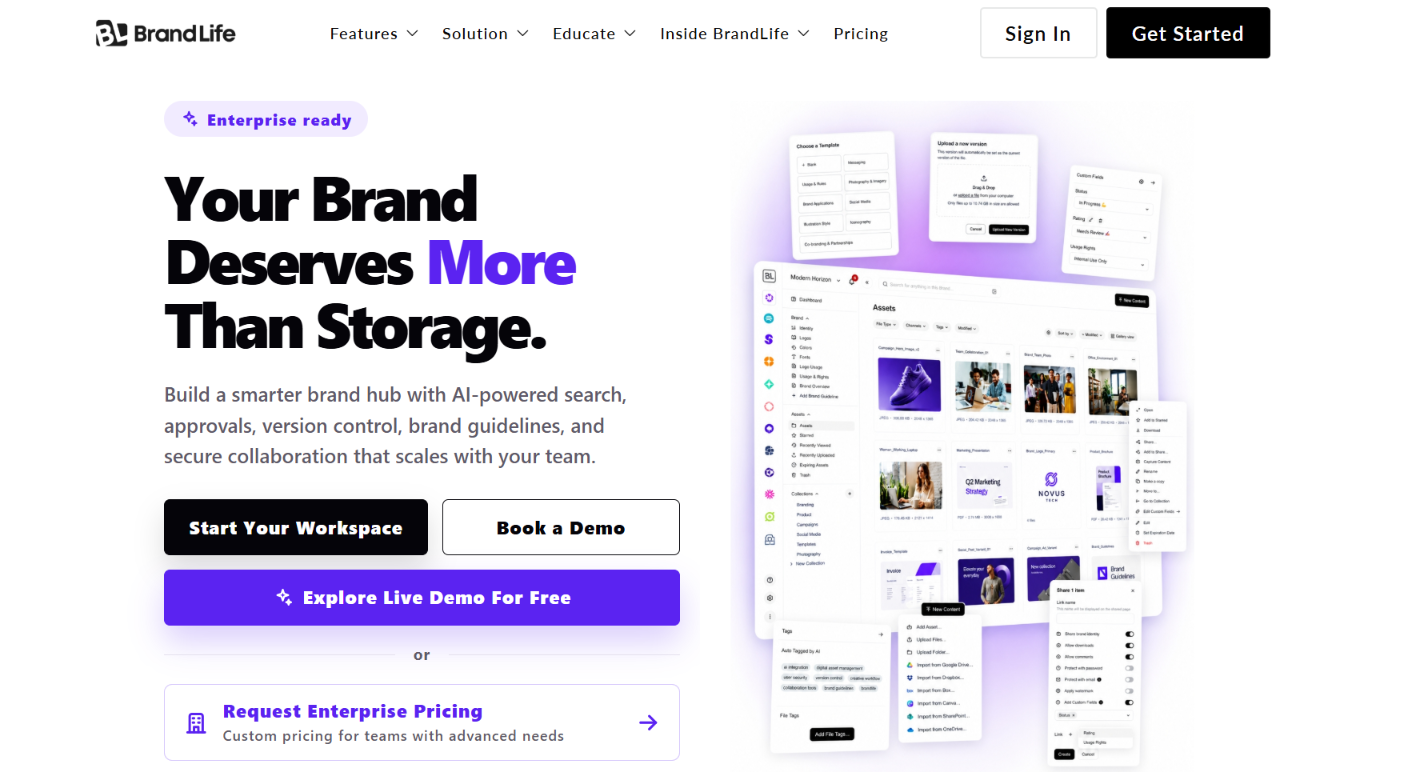

Understanding Digital Asset Management Pricing: A 2026 Guide

Key Takeaways

DAM Pricing Variability: The cost of Digital Asset Management systems varies based on factors like asset volume, user count, integrations, and features. Small businesses may spend $5,000–$15,000 annually, while mid-market and enterprise companies may pay significantly more, especially for custom or enterprise-grade solutions.

Core Pricing Factors: Key variables influencing DAM pricing include the number of users, asset storage, and required features. Usage-based models can add costs for high-volume periods, while subscription-based pricing offers predictability.

Hidden Costs to Watch For: Hidden fees are common and include storage overages, per-user charges as adoption grows, professional services for integrations, and annual price increases. Always request a detailed breakdown of potential costs before committing.

AI and Automation Value: Many DAM solutions, such as BrandLife, offer AI-powered features like smart search and automated workflows, helping teams save hours each week by improving asset retrieval and collaboration.

DAM ROI for Small Businesses: Even small businesses can benefit from DAM systems by eliminating duplication and speeding up processes. With the right platform, a small team can operate with the efficiency of a larger organization, saving time and enhancing productivity.

Picture this: a brand director stares at a shared drive bursting with 50,000 images, videos, and design files scattered across folders no one remembers naming. The team wastes hours every week hunting for the right asset. A digital asset management platform could fix all of it—but the pricing page reads like a puzzle wrapped in fine print.

If that scenario sounds familiar, you're not alone. Choosing a DAM system in 2026 isn't just a software decision—it's a strategic investment that touches every team, workflow, and campaign your brand runs. And the price tag? It depends on far more than most buyers expect.

This guide goes beyond surface-level cost breakdowns. Whether you're new to what digital asset management actually is or already evaluating vendors, you'll walk away understanding not just how much DAM costs—but why costs look the way they do, where the traps are, and how to make pricing work in your favor. For a broader perspective on DAM's role in business, explore this essential guide for businesses. Let's start by unpacking what actually drives these numbers.

Understanding Digital Asset Management Costs

DAM pricing isn't a flat monthly fee you can compare at a glance. It's a web of variables—storage, users, integrations, features—that interact differently depending on your team's size and ambitions. Even seasoned software buyers get caught off guard when the final invoice lands. With the global DAM market projected to reach $6.29 billion in 2026, vendors are packaging their offerings in increasingly creative—and sometimes confusing—ways.

Factors Influencing DAM Pricing

Imagine two brands evaluating DAM on the same day. One is a boutique agency managing a few hundred design files. The other is a global retailer with tens of thousands of product images, videos, and campaign assets across twelve markets. Their pricing journeys diverge from the very first click. The variables that matter most—volume, users, complexity—hit each buyer differently, which is why no single price tag tells the whole story.

Number of Digital Assets

Asset volume is the first lever that moves the needle. A team managing a modest library of brand guidelines and logos might sit comfortably in a starter tier. But the moment you add video archives, product photography at scale, or region-specific campaign assets, storage costs climb fast. Media-heavy teams should model their growth trajectory before committing to any plan.

User Count and Access Levels

A DAM platform that starts with five marketing users rarely stays that way. Once sales, product, and external partners want in—and they will—per-seat pricing can quietly inflate your annual spend. The real question isn't how many users you have today; it's how many you'll need in twelve months when adoption spreads across the organization.

Integration and Customization Needs

Consider a brand that wants its DAM to sync directly with Salesforce, push assets into a CMS, and feed creative files into an ad platform. Each integration adds complexity—and cost. Off-the-shelf connectors might be included, but custom API work or bespoke workflows often trigger professional services fees that don't appear on the pricing page. For a deeper look at what DAM software can actually do, it's worth understanding which capabilities come standard.

Feature Richness

Not all features ship in every plan. Premium capabilities that typically push pricing upward include:

  • AI-powered auto-tagging and metadata enrichment
  • Workflow automation and approval chains
  • Advanced rights management and expiration tracking
  • Brand portal customization and white-labeling

Hosting Options: Hosted vs Non-Hosted

Cloud-hosted DAM delivers predictable monthly costs and offloads infrastructure headaches. Self-hosted (on-premise) solutions look cheaper on paper—until you factor in server maintenance, security patches, IT staffing, and upgrade cycles. For most teams, the hidden operational burden of self-hosting far outweighs the perceived savings. Check out Brandlife Pricing Plans for an example of transparent, cloud-based pricing.

Comparing DAM Pricing Models

Not all DAM pricing is structured the same way, and the model you choose shapes more than your monthly bill. It affects how your costs evolve as your team grows, how predictable your budget stays, and whether you're rewarded or penalized for actually using the platform. Picking the wrong model can lock you into expenses that outpace your needs within a year.

Subscription-Based Pricing

For a marketing team that needs to forecast spend down to the quarter, subscription pricing is the safety net. You pay a fixed monthly or annual fee, and the scope is clear—specific user limits, storage caps, and feature sets. The tradeoff? If your needs outgrow the plan mid-contract, upgrades can be costly or unavailable until renewal. It's predictable, but only if you size your plan correctly from the start.

Usage-Based Pricing

Usage-based models scale with your activity—uploads, downloads, API calls, storage consumed. When growth is steady, this feels fair. But during a product launch or campaign blitz, costs can spike without warning. The upside is that lean months cost less. The risk is that your busiest, most productive periods become your most expensive ones.

Tiered and Custom Pricing

Most vendors offer tiered plans—Starter, Professional, Enterprise—each unlocking more features and capacity. Common tier distinctions include:

  • Storage limits and asset caps
  • Number of users or workspaces
  • Access to advanced features like analytics or AI tools

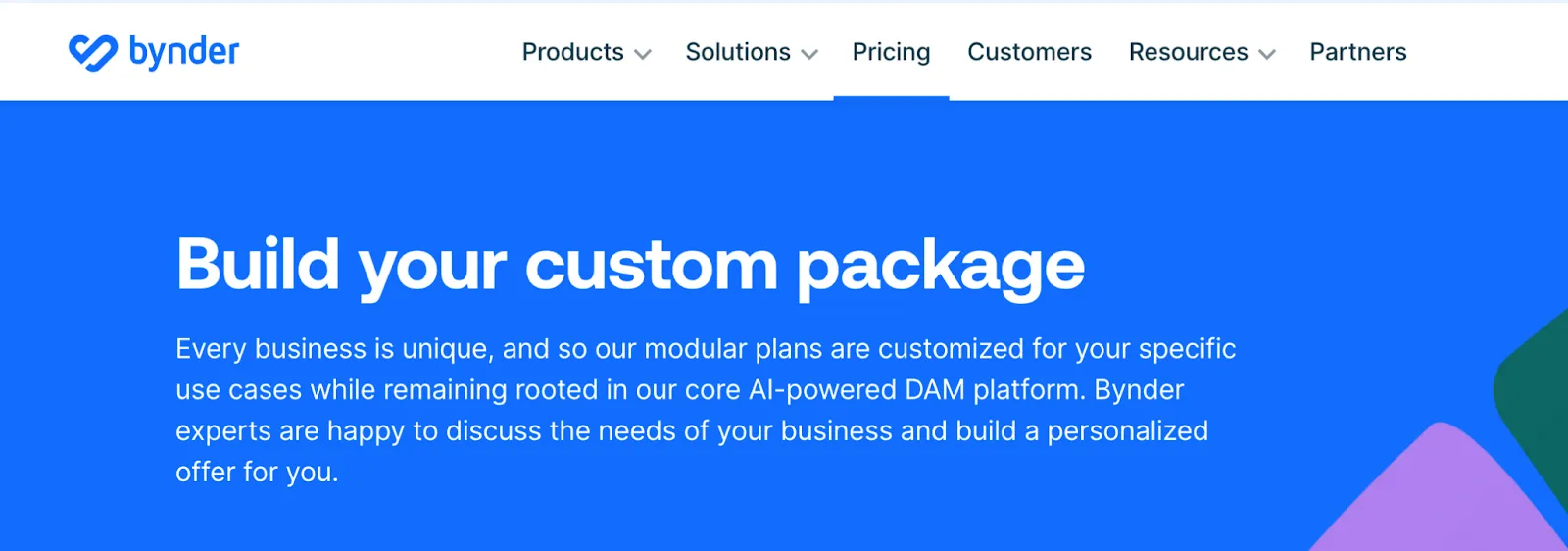
Custom quotes, often reserved for enterprise buyers, can be a double-edged sword. They offer flexibility but reduce transparency—making it harder to benchmark costs against competitors. For a real-world look at tiered structures, see this breakdown of Bynder pricing. If you're weighing a move, guidance on choosing or switching a plan helps clarify the decision.

Open Source vs Proprietary Software

Factor Open Source Proprietary
Upfront Cost Free or minimal Subscription or license fee
Flexibility High (full code access) Limited to vendor roadmap
Support Community-driven Dedicated vendor support

Open source appeals to teams with strong internal development resources—those who can customize, maintain, and secure the platform themselves. For everyone else, proprietary solutions trade some flexibility for reliability, ongoing support, and a vendor accountable for uptime. The "free" label on open source often masks significant internal labor costs.

Average Costs of DAM Systems

Averages can be misleading—what a five-person startup pays bears little resemblance to an enterprise contract. But benchmarks still matter. They give buying teams a sanity check, a way to spot outliers, and a foundation for negotiation. Just don't mistake an industry average for what your organization should actually spend.

Breakdown by Company Size

Company Size Typical Annual Cost
Small Business (1–50 employees) $5,000–$15,000
Mid-Market (51–500 employees) $15,000–$50,000
Enterprise (500+ employees) $50,000–$150,000+

The spread is driven by more than headcount. Enterprise deals include multi-region deployments, advanced security requirements, and custom SLAs. Mid-market buyers often land in the middle because they need enterprise features but lack the negotiating leverage to push prices down. For enterprise-specific considerations, this guide to digital asset management for enterprise covers what drives those higher price points. Industry data confirms the gap: average DAM costs run approximately $52,000 annually for cloud-hosted solutions and $71,000 for on-premise implementations.

Start-Up Costs

The sticker price on a DAM subscription rarely captures the full first-year investment. Before anyone on your team searches for a single asset, there's onboarding: migrating files from legacy systems, cleaning up metadata, configuring taxonomies, and building folder structures that actually make sense. These setup costs can range from a few thousand dollars for a simple migration to tens of thousands for complex environments. Budget for them upfront or risk a painful surprise. Understanding details like your billing cycle helps avoid early missteps.

Implementation and Training Costs

Even after the platform is live, spending doesn't stop. Common add-on costs that catch buyers off guard include:

  • User training sessions and certification programs
  • Dedicated onboarding support or success managers
  • Third-party integration setup and testing
  • Custom workflow configuration

These aren't optional luxuries—they're what separate a DAM that gathers dust from one that becomes the nerve center of your content operations. Experienced buyers build a 15–20% buffer above the subscription cost to absorb these expenses without scrambling for budget approvals mid-rollout.

Hidden Fees and Additional Costs

Every experienced software buyer has a story about a cost that appeared after the contract was signed. DAM platforms are no exception. The headline price gets you through the door, but savvy teams know to look behind it—because that's where the real budget impact often hides.

Cloud Data Charges

A brand archives five years of video content into its new DAM, confident it fits within the storage tier. Then the overage notification arrives. Cloud storage fees scale with volume, and video files are ruthless in capacity. What looked like a generous allocation at sign-up becomes a bottleneck once legacy assets are fully migrated. Always model your storage needs with growth—not just today's library—in mind.

Expanded User Permissions

DAM adoption tends to snowball. Marketing rolls it out, then creative requests access, then sales, then agency partners, then regional teams. Each addition can trigger per-seat charges or require upgrading to a higher tier. The cost of success, ironically, is a bigger bill. Before signing, ask your vendor exactly what happens when user count doubles—because it probably will.

Gradual Price Increases

Costs don't always spike overnight. They creep. Common escalation triggers include:

  • Annual contractual price increases (often 3–8%)
  • Feature additions that shift you into a higher tier
  • Support level upgrades when basic support proves insufficient
  • Usage thresholds that auto-trigger premium billing

The way to stay ahead? Negotiate price caps at renewal, build escalation clauses into your contract, and review usage reports quarterly—not annually. For more on managing recurring costs, explore how billing cycles and renewals work in practice.

Return on Investment (ROI) of DAM Systems

ROI in DAM isn't abstract. It shows up in hours recovered, campaigns launched faster, and teams that stop duplicating work. But the returns only materialize when the system fits—when it's adopted widely, configured thoughtfully, and embedded into daily workflows rather than treated as a glorified file server.

Streamlining Processes and Reducing Overhead

Think about a marketing manager who spends 30 minutes every morning tracking down the latest version of a campaign asset buried in email threads and shared drives. Multiply that across a team of twelve, five days a week. A well-implemented DAM cuts that search time by half or more—freeing hours that redirect toward creative work, strategy, and execution. The savings compound quietly, but they compound fast.

Accelerating Time to Market

When a product launch depends on coordinated asset delivery across retail, digital, and social channels, delays in finding or approving the right creative files can push timelines from days into weeks. DAM compresses that cycle. Assets are version-controlled, approvals are tracked in-platform, and distribution happens from a single source of truth. What once took a two-week sprint can collapse into a matter of days.

Enhancing Collaboration and Efficiency

The collaboration benefits go beyond file sharing. Features that drive real efficiency gains include:

  • Real-time commenting and annotation on assets
  • Role-based access that keeps the right people in the right lanes
  • Shared workspaces for cross-functional campaign teams
  • Automated notifications when assets are updated or approved

Consider a global brand launching a seasonal campaign across eight markets. Without DAM, coordination lives in spreadsheets and email chains. With it, every regional team pulls from the same approved asset set, comments in context, and moves in sync. That kind of alignment doesn't just save time—it protects brand consistency. For more strategies, explore digital asset management best practices that maximize these returns.

DAM Pricing Comparison: Leading Vendors

Comparing DAM vendors on price alone is like choosing a car based on the sticker without opening the hood. Headline prices rarely capture the full cost of ownership, and the tradeoffs between platforms—support quality, scalability, feature depth—matter as much as the monthly fee. Here's how several leading options stack up.

BrandLife

BrandLife's pricing

BrandLife leads with pricing transparency in a market where "contact sales" is the norm. Plans start at $250/month for the Pro tier (up to 5 users, 500 GB storage) and scale through Business at $500/month and Premium at $1,000/month, with a custom enterprise option available. Every plan includes user roles and permissions, advanced search, version control, collaborative tools, and brand guidelines management. 

A 7-day free trial lets teams test the full platform before committing. For organizations that want straightforward pricing without per-seat surprises, BrandLife's published tiers make budgeting predictable from day one. Sign up for a free trial.

Adobe Experience Manager

AEM

Adobe Experience Manager targets large enterprises that already live inside the Adobe ecosystem. Pricing is custom-quoted and typically runs six figures annually, bundled with broader experience management tools. The tradeoff is clear: deep integration with Creative Cloud and Adobe Analytics, but a price point and implementation complexity that puts it out of reach for most mid-market teams. If your organization already invests heavily in Adobe, the synergy can justify the cost. Otherwise, the overhead is hard to absorb.

MediaValet

MediaValet Website

MediaValet positions itself on cost predictability and enterprise-grade infrastructure built on Microsoft Azure. Pricing is subscription-based, typically starting in the mid-five-figure range annually. What sets it apart is the emphasis on transparent contracts—fewer surprise fees, clearer storage policies. For teams that have been burned by hidden charges elsewhere, MediaValet's straightforward approach is a deliberate appeal.

Brandfolder

Brandfolder Website

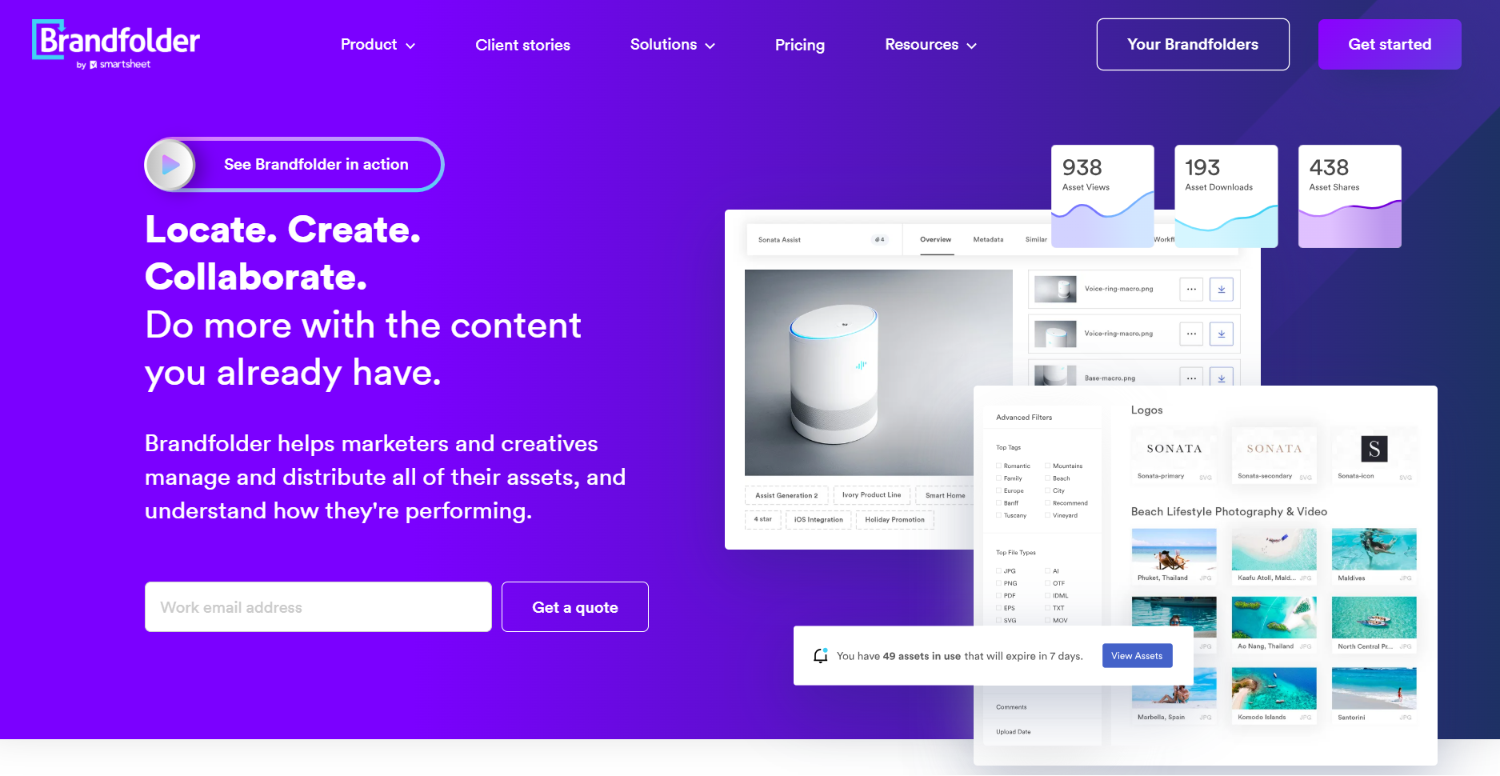
Brandfolder attracts mid-market and enterprise brands that prioritize ease of use and fast adoption. Pricing lands in the $40,000–$80,000+ annual range depending on features and scale. Teams choose Brandfolder when the priority is getting non-technical users—sales reps, field teams, agency partners—into the platform quickly without heavy training overhead. The user experience drives adoption, which drives value.

Canto

Canto

Canto appeals to teams seeking a balance between capability and cost. Standout features include:

  • Intuitive visual interface with drag-and-drop organization
  • Robust metadata and smart tagging
  • Flexible portal sharing for external stakeholders

For a mid-sized creative team that needs solid DAM fundamentals without enterprise complexity, Canto fits well. It's the kind of platform where a 20-person marketing department gets real value without the procurement process that comes with six-figure contracts. To see how these vendors compare against a transparent alternative, review Brandlife Pricing Plans.

Unlocking the Benefits of an Investment in Brandlife's DAM

Where many DAM vendors bury critical details behind "contact sales" buttons, Brandlife takes a different approach. The platform is built around pricing transparency, unlimited user access, and features designed to deliver value from day one—not after months of configuration and professional services.

Why Choose BrandLife?

Brandlife's pricing tiers are published clearly. Every feature is documented. There are no surprise fees waiting to ambush your budget. Brandlife includes unlimited users because DAM value increases with adoption—the more people using the system, the greater the return. Brandlife includes AI-powered features because automation should be accessible, not a premium add-on reserved for the highest-paying customers.

Centralized Asset Library

Centrakized Asset Library

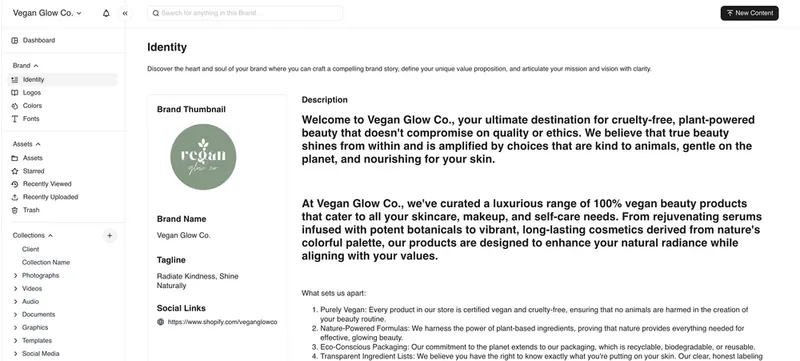
At the core of Brandlife's platform is a centralized asset library designed for real-world workflows. Key capabilities include:

  • Unlimited asset storage with organized folder structures
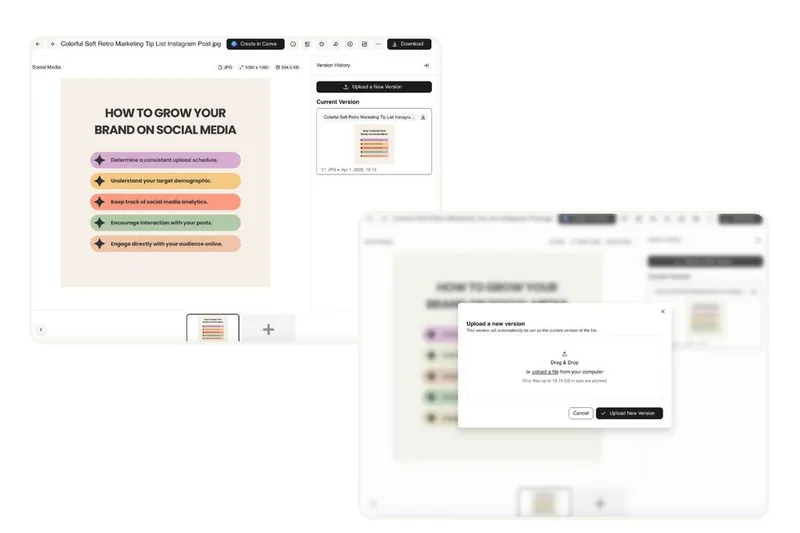
  • Version control that keeps every iteration accessible
  • Brand guidelines housed alongside creative assets

Imagine a retail marketing team managing seasonal campaigns across 15 product lines. Instead of hunting through drives and email attachments, every approved image, video, and template lives in one searchable location. That's not a feature list—it's a daily workflow transformation.

Advanced Search Capabilities

Brandlife's AI-Powered tagging

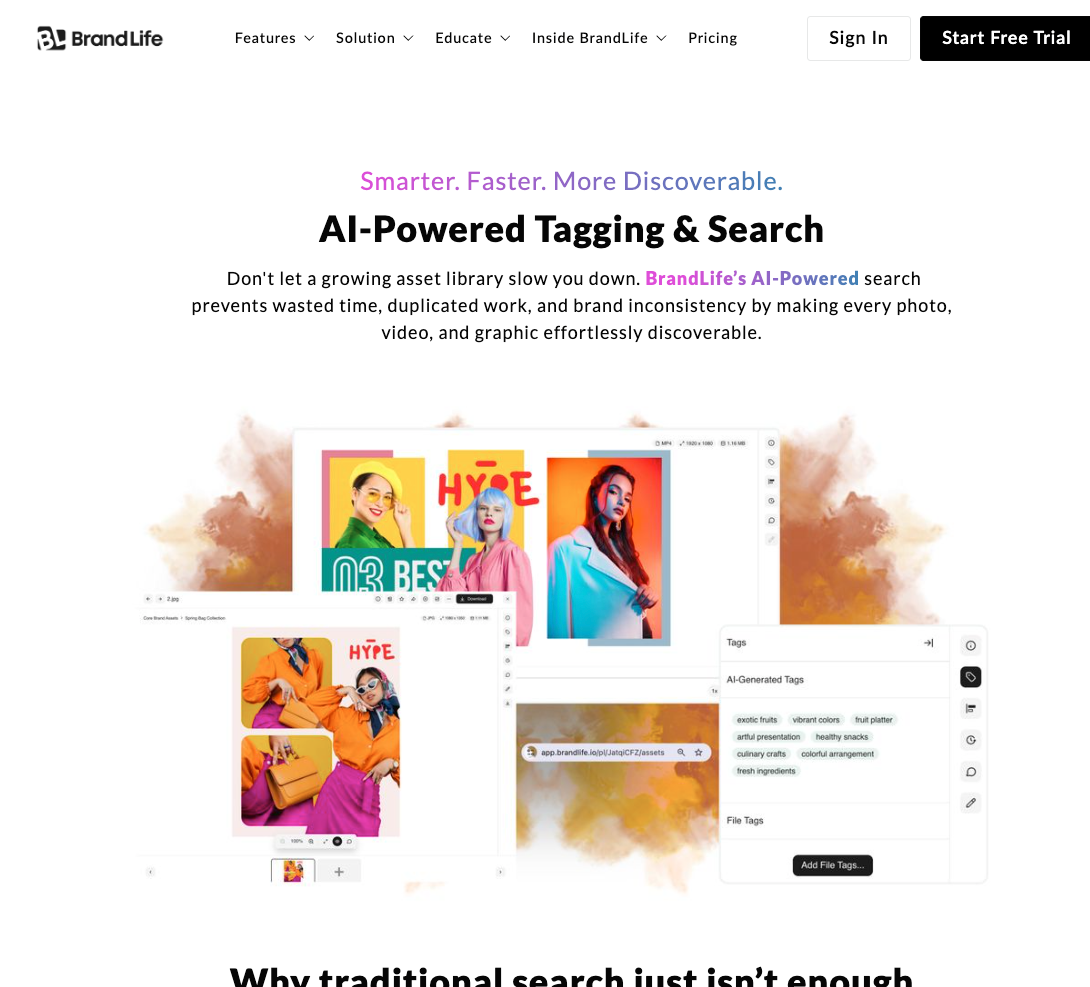
Finding the right asset shouldn't require remembering who named it or where they saved it. Brandlife's AI-powered search uses metadata, visual recognition, and smart tagging to surface assets in seconds. For teams drowning in thousands of files, this single capability can reclaim hours of lost productivity every week—turning search from a frustration into a non-event.

Real-Time Collaboration Tools

Brandlife's Team Collaboration

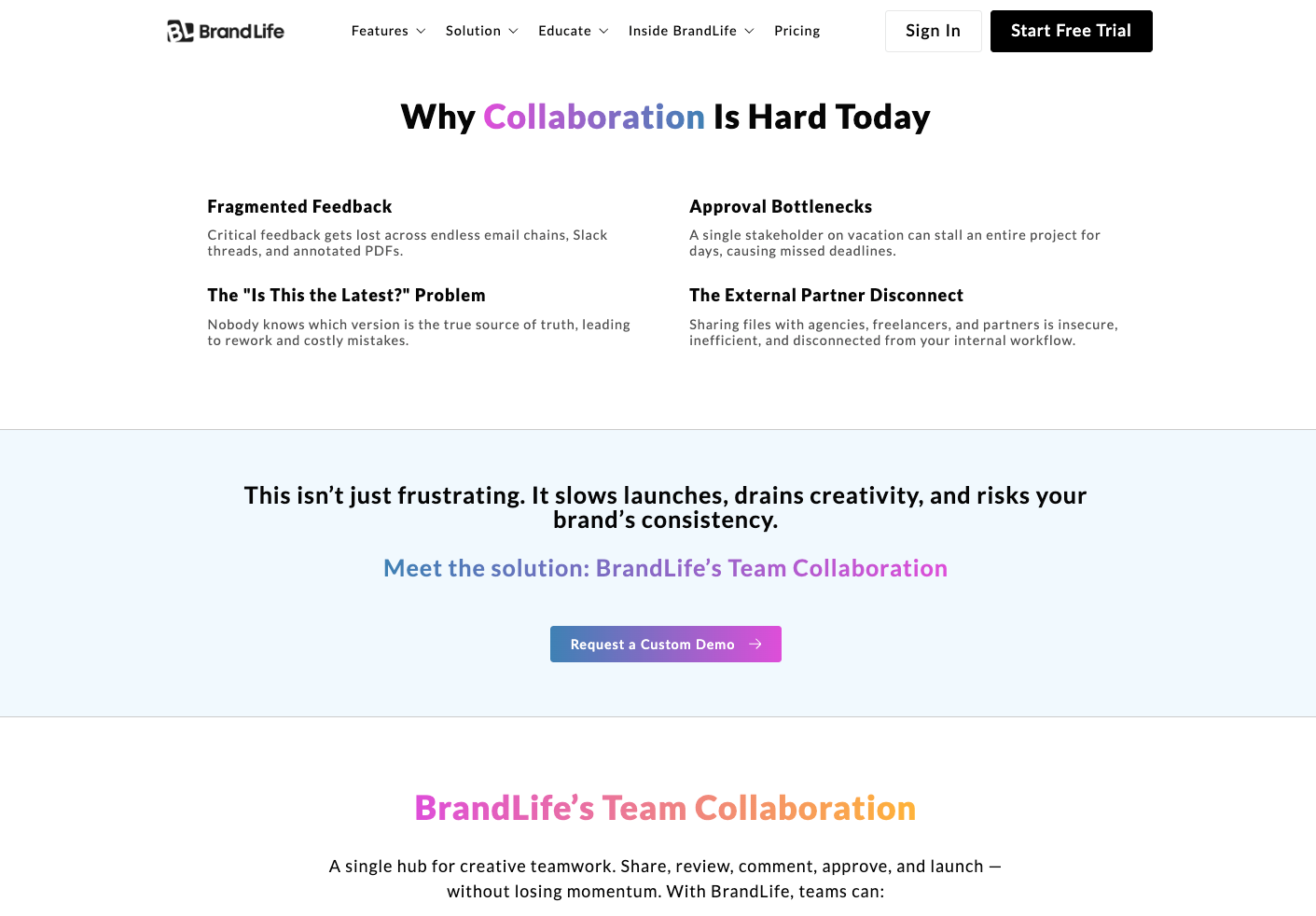
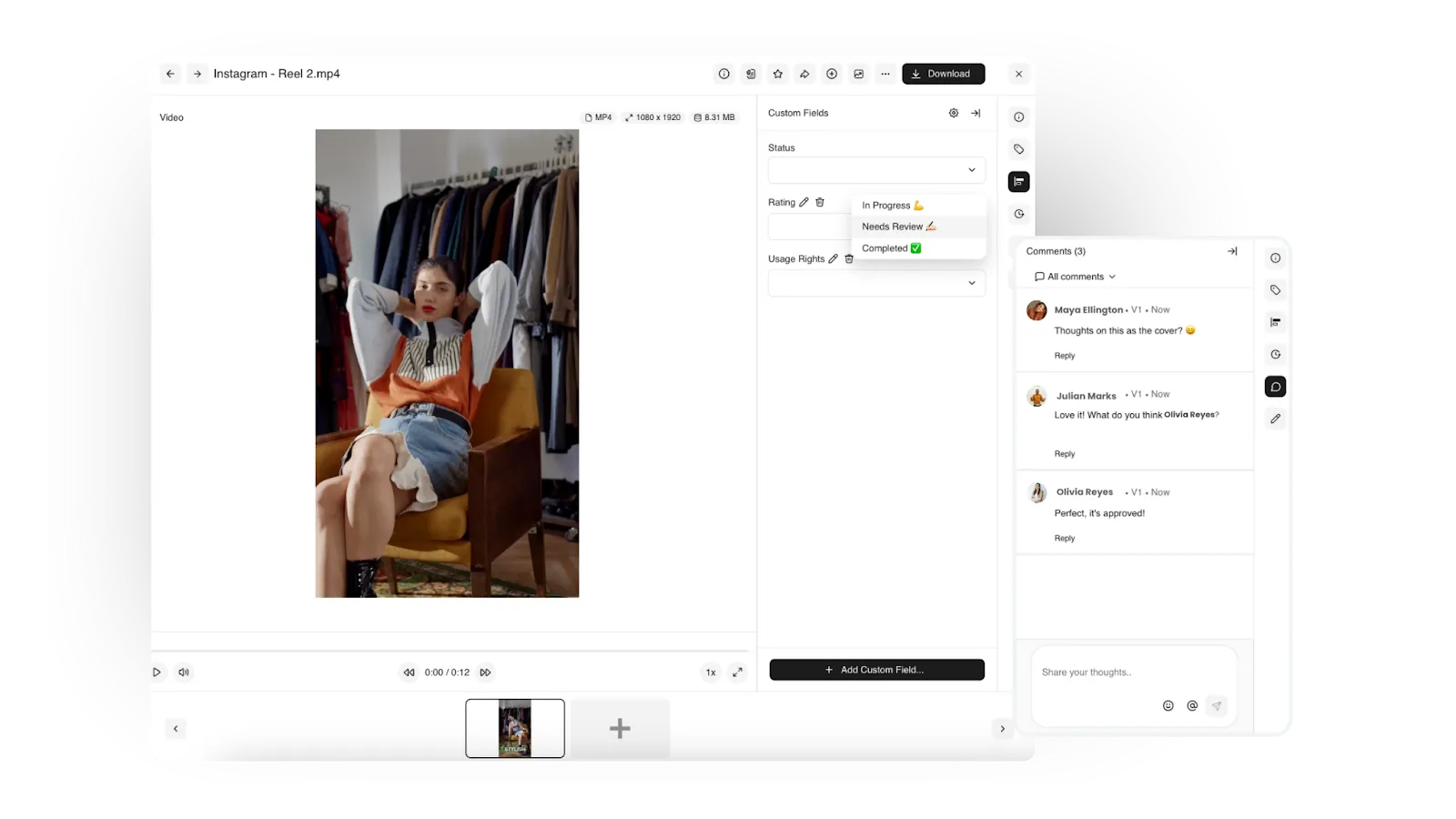
When a campaign needs feedback from five stakeholders across three time zones, waiting for email replies kills momentum. Brandlife's real-time collaboration tools let teams comment directly on assets, track approval status, and resolve feedback without leaving the platform. A project that used to stall in review cycles now moves continuously—because the conversation lives right next to the work.

Start Your Free Trial Today!

Getting started with Brandlife takes minutes, not meetings:

  • Sign up for a free trial
  • Upload assets and invite team members—no user limits
  • Explore AI search, collaboration tools, and brand portals
  • Experience the full platform before committing to a plan

Frequently Asked Questions

What is the typical cost range for DAM software in 2026?

Small businesses can expect to spend $5,000–$15,000 annually, mid-market companies typically land between $15,000 and $50,000, and enterprise deployments often exceed $50,000—sometimes significantly. The range depends on asset volume, user count, feature requirements, and whether the solution is cloud-hosted or on-premise. Always compare total cost of ownership, not just subscription fees.

How is DAM pricing calculated?

Most vendors build pricing around three core variables: the number of users who need access, the volume of assets stored, and the features included in your tier. Some add usage-based components—API calls, downloads, bandwidth. The formula varies by vendor, which makes apples-to-apples comparison difficult without requesting detailed quotes.

Are there hidden costs I should be aware of?

Yes—and they're more common than vendors like to admit. Watch for:

  • Storage overage fees triggered by asset growth
  • Per-seat charges as adoption expands beyond the initial team
  • Professional services costs for integrations and migrations
  • Annual price escalation clauses buried in contract terms

The best defense is asking vendors to itemize every potential cost before signing—not after.

Is DAM worth the investment for small businesses?

Consider a 15-person e-commerce brand managing product images across three sales channels. Without DAM, every asset update means manually uploading files to multiple platforms—burning hours that a small team can't afford to lose. Even a modest DAM investment pays for itself when it eliminates that duplication and gives a lean team the asset infrastructure of a much larger organization.

Related

See more
Understanding Digital Asset Management Pricing: A 2026 Guide

Understanding Digital Asset Management Pricing: A 2026 Guide

Mastering Digital Asset Management Integrations for 2026

Mastering Digital Asset Management Integrations for 2026

Exploring Essential Features of Digital Asset Management Systems

Exploring Essential Features of Digital Asset Management Systems

Ready to make your brand unstoppable?

Try it free or request a quote. Let’s build your brand’s next.

Understanding Digital Asset Management Pricing: A 2026 Guide

Start Free TrialDownload Free PDF
Understanding Digital Asset Management Pricing: A 2026 Guide

Key Takeways

DAM Pricing Variability: The cost of Digital Asset Management systems varies based on factors like asset volume, user count, integrations, and features. Small businesses may spend $5,000–$15,000 annually, while mid-market and enterprise companies may pay significantly more, especially for custom or enterprise-grade solutions.

Core Pricing Factors: Key variables influencing DAM pricing include the number of users, asset storage, and required features. Usage-based models can add costs for high-volume periods, while subscription-based pricing offers predictability.

Hidden Costs to Watch For: Hidden fees are common and include storage overages, per-user charges as adoption grows, professional services for integrations, and annual price increases. Always request a detailed breakdown of potential costs before committing.

AI and Automation Value: Many DAM solutions, such as BrandLife, offer AI-powered features like smart search and automated workflows, helping teams save hours each week by improving asset retrieval and collaboration.

DAM ROI for Small Businesses: Even small businesses can benefit from DAM systems by eliminating duplication and speeding up processes. With the right platform, a small team can operate with the efficiency of a larger organization, saving time and enhancing productivity.

Picture this: a brand director stares at a shared drive bursting with 50,000 images, videos, and design files scattered across folders no one remembers naming. The team wastes hours every week hunting for the right asset. A digital asset management platform could fix all of it—but the pricing page reads like a puzzle wrapped in fine print.

If that scenario sounds familiar, you're not alone. Choosing a DAM system in 2026 isn't just a software decision—it's a strategic investment that touches every team, workflow, and campaign your brand runs. And the price tag? It depends on far more than most buyers expect.

This guide goes beyond surface-level cost breakdowns. Whether you're new to what digital asset management actually is or already evaluating vendors, you'll walk away understanding not just how much DAM costs—but why costs look the way they do, where the traps are, and how to make pricing work in your favor. For a broader perspective on DAM's role in business, explore this essential guide for businesses. Let's start by unpacking what actually drives these numbers.

Understanding Digital Asset Management Costs

DAM pricing isn't a flat monthly fee you can compare at a glance. It's a web of variables—storage, users, integrations, features—that interact differently depending on your team's size and ambitions. Even seasoned software buyers get caught off guard when the final invoice lands. With the global DAM market projected to reach $6.29 billion in 2026, vendors are packaging their offerings in increasingly creative—and sometimes confusing—ways.

Factors Influencing DAM Pricing

Imagine two brands evaluating DAM on the same day. One is a boutique agency managing a few hundred design files. The other is a global retailer with tens of thousands of product images, videos, and campaign assets across twelve markets. Their pricing journeys diverge from the very first click. The variables that matter most—volume, users, complexity—hit each buyer differently, which is why no single price tag tells the whole story.

Number of Digital Assets

Asset volume is the first lever that moves the needle. A team managing a modest library of brand guidelines and logos might sit comfortably in a starter tier. But the moment you add video archives, product photography at scale, or region-specific campaign assets, storage costs climb fast. Media-heavy teams should model their growth trajectory before committing to any plan.

User Count and Access Levels

A DAM platform that starts with five marketing users rarely stays that way. Once sales, product, and external partners want in—and they will—per-seat pricing can quietly inflate your annual spend. The real question isn't how many users you have today; it's how many you'll need in twelve months when adoption spreads across the organization.

Integration and Customization Needs

Consider a brand that wants its DAM to sync directly with Salesforce, push assets into a CMS, and feed creative files into an ad platform. Each integration adds complexity—and cost. Off-the-shelf connectors might be included, but custom API work or bespoke workflows often trigger professional services fees that don't appear on the pricing page. For a deeper look at what DAM software can actually do, it's worth understanding which capabilities come standard.

Feature Richness

Not all features ship in every plan. Premium capabilities that typically push pricing upward include:

  • AI-powered auto-tagging and metadata enrichment
  • Workflow automation and approval chains
  • Advanced rights management and expiration tracking
  • Brand portal customization and white-labeling

Hosting Options: Hosted vs Non-Hosted

Cloud-hosted DAM delivers predictable monthly costs and offloads infrastructure headaches. Self-hosted (on-premise) solutions look cheaper on paper—until you factor in server maintenance, security patches, IT staffing, and upgrade cycles. For most teams, the hidden operational burden of self-hosting far outweighs the perceived savings. Check out Brandlife Pricing Plans for an example of transparent, cloud-based pricing.

Comparing DAM Pricing Models

Not all DAM pricing is structured the same way, and the model you choose shapes more than your monthly bill. It affects how your costs evolve as your team grows, how predictable your budget stays, and whether you're rewarded or penalized for actually using the platform. Picking the wrong model can lock you into expenses that outpace your needs within a year.

Subscription-Based Pricing

For a marketing team that needs to forecast spend down to the quarter, subscription pricing is the safety net. You pay a fixed monthly or annual fee, and the scope is clear—specific user limits, storage caps, and feature sets. The tradeoff? If your needs outgrow the plan mid-contract, upgrades can be costly or unavailable until renewal. It's predictable, but only if you size your plan correctly from the start.

Usage-Based Pricing

Usage-based models scale with your activity—uploads, downloads, API calls, storage consumed. When growth is steady, this feels fair. But during a product launch or campaign blitz, costs can spike without warning. The upside is that lean months cost less. The risk is that your busiest, most productive periods become your most expensive ones.

Tiered and Custom Pricing

Most vendors offer tiered plans—Starter, Professional, Enterprise—each unlocking more features and capacity. Common tier distinctions include:

  • Storage limits and asset caps
  • Number of users or workspaces
  • Access to advanced features like analytics or AI tools

Custom quotes, often reserved for enterprise buyers, can be a double-edged sword. They offer flexibility but reduce transparency—making it harder to benchmark costs against competitors. For a real-world look at tiered structures, see this breakdown of Bynder pricing. If you're weighing a move, guidance on choosing or switching a plan helps clarify the decision.

Open Source vs Proprietary Software

Factor Open Source Proprietary
Upfront Cost Free or minimal Subscription or license fee
Flexibility High (full code access) Limited to vendor roadmap
Support Community-driven Dedicated vendor support

Open source appeals to teams with strong internal development resources—those who can customize, maintain, and secure the platform themselves. For everyone else, proprietary solutions trade some flexibility for reliability, ongoing support, and a vendor accountable for uptime. The "free" label on open source often masks significant internal labor costs.

Average Costs of DAM Systems

Averages can be misleading—what a five-person startup pays bears little resemblance to an enterprise contract. But benchmarks still matter. They give buying teams a sanity check, a way to spot outliers, and a foundation for negotiation. Just don't mistake an industry average for what your organization should actually spend.

Breakdown by Company Size

Company Size Typical Annual Cost
Small Business (1–50 employees) $5,000–$15,000
Mid-Market (51–500 employees) $15,000–$50,000
Enterprise (500+ employees) $50,000–$150,000+

The spread is driven by more than headcount. Enterprise deals include multi-region deployments, advanced security requirements, and custom SLAs. Mid-market buyers often land in the middle because they need enterprise features but lack the negotiating leverage to push prices down. For enterprise-specific considerations, this guide to digital asset management for enterprise covers what drives those higher price points. Industry data confirms the gap: average DAM costs run approximately $52,000 annually for cloud-hosted solutions and $71,000 for on-premise implementations.

Start-Up Costs

The sticker price on a DAM subscription rarely captures the full first-year investment. Before anyone on your team searches for a single asset, there's onboarding: migrating files from legacy systems, cleaning up metadata, configuring taxonomies, and building folder structures that actually make sense. These setup costs can range from a few thousand dollars for a simple migration to tens of thousands for complex environments. Budget for them upfront or risk a painful surprise. Understanding details like your billing cycle helps avoid early missteps.

Implementation and Training Costs

Even after the platform is live, spending doesn't stop. Common add-on costs that catch buyers off guard include:

  • User training sessions and certification programs
  • Dedicated onboarding support or success managers
  • Third-party integration setup and testing
  • Custom workflow configuration

These aren't optional luxuries—they're what separate a DAM that gathers dust from one that becomes the nerve center of your content operations. Experienced buyers build a 15–20% buffer above the subscription cost to absorb these expenses without scrambling for budget approvals mid-rollout.

Hidden Fees and Additional Costs

Every experienced software buyer has a story about a cost that appeared after the contract was signed. DAM platforms are no exception. The headline price gets you through the door, but savvy teams know to look behind it—because that's where the real budget impact often hides.

Cloud Data Charges

A brand archives five years of video content into its new DAM, confident it fits within the storage tier. Then the overage notification arrives. Cloud storage fees scale with volume, and video files are ruthless in capacity. What looked like a generous allocation at sign-up becomes a bottleneck once legacy assets are fully migrated. Always model your storage needs with growth—not just today's library—in mind.

Expanded User Permissions

DAM adoption tends to snowball. Marketing rolls it out, then creative requests access, then sales, then agency partners, then regional teams. Each addition can trigger per-seat charges or require upgrading to a higher tier. The cost of success, ironically, is a bigger bill. Before signing, ask your vendor exactly what happens when user count doubles—because it probably will.

Gradual Price Increases

Costs don't always spike overnight. They creep. Common escalation triggers include:

  • Annual contractual price increases (often 3–8%)
  • Feature additions that shift you into a higher tier
  • Support level upgrades when basic support proves insufficient
  • Usage thresholds that auto-trigger premium billing

The way to stay ahead? Negotiate price caps at renewal, build escalation clauses into your contract, and review usage reports quarterly—not annually. For more on managing recurring costs, explore how billing cycles and renewals work in practice.

Return on Investment (ROI) of DAM Systems

ROI in DAM isn't abstract. It shows up in hours recovered, campaigns launched faster, and teams that stop duplicating work. But the returns only materialize when the system fits—when it's adopted widely, configured thoughtfully, and embedded into daily workflows rather than treated as a glorified file server.

Streamlining Processes and Reducing Overhead

Think about a marketing manager who spends 30 minutes every morning tracking down the latest version of a campaign asset buried in email threads and shared drives. Multiply that across a team of twelve, five days a week. A well-implemented DAM cuts that search time by half or more—freeing hours that redirect toward creative work, strategy, and execution. The savings compound quietly, but they compound fast.

Accelerating Time to Market

When a product launch depends on coordinated asset delivery across retail, digital, and social channels, delays in finding or approving the right creative files can push timelines from days into weeks. DAM compresses that cycle. Assets are version-controlled, approvals are tracked in-platform, and distribution happens from a single source of truth. What once took a two-week sprint can collapse into a matter of days.

Enhancing Collaboration and Efficiency

The collaboration benefits go beyond file sharing. Features that drive real efficiency gains include:

  • Real-time commenting and annotation on assets
  • Role-based access that keeps the right people in the right lanes
  • Shared workspaces for cross-functional campaign teams
  • Automated notifications when assets are updated or approved

Consider a global brand launching a seasonal campaign across eight markets. Without DAM, coordination lives in spreadsheets and email chains. With it, every regional team pulls from the same approved asset set, comments in context, and moves in sync. That kind of alignment doesn't just save time—it protects brand consistency. For more strategies, explore digital asset management best practices that maximize these returns.

DAM Pricing Comparison: Leading Vendors

Comparing DAM vendors on price alone is like choosing a car based on the sticker without opening the hood. Headline prices rarely capture the full cost of ownership, and the tradeoffs between platforms—support quality, scalability, feature depth—matter as much as the monthly fee. Here's how several leading options stack up.

BrandLife

BrandLife's pricing

BrandLife leads with pricing transparency in a market where "contact sales" is the norm. Plans start at $250/month for the Pro tier (up to 5 users, 500 GB storage) and scale through Business at $500/month and Premium at $1,000/month, with a custom enterprise option available. Every plan includes user roles and permissions, advanced search, version control, collaborative tools, and brand guidelines management. 

A 7-day free trial lets teams test the full platform before committing. For organizations that want straightforward pricing without per-seat surprises, BrandLife's published tiers make budgeting predictable from day one. Sign up for a free trial.

Adobe Experience Manager

AEM

Adobe Experience Manager targets large enterprises that already live inside the Adobe ecosystem. Pricing is custom-quoted and typically runs six figures annually, bundled with broader experience management tools. The tradeoff is clear: deep integration with Creative Cloud and Adobe Analytics, but a price point and implementation complexity that puts it out of reach for most mid-market teams. If your organization already invests heavily in Adobe, the synergy can justify the cost. Otherwise, the overhead is hard to absorb.

MediaValet

MediaValet Website

MediaValet positions itself on cost predictability and enterprise-grade infrastructure built on Microsoft Azure. Pricing is subscription-based, typically starting in the mid-five-figure range annually. What sets it apart is the emphasis on transparent contracts—fewer surprise fees, clearer storage policies. For teams that have been burned by hidden charges elsewhere, MediaValet's straightforward approach is a deliberate appeal.

Brandfolder

Brandfolder Website

Brandfolder attracts mid-market and enterprise brands that prioritize ease of use and fast adoption. Pricing lands in the $40,000–$80,000+ annual range depending on features and scale. Teams choose Brandfolder when the priority is getting non-technical users—sales reps, field teams, agency partners—into the platform quickly without heavy training overhead. The user experience drives adoption, which drives value.

Canto

Canto

Canto appeals to teams seeking a balance between capability and cost. Standout features include:

  • Intuitive visual interface with drag-and-drop organization
  • Robust metadata and smart tagging
  • Flexible portal sharing for external stakeholders

For a mid-sized creative team that needs solid DAM fundamentals without enterprise complexity, Canto fits well. It's the kind of platform where a 20-person marketing department gets real value without the procurement process that comes with six-figure contracts. To see how these vendors compare against a transparent alternative, review Brandlife Pricing Plans.

Unlocking the Benefits of an Investment in Brandlife's DAM

Where many DAM vendors bury critical details behind "contact sales" buttons, Brandlife takes a different approach. The platform is built around pricing transparency, unlimited user access, and features designed to deliver value from day one—not after months of configuration and professional services.

Why Choose BrandLife?

Brandlife's pricing tiers are published clearly. Every feature is documented. There are no surprise fees waiting to ambush your budget. Brandlife includes unlimited users because DAM value increases with adoption—the more people using the system, the greater the return. Brandlife includes AI-powered features because automation should be accessible, not a premium add-on reserved for the highest-paying customers.

Centralized Asset Library

Centrakized Asset Library

At the core of Brandlife's platform is a centralized asset library designed for real-world workflows. Key capabilities include:

  • Unlimited asset storage with organized folder structures
  • Version control that keeps every iteration accessible
  • Brand guidelines housed alongside creative assets

Imagine a retail marketing team managing seasonal campaigns across 15 product lines. Instead of hunting through drives and email attachments, every approved image, video, and template lives in one searchable location. That's not a feature list—it's a daily workflow transformation.

Advanced Search Capabilities

Brandlife's AI-Powered tagging

Finding the right asset shouldn't require remembering who named it or where they saved it. Brandlife's AI-powered search uses metadata, visual recognition, and smart tagging to surface assets in seconds. For teams drowning in thousands of files, this single capability can reclaim hours of lost productivity every week—turning search from a frustration into a non-event.

Real-Time Collaboration Tools

Brandlife's Team Collaboration

When a campaign needs feedback from five stakeholders across three time zones, waiting for email replies kills momentum. Brandlife's real-time collaboration tools let teams comment directly on assets, track approval status, and resolve feedback without leaving the platform. A project that used to stall in review cycles now moves continuously—because the conversation lives right next to the work.

Start Your Free Trial Today!

Getting started with Brandlife takes minutes, not meetings:

  • Sign up for a free trial
  • Upload assets and invite team members—no user limits
  • Explore AI search, collaboration tools, and brand portals
  • Experience the full platform before committing to a plan

Frequently Asked Questions

What is the typical cost range for DAM software in 2026?

Small businesses can expect to spend $5,000–$15,000 annually, mid-market companies typically land between $15,000 and $50,000, and enterprise deployments often exceed $50,000—sometimes significantly. The range depends on asset volume, user count, feature requirements, and whether the solution is cloud-hosted or on-premise. Always compare total cost of ownership, not just subscription fees.

How is DAM pricing calculated?

Most vendors build pricing around three core variables: the number of users who need access, the volume of assets stored, and the features included in your tier. Some add usage-based components—API calls, downloads, bandwidth. The formula varies by vendor, which makes apples-to-apples comparison difficult without requesting detailed quotes.

Are there hidden costs I should be aware of?

Yes—and they're more common than vendors like to admit. Watch for:

  • Storage overage fees triggered by asset growth
  • Per-seat charges as adoption expands beyond the initial team
  • Professional services costs for integrations and migrations
  • Annual price escalation clauses buried in contract terms

The best defense is asking vendors to itemize every potential cost before signing—not after.

Is DAM worth the investment for small businesses?

Consider a 15-person e-commerce brand managing product images across three sales channels. Without DAM, every asset update means manually uploading files to multiple platforms—burning hours that a small team can't afford to lose. Even a modest DAM investment pays for itself when it eliminates that duplication and gives a lean team the asset infrastructure of a much larger organization.

Professional Branding Start Here

Everything you need to launch and maintain a consistent brand.

Try Free TrialLearn More

Related Resources

Understanding Digital Asset Management Pricing: A 2026 Guide

Understanding Digital Asset Management Pricing: A 2026 Guide

Mastering Digital Asset Management Integrations for 2026

Mastering Digital Asset Management Integrations for 2026

Transform the way you

manage your assets

8.8 hours/ week are wasted just looking for files and content