

Key Takeaways
- Best for brand governance and DAM: BrandLife, Bynder, Brandfolder
- Best for developer-focused media optimization: ImageKit, Imgix, bunny.net
- Best for e-commerce imagery: Sirv
- Best for video-first teams: Gumlet
- Best for enterprise Adobe/Drupal ecosystems: AEM Assets, Acquia DAM
- Best free alternatives: ImageKit (generous free tier), Uploadcare, bunny.net (pay-as-you-go)
Your media management costs just became unpredictable.
That's the moment most teams start searching for Cloudinary alternatives. Maybe a usage spike triggered an overage bill nobody budgeted for. Maybe the marketing team is still pinging developers every time they need a resized logo. Or maybe you've realized that Cloudinary's API-first architecture-brilliant for engineers-leaves creative and brand teams working around the tool rather than with it.
Cloudinary built a genuinely strong product. Its image and video optimization, real-time transformations, and global CDN delivery are best-in-class for developer workflows. But as teams scale, the cracks appear: usage-based billing that compounds unpredictably, limited collaboration features, and a DAM layer that feels bolted on rather than built in. According to G2's 2026 data, image and video processing platforms see 35% average customer churn driven largely by billing surprises at scale-and 67% of teams switching from optimization platforms cite better DAM integration as their primary reason for leaving.
The cloudinary alternatives landscape splits into two distinct categories, and understanding which one you actually need is the most important decision you'll make before evaluating any specific tool.
DAM-first platforms (BrandLife, Bynder, Brandfolder, Canto, MediaValet) solve the organizational, governance, and collaboration problems. They're built for the humans who manage assets-brand managers, creative directors, marketing ops teams-not just the APIs that serve them.
CDN-first / media optimization platforms (ImageKit, Imgix, bunny.net, Cloudimage, Gumlet) solve the technical delivery problems. They're built for developers who need faster image processing, cheaper bandwidth, and cleaner APIs.
Some teams need both. Most need one more than the other. This guide covers 15 Cloudinary competitors across both categories, with honest assessments of where each one wins and where it falls short.
How this list was curated: Each tool was evaluated on feature depth, pricing transparency, integration ecosystem, collaboration and brand governance capabilities, migration ease, and scalability. The DAM market is projected to reach $6.7 billion by 2026, with 45% growth in AI-driven features-so AI capabilities received particular weight in the DAM-first category.
Quick comparison: all 15 Cloudinary competitors at a glance
1. BrandLife - best for brand consistency and DAM-first teams
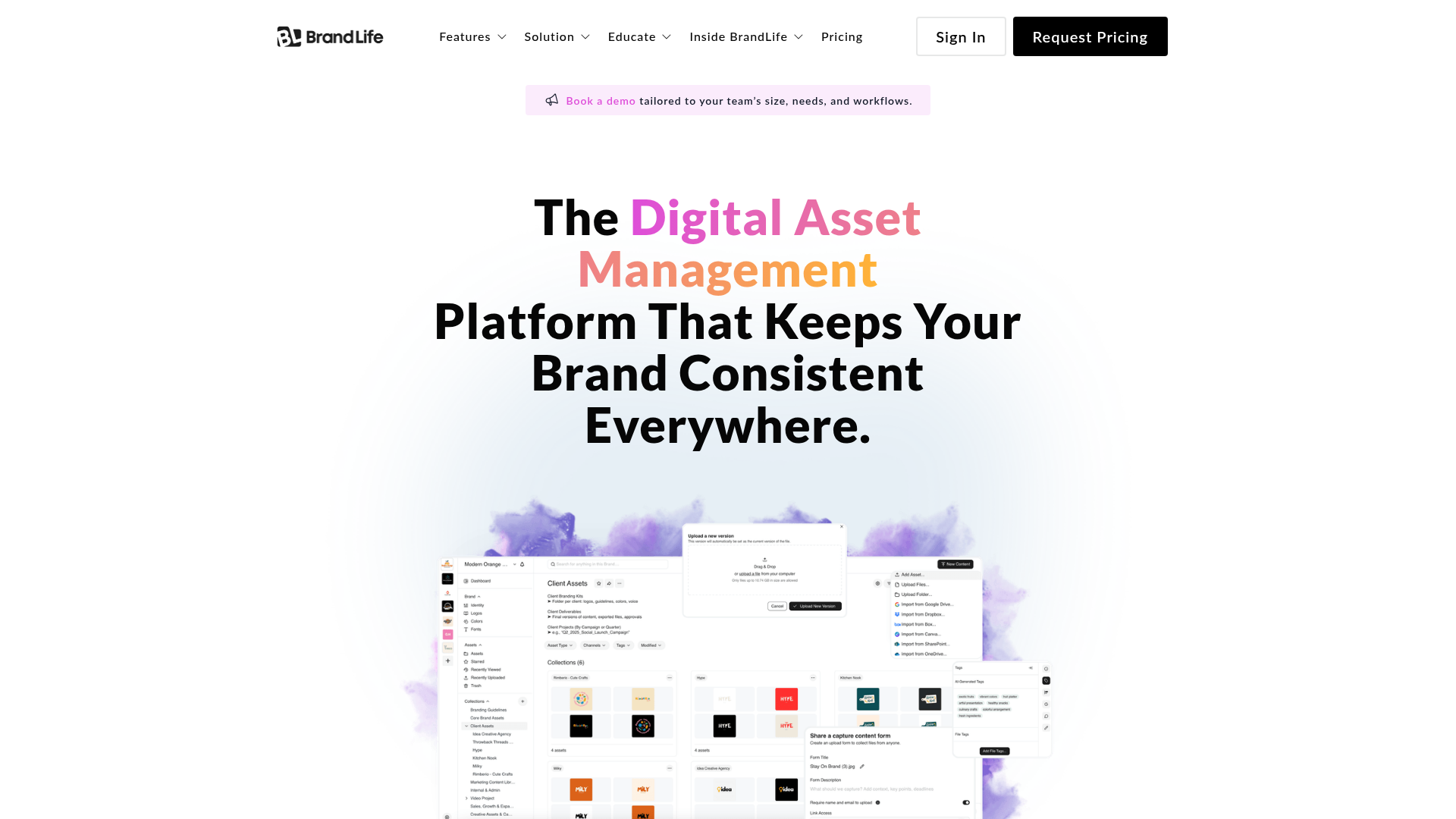
BrandLife is a digital asset management platform built for teams that need more than image optimization-they need a centralized hub for organizing, governing, and collaborating on every brand asset.
Where Cloudinary focuses on media delivery APIs, BrandLife focuses on the human side of asset management: making sure the right people can find the right files, follow brand guidelines, and collaborate without needing to ping a developer. When a marketing director realizes their teams spends 30 minutes per day searching for the right logo file, the appeal of BrandLife's AI-powered tagging and centralized library becomes obvious.
Best for: Marketing departments, agencies, enterprise brand teams, and creative professionals who need DAM capabilities, brand governance, and collaboration-not just a media delivery API.
Key strengths
- Centralized asset library with AI-powered tagging and advanced search
- Version control with full edit history and rollback capabilities
- Real-time collaboration tools including commenting, feedback, and approvals
- Built-in brand guideline management and enforcement
- Customizable user roles and permissions with extensive integrations
Pricing: BrandLife Starter is $150/month. Enterprise pricing is custom. Free trial available.
BrandLife's approach to asset management is fundamentally different from Cloudinary's. Cloudinary optimizes how assets are delivered; BrandLife governs how assets are used. For teams where brand consistency, collaboration, and organized asset libraries matter more than transformation APIs, that distinction is the whole ballgame.
2. Bynder - best for enterprise content operations at scale
Bynder is an enterprise-grade DAM platform with modules for content workflow, creative automation, and brand templates-one of the most recognized names in digital asset management software.
It competes with Cloudinary on the asset management front while offering significantly deeper workflow automation. Bynder scores 4.7/5 on G2 in 2026, compared to Cloudinary's 4.5/5, reflecting its strength in the DAM category specifically.
Best for: Large enterprises and global marketing teams managing high-volume content operations across multiple brands and regions.
Key strengths
- Content Workflow and Asset Workflow modules for end-to-end operations
- Studio module for creative automation and brand templating
- AI Assist for smart tagging and content recommendations
- Brand guidelines and digital brand portals
- Analytics dashboard for asset performance tracking
Pricing: Custom enterprise pricing. No self-serve free tier.
One honest caveat: Bynder doesn't offer the image CDN or real-time transformation capabilities that Cloudinary provides. If your team needs both DAM and media optimization, you'd likely run Bynder alongside a CDN tool rather than as a direct replacement. For pure DAM needs at enterprise scale, though, it's one of the strongest options in the market.
3. ImageKit - best for developer-focused media optimization
ImageKit positions itself as the most direct Cloudinary competitor-same API-first approach, same image and video optimization and CDN delivery, but with more transparent pricing and a migration path that doesn't require URL changes.
That last point matters more than it sounds. Most CDN migrations involve rewriting thousands of image URLs across your codebase. ImageKit's zero-URL-change migration means you can switch without touching a single line of existing code.
Best for: Development teams and technical marketers who need a drop-in Cloudinary replacement with better pricing and easy migration.
Key strengths
- Real-time image and video transformations via URL parameters
- Global CDN delivery with multiple processing regions
- Zero-URL-change migration path from Cloudinary
- Basic DAM features including asset management, search, and folders
- Strong developer documentation and SDK support
Pricing: Plans start at $89/month (225GB bandwidth and storage). Cloudinary's equivalent plan runs $99/month with shared credits across bandwidth, storage, and transformations. Enterprise discounts tend to be 30%+ better at scale.
ImageKit's DAM features are basic compared to dedicated platforms-it's not the right choice if your team needs brand governance or collaboration tools. But for developers who want a technically equivalent Cloudinary replacement at lower cost, it's the clearest like-for-like swap available.
4. Brandfolder - best for Smartsheet-integrated brand management
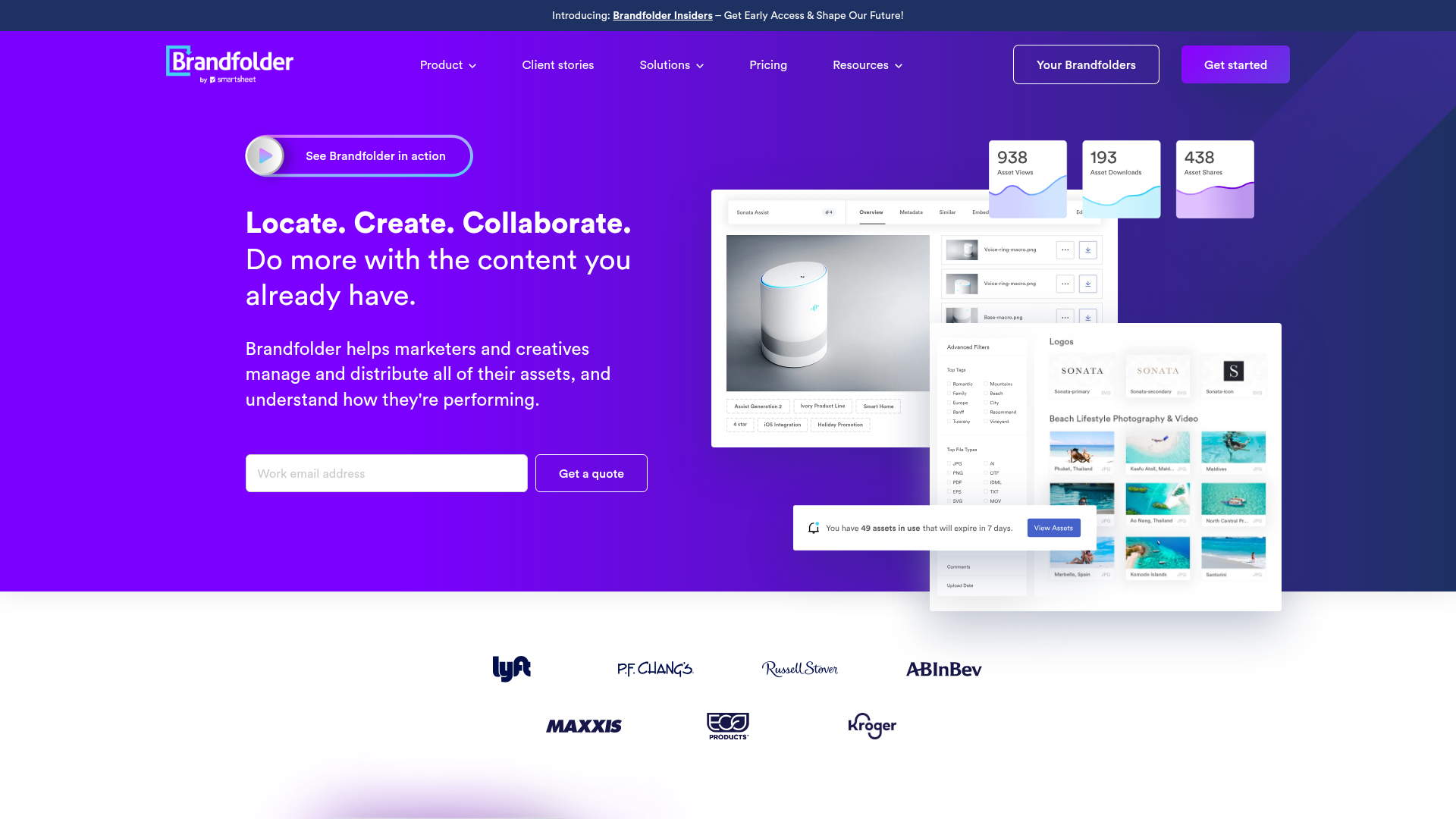
Brandfolder (now part of Smartsheet) is a DAM platform focused on brand asset management with strong search, analytics, and integration capabilities.
Its acquisition by Smartsheet makes it particularly compelling for organizations already in that ecosystem-asset management and project management become part of the same workflow rather than two separate tools that need to talk to each other.
Best for: Brand and marketing teams already using Smartsheet who need integrated asset management with strong analytics.
Key strengths
- AI-powered smart search and auto-tagging for fast asset retrieval
- Brand portals and asset distribution for external sharing
- Asset analytics and usage reporting
- Deep Smartsheet integration for project and asset workflow alignment
- Custom metadata and taxonomy for complex asset libraries
Pricing: Custom pricing. No publicly listed tiers. Smartsheet bundling available.
Brandfolder's search capabilities are genuinely excellent-teams that spend significant time hunting for assets tend to notice the difference quickly. The trade-off is pricing opacity and limited image transformation capabilities. It's a DAM tool, not a CDN replacement.
5. Acquia DAM (Widen) - best for Drupal and enterprise CMS teams
Acquia DAM (formerly Widen Collective) is an enterprise DAM deeply integrated with the Acquia and Drupal ecosystem-a strong Cloudinary alternative for organizations that need robust asset management tied to their CMS and digital experience platform.
If your organization runs Drupal, the native integration here is genuinely difficult to replicate with any other DAM tool.
Best for: Enterprise organizations running Drupal and Acquia who need DAM tightly integrated with their digital experience platform.
Key strengths
- Enterprise DAM with workflow automation and approval processes
- Deep Drupal and Acquia CMS native integration
- Brand portals and controlled asset distribution
- AI-powered metadata and tagging
- Rights management, compliance tracking, and comprehensive reporting
Pricing: Custom enterprise pricing. Typically sold as part of Acquia's broader digital experience platform suite.
The honest limitation: Acquia DAM is overkill for teams not in the Acquia ecosystem. Implementation is complex, costs are high, and the value proposition depends heavily on that Drupal integration. Outside that context, other DAM platforms offer comparable features with simpler onboarding.
6. Adobe Experience Manager Assets - best for Adobe-centric enterprises
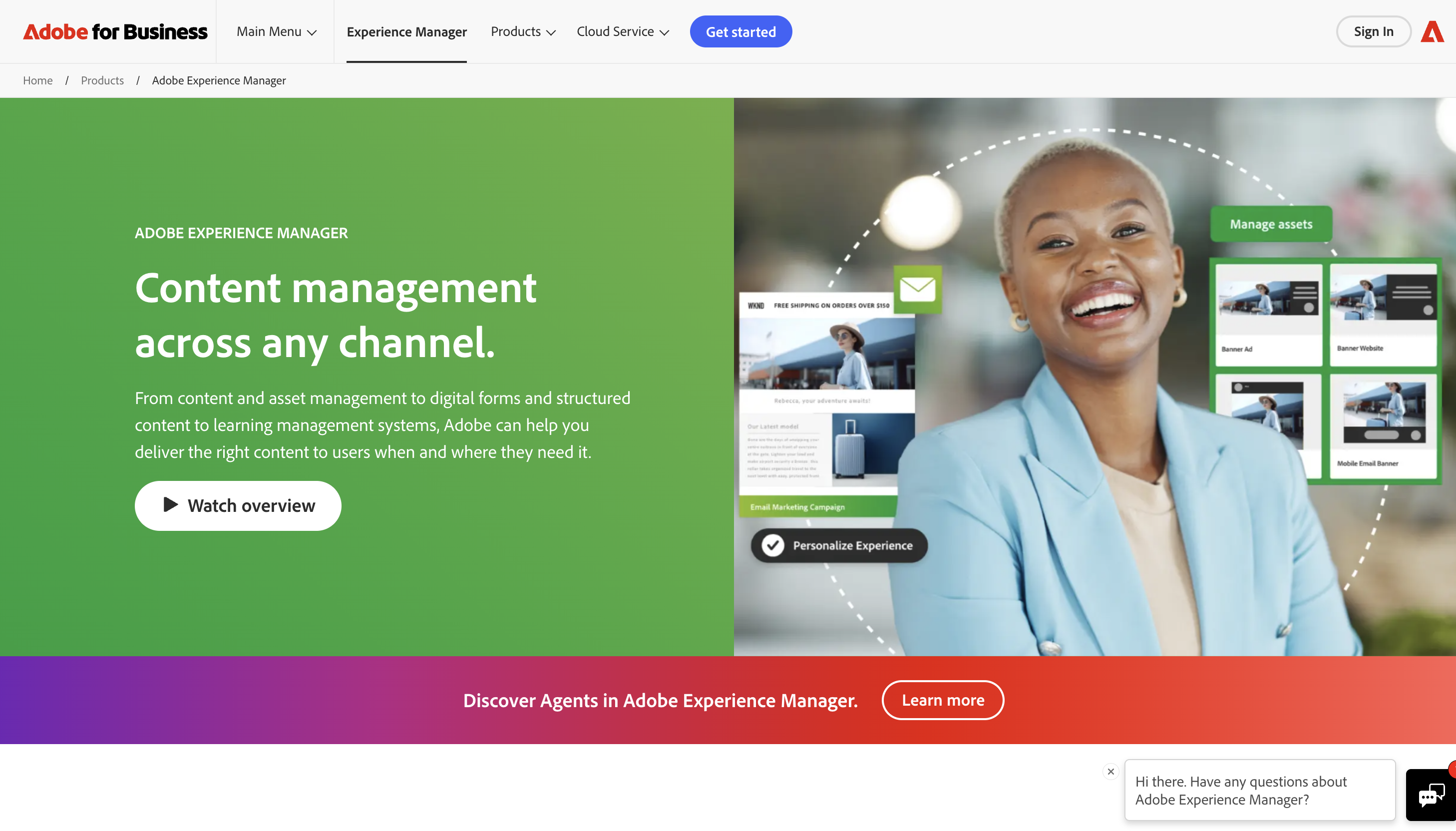
AEM Assets is Adobe's enterprise DAM, part of the Adobe Experience Cloud. For organizations already invested in Adobe Creative Cloud and Adobe's marketing suite, it offers unmatched native integration-but at a premium price and implementation complexity that most mid-market teams can't justify.
Best for: Large enterprises deeply embedded in the Adobe ecosystem that need DAM, CMS, and media delivery in a single platform.
Key strengths
- Native Adobe Creative Cloud integration for seamless designer workflows
- AI-powered asset intelligence via Adobe Sensei
- Dynamic media delivery and optimization capabilities
- Content fragments and headless CMS capabilities
- Automated workflows, approval processes, and enterprise-grade compliance
Pricing: Custom enterprise licensing. Typically six-figure annual contracts. Requires Adobe Experience Cloud commitment.
AEM Assets combines DAM with CMS and media delivery in a way no other platform matches-but that breadth comes with long implementation cycles, dedicated technical resources, and costs that make it inaccessible for most teams. If you're not already deep in the Adobe ecosystem, the switching cost is rarely worth it.
7. Canto - best for visual-first creative teams

Canto is a well-established DAM platform known for its clean, visual interface and ease of use-a strong fit for creative teams that prioritize visual browsing and quick asset retrieval over developer APIs.
Non-technical users tend to adopt Canto faster than most DAM platforms. The interface is designed around how creative teams actually think about assets, not how databases organize them.
Best for: Creative teams and agencies that manage large visual asset libraries and prioritize ease of use over API-driven media optimization.
Key strengths
- Visual asset library with facial recognition and smart tags
- Brand portals and public-facing asset collections
- Workflow and approval tools for creative review cycles
- Integration with Adobe, Google Workspace, and other creative tools
- Version control and custom metadata schemas
Pricing: Custom pricing based on storage and users. Free trial available.
Canto's limitations are worth noting: it doesn't offer the media transformation or CDN capabilities that Cloudinary provides, and its integration ecosystem is smaller than some competitors. For teams that primarily need a beautiful, easy-to-use DAM, those trade-offs are usually acceptable.
8. MediaValet - best for enterprise security and compliance
MediaValet is a cloud-native DAM platform that competes with Cloudinary on asset management while offering enterprise governance capabilities that Cloudinary doesn't prioritize.
It's a strong choice for enterprises with strict security, compliance, and data residency requirements-industries like financial services, healthcare, and government where asset governance isn't optional.
Best for: Enterprise organizations with strict security, compliance, or data residency requirements, especially those in the Microsoft ecosystem.
Key strengths
- Enterprise-grade security and compliance architecture
- AI-powered tagging and facial recognition
- Workflow automation and approval processes
- Integrations with Microsoft 365, Salesforce, and marketing automation platforms
- Rights management, expiry tracking, and custom metadata
Pricing: Custom enterprise pricing. Mid-to-high range for DAM platforms.
MediaValet's UI isn't the most intuitive in the category-teams coming from more visual DAM platforms sometimes find the learning curve steeper than expected. And like most DAM tools here, it doesn't replace Cloudinary's media CDN capabilities. It replaces Cloudinary's asset management layer.
9. Imgix - best for real-time image processing at scale
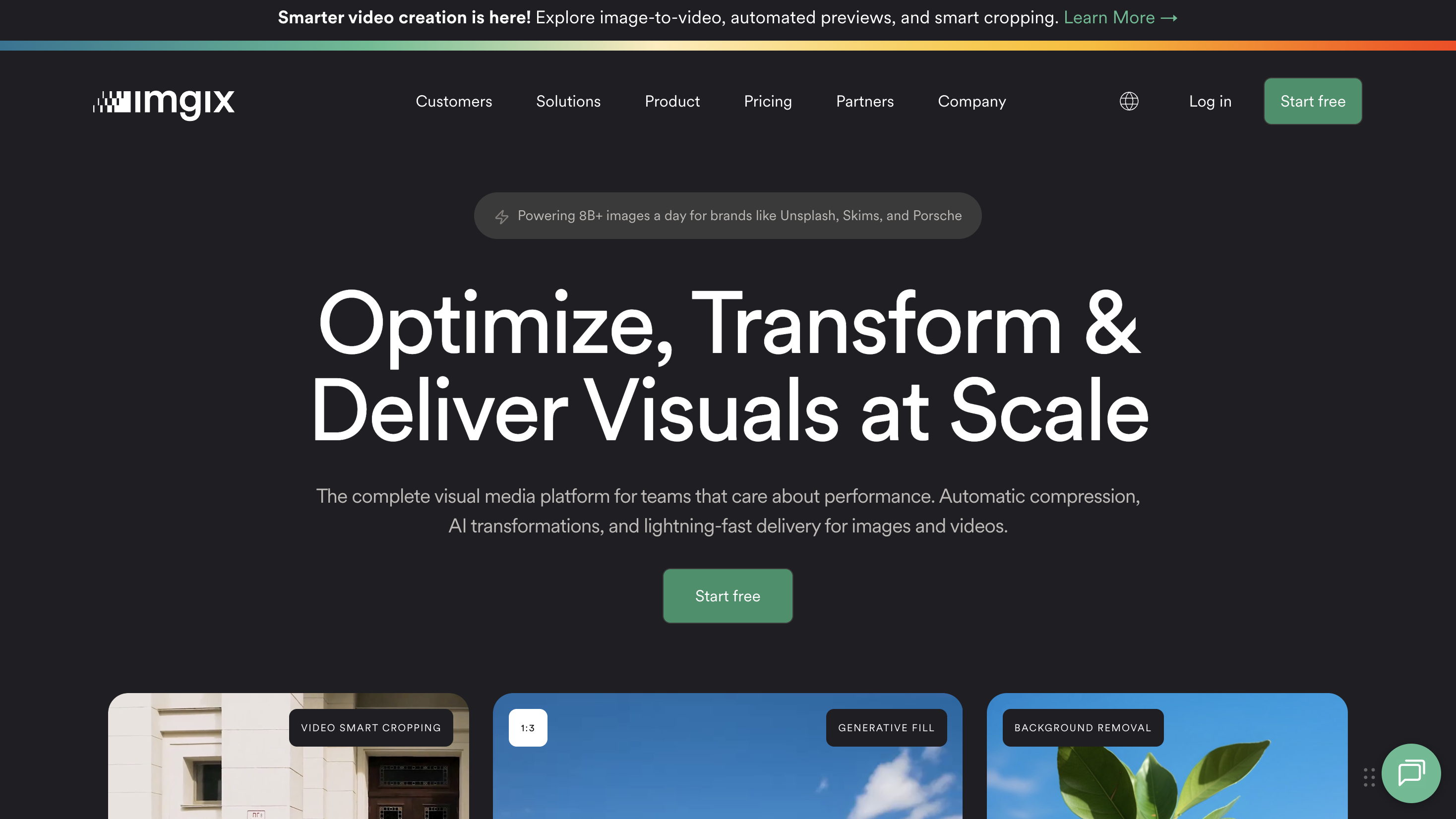
Imgix is a real-time image processing and CDN service that competes directly with Cloudinary's core image optimization capabilities. It's API-driven, developer-focused, and optimized for high-volume image delivery.
Think of it as Cloudinary's closest technical peer in the CDN-first category-similar URL-based transformation approach, similar global delivery infrastructure, but with a simpler pricing model and strong documentation.
Best for: Developer teams that need high-performance, real-time image processing without the DAM overhead-especially e-commerce and media sites.
Key strengths
- Real-time image processing via URL parameters
- Global CDN with edge caching and automatic format selection (WebP, AVIF)
- Face detection and smart cropping
- Purging and cache management
- Rendering API for PDFs and SVGs
Pricing: Plans start at $75/month. Usage-based pricing with published tiers.
The notable limitation: Imgix handles images only-no video processing. If your Cloudinary usage is split between image and video optimization, Imgix covers only half the equation. For image-heavy workloads, though, it's one of the most technically capable alternatives available.
10. Uploadcare - best for file upload and processing pipelines
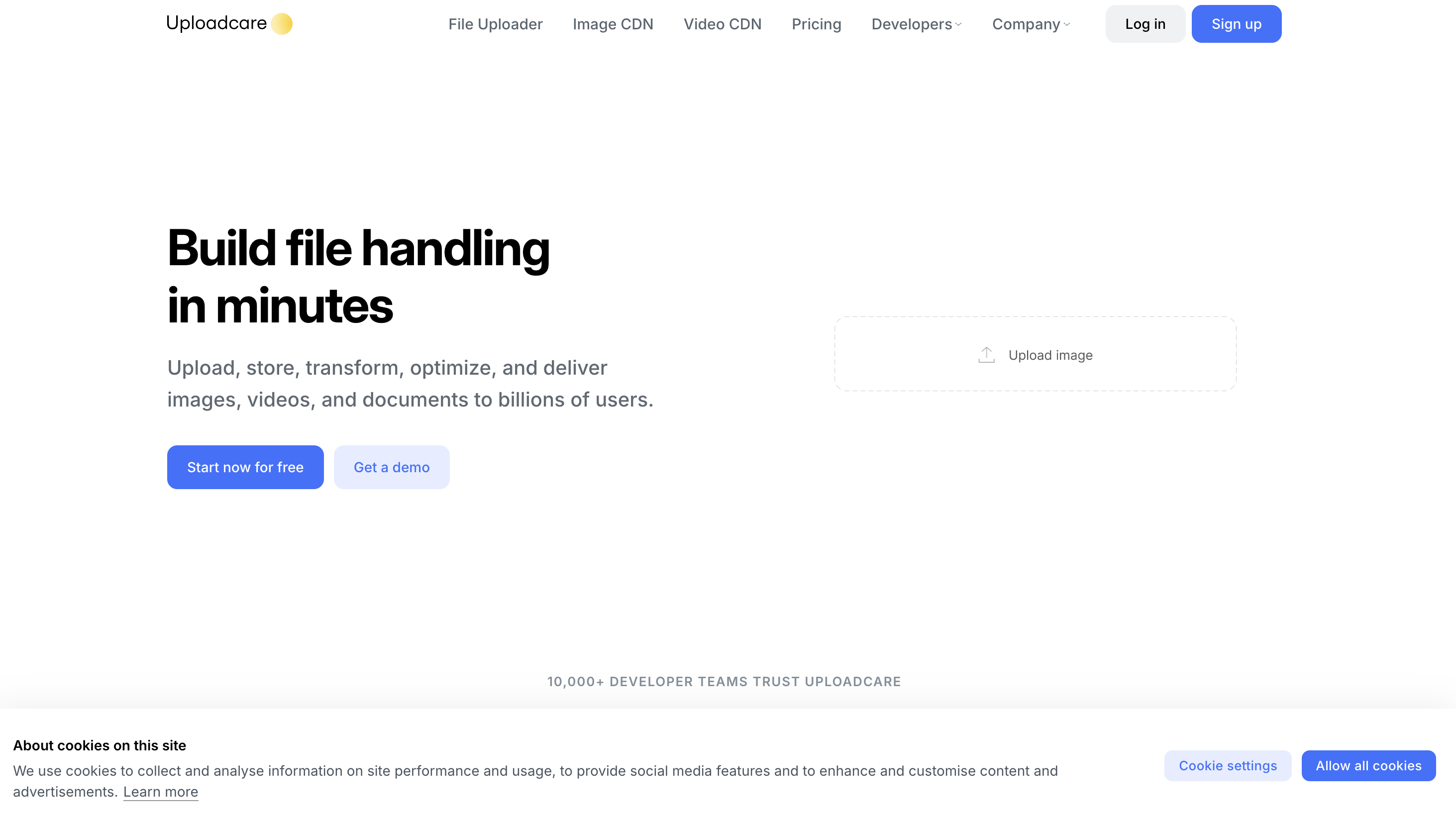
Uploadcare combines file uploading, processing, and CDN delivery into a single API-particularly strong for applications that need user-generated content handling alongside image optimization.
Where most CDN tools assume you control the source files, Uploadcare is built around the moment of upload itself. The drag-and-drop widget, social media imports, and URL-based ingestion make it the right choice when your users are the ones creating the content.
Best for: SaaS platforms and web applications that handle user-uploaded content and need a streamlined upload-to-delivery pipeline.
Key strengths
- File upload widget with drag-and-drop, URL, and social media imports
- On-the-fly image transformations and adaptive delivery
- Document conversion and video processing
- HIPAA-compliant options for regulated industries
- CDN delivery with global edge network
Pricing: Free tier available. Paid plans scale with usage.
Uploadcare's advanced transformation depth doesn't match Cloudinary's for complex image manipulation workflows. Video capabilities are less mature than dedicated video platforms. But for the specific use case of user-generated content ingestion with built-in processing, it's genuinely well-suited.
11. Sirv - best for e-commerce product imagery
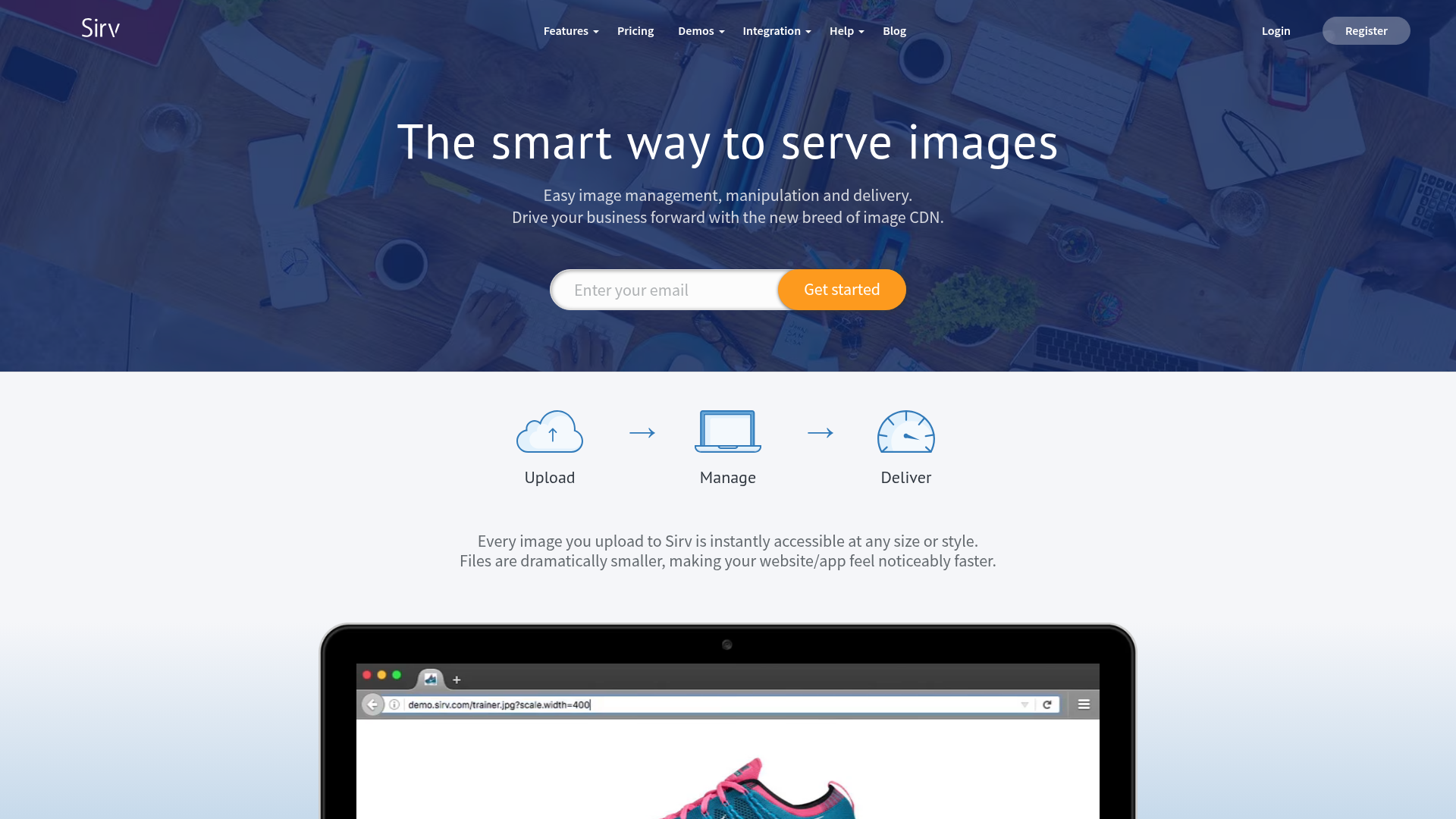
Sirv specializes in e-commerce image optimization with standout features like 360-degree spin views and deep zoom-a niche but powerful Cloudinary alternative for online retailers.
If you sell physical products online, the gap between a standard product image and a Sirv-powered 360-degree spin view is measurable in conversion rates. That's the specific problem Sirv was built to solve.
Best for: E-commerce businesses that need specialized product imagery features-360 spins, deep zoom-alongside standard image optimization.
Key strengths
- 360-degree product spin views for interactive product pages
- Deep zoom for high-resolution product detail images
- Real-time image optimization and CDN delivery
- Responsive image sets and lazy loading
- Shopify and Magento integrations
Pricing: Plans start at $49/month. Free trial available.
Sirv's narrow focus is both its strength and its limitation. It's exceptional for product imagery; it's not a general-purpose media platform. Teams that need video optimization, DAM features, or broad file type support will find it too specialized.
12. Gumlet - best for video-first teams on a budget
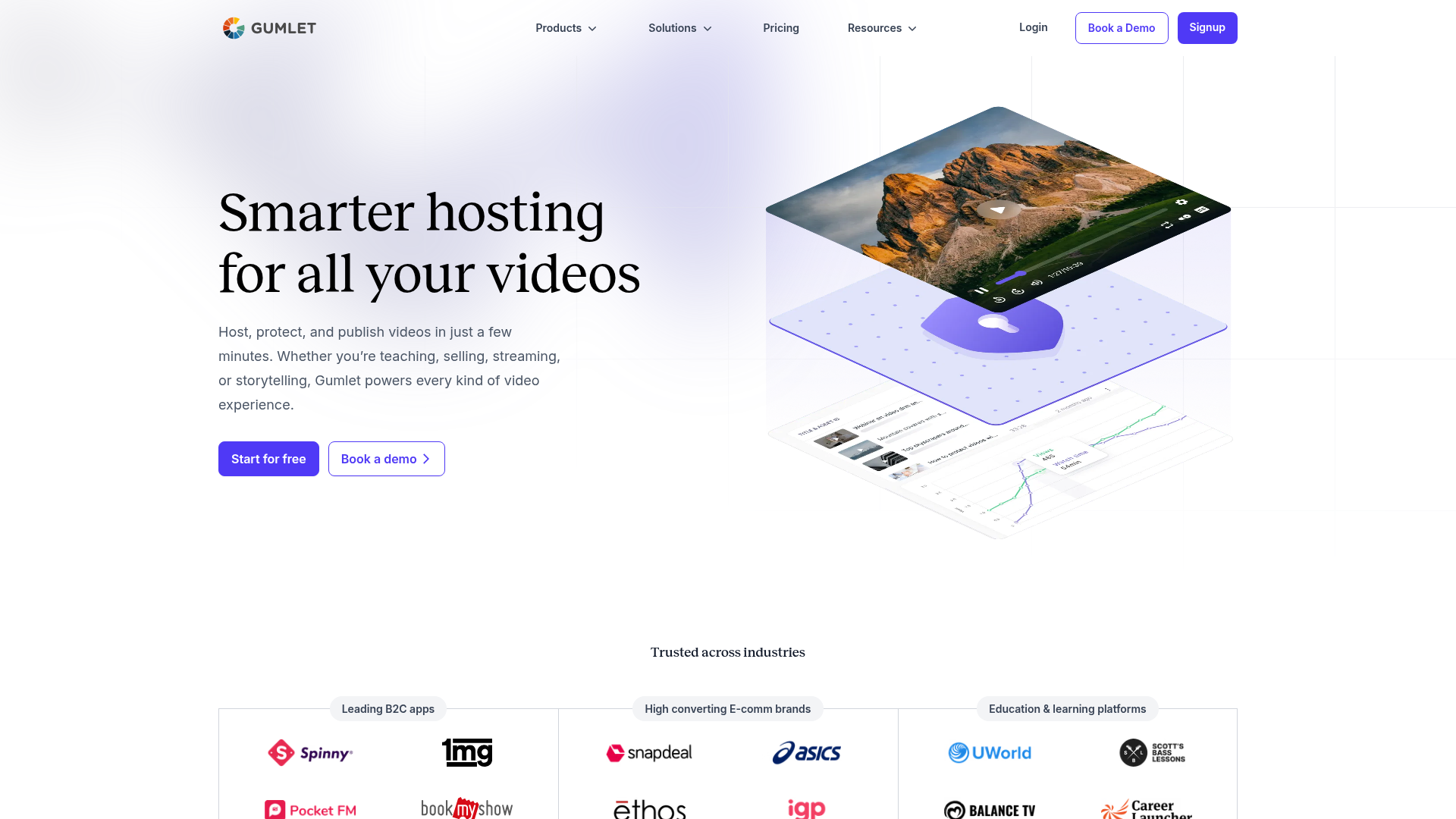
Gumlet offers image and video optimization with a focus on video streaming and processing-a cost-effective Cloudinary alternative for teams where video is the primary media type.
Cloudinary's video processing is capable but expensive at scale. Gumlet targets that exact pain point: comparable video streaming capabilities at a price point that doesn't require a budget conversation every month.
Best for: Teams that prioritize video content delivery and need an affordable alternative to Cloudinary's video processing.
Key strengths
- Video hosting, optimization, and adaptive bitrate streaming
- DRM protection for premium video content
- Image optimization and CDN delivery
- Analytics dashboard for video performance
- Simple integration with minimal code changes required
Pricing: Free tier available. Paid plans scale with usage and bandwidth.
Gumlet's image transformation features are less mature than Cloudinary's-if image optimization is equally important to video in your workflow, you may find the image side underwhelming. The community and ecosystem are also smaller, which matters when you're debugging edge cases at 2am.
13. Filestack - best for multi-source file ingestion
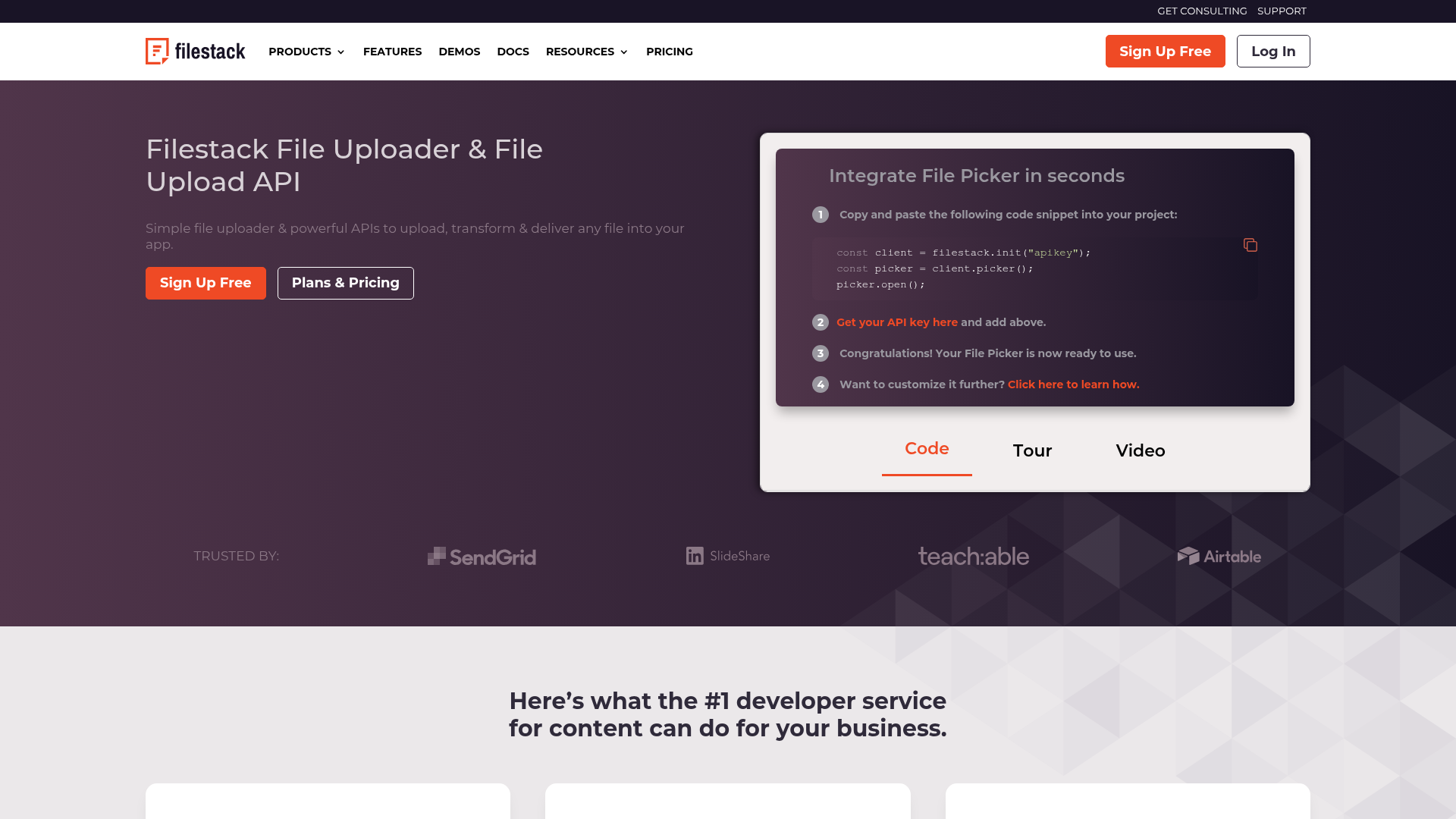
Filestack provides file uploading, transformation, and delivery APIs with a focus on ingesting files from multiple sources-cloud storage, social media, device cameras, and more.
The 20+ source file picker is genuinely distinctive. Most upload tools assume files come from a user's device. Filestack assumes files come from everywhere, and builds the workflow around that reality.
Best for: Applications that need to ingest files from diverse sources with built-in content moderation and security.
Key strengths
- Multi-source file picker supporting 20+ sources including Dropbox, Google Drive, and Instagram
- Image and document transformations
- Built-in content moderation with NSFW detection
- Virus scanning and encryption for security-sensitive applications
- Workflow automation and CDN delivery
Pricing: Free tier available. Paid plans scale with usage.
Filestack's image transformation depth doesn't match Cloudinary's for complex manipulation workflows, and it's not focused on DAM. It occupies a specific niche-multi-source ingestion with security features-and it does that niche well.
14. Cloudimage - best for simple, CDN-only image optimization
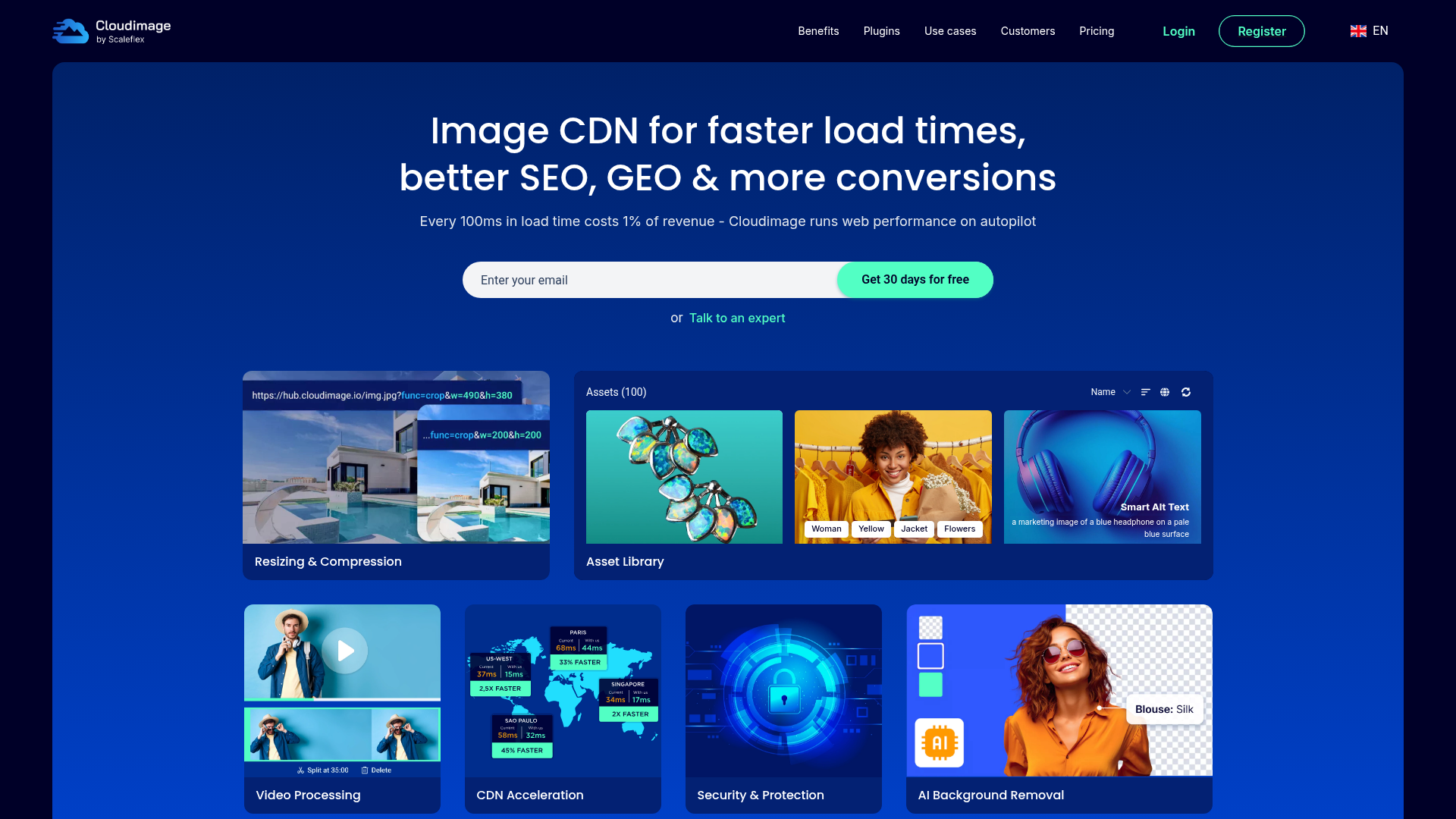
Cloudimage is a lightweight image CDN and optimization service that works with existing storage-the simplest Cloudinary alternative for teams that just want faster image delivery without rebuilding their media pipeline.
If your team's only complaint about your current setup is image load times, Cloudimage is worth evaluating before you commit to a more complex migration.
Best for: Teams that need basic image optimization and CDN delivery without migrating their existing storage infrastructure.
Key strengths
- Image resizing, compression, and format conversion (WebP, AVIF)
- Global CDN delivery with edge caching
- Works with any existing storage-S3, Google Cloud Storage, or custom origin
- Lazy loading and responsive image generation
- Simple URL-based API with minimal setup
Pricing: Free tier available. Paid plans scale with bandwidth and requests.
Cloudimage's transformation capabilities are limited compared to Cloudinary's full feature set, and there's no video support in basic plans. No DAM features either. But for the specific use case of "make my existing images load faster without changing my storage setup," it's one of the most straightforward options available.
15. bunny.net - best for performance-obsessed developer teams
bunny.net is a CDN and edge platform that includes image optimization as part of its broader content delivery network-the performance-first Cloudinary alternative for teams where speed and global reach are paramount.
The economics are compelling. bunny.net's pay-as-you-go pricing means low-traffic periods cost almost nothing, and high-traffic periods scale without the credit-system surprises that Cloudinary users often encounter.
Best for: Developer teams and high-traffic websites that prioritize CDN performance and cost efficiency over advanced media transformations.
Key strengths
- Global CDN with extensive points of presence worldwide
- Bunny Optimizer for image optimization and processing
- Bunny Stream for video hosting and delivery
- Edge storage with DDoS protection
- Transparent pay-as-you-go pricing with no hidden credit systems
Pricing: Pay-as-you-go. CDN bandwidth from $0.01/GB. No monthly minimum.
bunny.net's image optimization features are less sophisticated than Cloudinary's-complex transformation workflows aren't its strength. There are no DAM capabilities, and setup requires more technical configuration than plug-and-play alternatives. But for raw CDN performance at minimal cost, it's hard to beat.
Honorable mentions - other Cloudinary competitors worth knowing
Not every strong tool made the top 15. These deserve a mention for specific use cases.
Pics.io
Google Drive and S3-native DAM. Best for teams that want DAM functionality layered on top of existing cloud storage without a full migration.
Air
Creative operations platform focused on visual asset collaboration. Strong for creative teams that need workflow tools alongside storage.
Orange Logic
Enterprise DAM with strong metadata and taxonomy management. Best for large organizations with complex asset classification requirements.
Fastly Image Optimizer
Edge-based image optimization from Fastly's CDN. Best for teams already on Fastly who want to add image optimization without a separate vendor.
Piio
Automated image optimization that works with existing infrastructure. Minimal setup-best for teams that want optimization running in the background without ongoing management.
KeyCDN
Budget CDN with image processing capabilities. Best for cost-sensitive teams that need basic CDN and image optimization without premium pricing.
Stockpress
DAM designed specifically for photographers and visual content creators. Niche but excellent for photography-centric workflows.
OpenText Digital Asset Management
Enterprise-grade DAM within the OpenText information management suite. Best for large organizations already in the OpenText ecosystem.
IntelligenceBank
DAM with built-in marketing operations features including compliance, approvals, and brand management. Strong fit for regulated industries.
Veeva Vault PromoMats
DAM built specifically for life sciences and pharmaceutical marketing. Best for regulated industries with strict compliance requirements.
How to choose the right Cloudinary competitor
DAM-first vs. CDN-first - which do you actually need?
This is the question most comparison articles skip, and it's the most important one to answer before you evaluate any specific tool.
Ask yourself: what's actually causing the pain? If your team can't find assets, brand consistency is suffering, and collaboration requires too many Slack messages and email threads-that's a DAM problem. The right tools are BrandLife, Bynder, Brandfolder, Canto, or MediaValet. Cloudinary was never designed to solve those problems, and no amount of configuration will make it a proper DAM platform.
If the pain is technical-image load times are slow, transformation costs are high, API rate limits are frustrating, or your CDN bills are unpredictable-that's a media optimization problem. The right tools are ImageKit, Imgix, bunny.net, or Cloudimage. These are direct Cloudinary replacements in the technical sense.
Some teams genuinely need both. A large e-commerce company might run a DAM platform for brand asset governance and a CDN tool for product image delivery. That's a legitimate architecture-just be clear about which problem you're solving before you start evaluating vendors.
Evaluating total cost of ownership
The most common mistake in evaluating Cloudinary alternatives is comparing monthly subscription prices without modeling actual usage. Cloudinary's shared credit system means bandwidth, storage, and transformations all draw from the same pool-a traffic spike in one area can exhaust credits you were counting on for another.
When calculating TCO, factor in: base subscription cost, overage rates at your actual usage levels, implementation and migration effort (developer time has a cost), training time for non-technical users, and integration costs if you need to connect to your existing stack. A tool that looks 20% cheaper on paper can end up costing more when you account for the developer hours required to implement and maintain it.
For DAM platforms specifically, also consider the cost of the problem you're currently not solving. If your team spends an average of 30 minutes per day searching for assets, that's measurable lost productivity-and it's a cost that doesn't appear on any vendor invoice.
Migration considerations
Switching from Cloudinary involves different challenges depending on which category of tool you're moving to.
For CDN-first migrations, the primary concern is URL structure. ImageKit offers zero-URL-change migration, meaning your existing Cloudinary URLs can be proxied through ImageKit without rewriting your codebase. Other CDN tools may support custom origins that preserve URL structures. Verify this before committing to any migration plan.
For DAM migrations, the process is fundamentally different-you're re-organizing assets, not just changing delivery endpoints. Plan for asset re-upload, metadata mapping, folder structure decisions, and user training. A phased migration (new assets go into the new DAM while legacy assets are migrated in batches) tends to be less disruptive than a hard cutover.
In either case, build a rollback strategy before you start. The ability to revert to Cloudinary while you work out issues in the new system is worth the extra planning time.
Finding the right Cloudinary alternative for your team
The "best" Cloudinary alternative depends entirely on what's driving the switch.
If the pain is pricing, look at ImageKit, Gumlet, bunny.net, or Cloudimage-all offer more transparent pricing models than Cloudinary's shared credit system, with potential savings of 30–80% depending on your usage profile. If the pain is DAM and collaboration gaps, BrandLife, Bynder, Brandfolder, and Canto are purpose-built for the problems Cloudinary was never designed to solve. If the pain is ecosystem fit, AEM Assets works for Adobe-centric enterprises, Acquia DAM for Drupal organizations, Brandfolder for Smartsheet users, and MediaValet for Microsoft-aligned teams.
For teams that realize their real need is brand consistency, collaboration, and centralized asset governance-not just faster image delivery-BrandLife offers a purpose-built DAM platform with AI-powered tagging, brand guideline management, and extensive integrations designed to solve the problems Cloudinary was never built to address. You can explore the guide to digital asset management workflow to understand how a DAM-first approach changes the way teams work.