
.jpg)
Key Takeaways
- Brandfolder keeps pricing quote-based, with rates held off public pages. Buyers work through sales for each deal, with paid plans only.
- Entry deployments start around $500/month when billed annually. Mid-market teams often land near $18,000 to $50,000/year, and enterprise contracts run $30,000 to $150,000+ per year.
- Verified buyer data shows a median enterprise deal near $34,000/year, with one reported example at $26,000/year plus $8,000 onboarding.
- Implementation and premium support can push first-year costs well past the base subscription.
- Match spend to brand complexity and partner network before you commit to a multi-year contract.
Your finance team wants a budget number that holds up all year. With Brandfolder, that number usually starts with a sales call, then gets shaped by users, storage, support, and integrations.
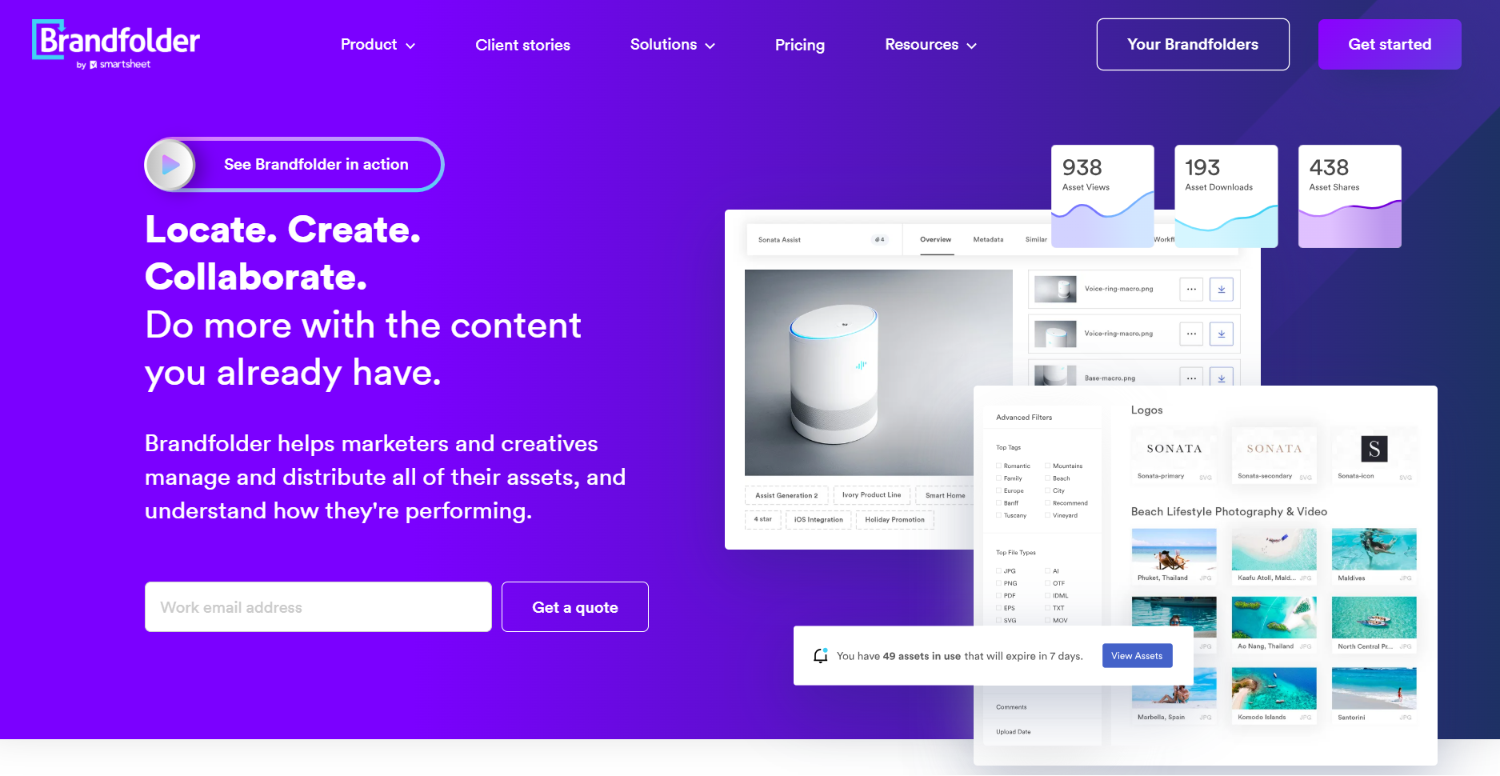
That makes planning harder for CMOs, creative leads, and agencies. A quote-based Digital Asset Management (DAM) can fit well, though it takes more work to model total cost before procurement starts.
This guide brings together verified buyer data and third-party pricing research. You will also get some clarity on Brandfolder pricing, so you can judge fit before you enter a longer sales cycle.
How Brandfolder Prices Its DAM
Smartsheet acquired Brandfolder in 2020, and the product sits in the mid-to-premium DAM category for brand ops and creative workflows.
The quote-based model
Every deal is custom. User count and storage set the base. Support level and integrations can move the quote higher.
That sales-led approach adds time to the buying process. You can use third-party benchmarks like Vendr's marketplace data to set expectations before the first call.
Typical tiers and ranges
Third-party pricing sources use slightly different labels, though the cost ranges land in a similar area across Vendr's marketplace data and CheckThat's pricing analysis.
Indicative Brandfolder tiers drawn from 2024 to 2026 third-party pricing research.
Reported buyer data adds useful detail here too. Vendr's published procurement data puts Brandfolder's median contract at roughly $24,700/year across more than 50 recorded purchases, while other buyer reports cite individual deals in the mid-$20,000s to mid-$30,000s per year, sometimes with onboarding fees of several thousand dollars on top.
Per-user economics
Buyer research is less consistent on a clean per-seat rate, since most sources report team-level contract totals rather than per-user pricing. Dividing typical mid-market contracts by user count works out to roughly $150 to $300 per user per year, based on the tiers above.
Per-seat cost tends to fall as a deployment scales, even though total spend keeps climbing as more teams get access.
What Brandfolder Costs by Team Size
First-year cost matters more than subscription alone. Modeling from CheckThat's 2026 analysis shows how rollout size changes the total once implementation is added.
Small teams (About 100 Users)
A 100-user rollout runs $15,000 to $25,000/year in subscription. Add implementation of $4,500 to $8,750, and first-year cost reaches $19,500 to $33,750.
That spend usually covers setup work before the platform starts returning time to the team. Metadata design and migration are common cost drivers.
Mid-market teams (200 to 300 Users)
A 200 to 300 user deployment sits at $30,000 to $50,000/year in subscription. Implementation adds $9,000 to $17,500, pushing first-year cost to $39,000 to $67,500.
Taxonomy work and brand guideline setup typically expand the project at this stage. More brands and more channels usually mean a longer onboarding cycle.
Enterprise teams (500+ Users)
Large deployments carry subscription costs of $75,000 to $150,000/year. Implementation ranges from $22,500 to $52,500, so first-year totals can reach $97,500 to $202,500.
At this level, price usually tracks storage, brand count, and integration scope. Global partner networks and heavy video libraries tend to sit at the higher end.
Hidden Costs That Inflate the Final Bill
The annual license is only one line item. ITQlick's cost analysis reports one-time onboarding fees running into the thousands of dollars above the yearly subscription.
Implementation and onboarding
Setup estimates span $4,500 to $52,500, depending on complexity, according to ITQlick's cost breakdown. That budget usually covers metadata model design, migration work, and workflow setup.
Single-brand teams tend to move faster. Regional asset sets and franchise permissions usually add more setup work.
Storage overage
Entry tiers sit at 50 to 100 GB. Premium tiers reach 500 GB to 2 TB. Teams that outgrow those limits can face a higher tier or added storage costs, with overage reported near $1,000 per terabyte in ITQlick's analysis.
Video-heavy libraries feel this first. E-commerce teams with large product catalogs can see the same pressure.
Seat scaling and role creep
Seat scaling raises this same total as more stakeholders and partners need logins, following the same team-size pattern cited above. Per-seat cost usually improves with volume, while total spend rises as access expands.
That matters when sales teams and external partners need logins. Broader access can push a buyer into an enterprise-style contract or a guest-access model.
Support and integrations
Premium support commonly adds a noticeable amount on top of the base contract, and enterprise plans more often include a dedicated customer success layer.
Custom connectors for PIM, BI, or commerce tools can add recurring fees or professional services costs. Those line items matter most in broader rollout plans.
Hidden cost factors that sit outside the base subscription quote.
Total cost of ownership includes onboarding, storage, and support beyond the license fee.
How Brandfolder Pricing Compares to Other DAMs
Small teams can find DAM tools under $500 per month. Brandfolder starts around that level, then moves into premium territory as users, storage, and integrations expand.
Budget and mid-range tiers
Lower-cost DAM tools fit simpler libraries and smaller teams. Brandfolder's entry configuration lands above some starter plans and below many full enterprise DAM deployments, depending on how the account is configured.
That difference shapes the shortlist for lean marketing teams. A buyer still needs to enter a sales process first, because Brandfolder sells through paid plans only.
Premium and enterprise tiers
At the upper end, Brandfolder's $30,000 to $150,000+ range lines up with the broader enterprise DAM category for global and multi-brand deployments. Seat count, storage, and integrations drive the move into six figures.
Some DAM vendors publish clearer starter pricing. Others lean further into enterprise content operations, which can bring a heavier implementation project than a mid-market Brandfolder deal.
A Framework for Deciding If the Price Fits
A DAM quote makes sense only in the context of your operating model. Score your team on four factors before you weigh any proposal.
Brand complexity
Count your brands and regional variations. A single-brand startup scores low. A franchise system or multi-brand company scores much higher.
Creative velocity
Measure asset volume and rich media use. Light campaign output creates less storage pressure than an always-on video and content team.
Partner surface area
Add up your agencies, franchisees, and resellers. A broad partner network usually increases the value of portals, permissions, and controlled sharing.
Governance risk
Map your compliance exposure and rights rules. Regulated brands or tightly controlled categories usually need stronger approval workflows and audit visibility.
High scores across those areas can justify a premium DAM. Lower scores usually point toward a simpler platform with more transparent pricing.
The Decision Factor
Brandfolder sits in the mid-to-premium DAM category with quote-based pricing. Research places entry plans near $500/month, while enterprise deployments can reach $30,000 to $150,000+ per year. Verified buyer data points to a median deal near $34,000/year, with onboarding costs that can add another $8,000 in reported cases. Real first-year cost usually includes implementation, storage growth, and support.
Your best decision starts with fit. High brand complexity, heavy partner sharing, and stronger governance needs can justify a premium DAM contract. Simpler teams usually benefit from clearer pricing and a lighter rollout.
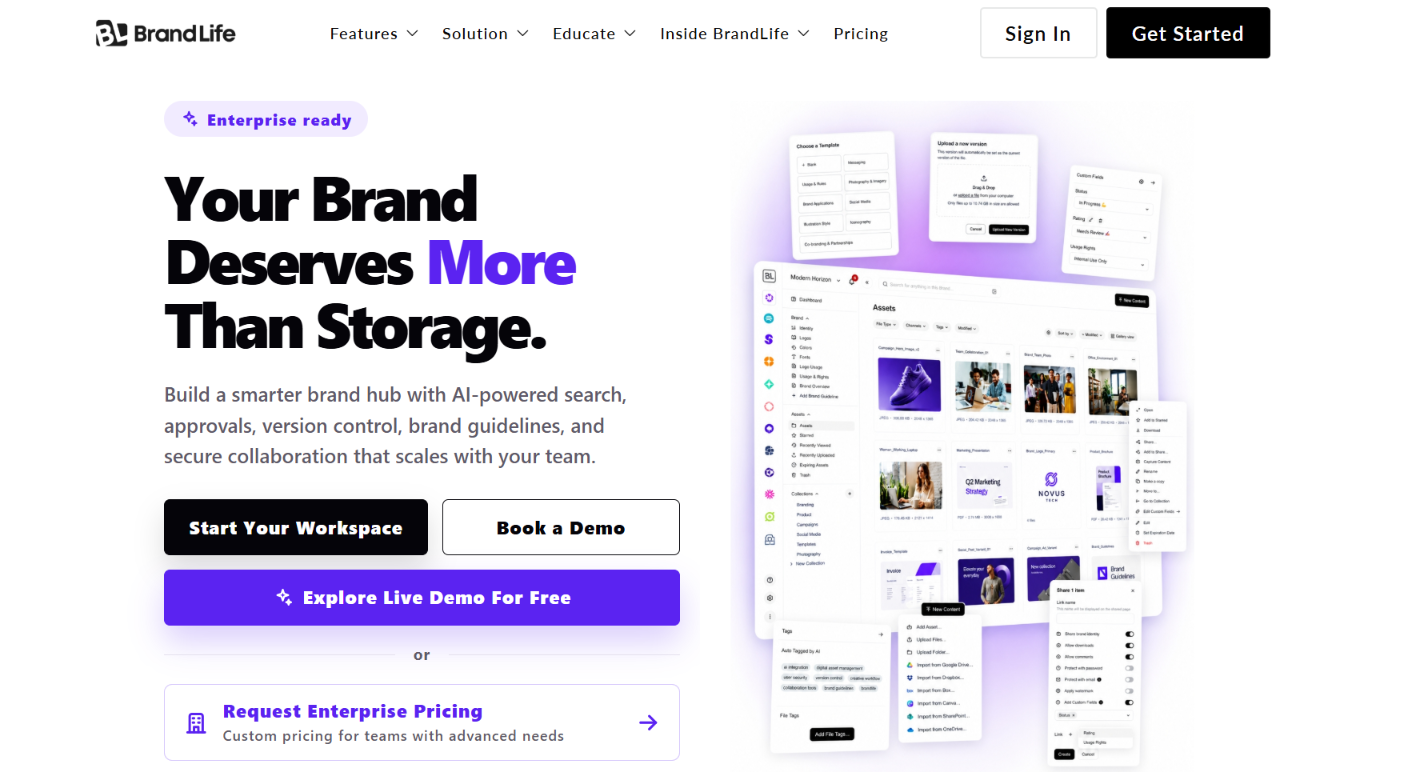
BrandLife offers that transparent path. Published plans start at $150/month, and each brand can run in its own workspace. AI search, living brand guidelines, and free brand portals help teams launch faster with fewer asset-request emails.
Get Started with BrandLife if you want a modern DAM without the usual quote-first friction.
Frequently Asked Questions
Does Brandfolder offer a free trial or free plan?
Brandfolder routes evaluations through its sales team and sells through paid plans. Buyers who want an immediate budget number often compare it with tools that publish a starting price.
How long does Brandfolder implementation take?
Implementation length depends on migration scope, metadata structure, and workflow complexity. A simpler rollout moves faster, while multi-brand and franchise setups usually take longer because permissions, taxonomy, and sharing rules need more planning.
Can I negotiate Brandfolder pricing?
Quote-based deals usually leave room to negotiate seat count, support level, and contract terms. Third-party marketplace data can help you benchmark the number before procurement moves forward.
What happens to my assets if I switch DAM platforms?
A platform change usually means exporting files, remapping metadata, and rebuilding permissions. Global teams should also budget for content cleanup, training, and workflow updates.
Is a premium DAM worth it for a small marketing team?
That depends on brand complexity, content volume, and partner sharing needs. Smaller teams with simpler workflows often get better value from a transparently priced DAM with AI search and brand portals.
How does BrandLife handle digital storage limits?
BrandLife expands digital storage as an add-on resource on top of the base plan. Your team adds capacity as the library grows instead of moving into a bundled seat tier.