

Key Takeaways
- MediaValet uses custom, configuration-based pricing tied to storage and setup scope. Tiers stay private, so every quote comes from sales.
- Third-party estimates from ITQlick put contracts from about $5,000 to $6,000 per year for small teams to roughly $150,000 per year for large enterprise deployments.
- Users are unlimited, so cost scales with your asset footprint and workflow complexity instead of headcount.
- Implementation and migration add real money on top of the subscription, ranging from $2,000 for small setups to $20,000+ for enterprise rollouts.
- If you want predictable, published pricing with multi-brand workspaces built in, BrandLife pricing starts at $150/month with clear add-ons.
You want to know one number before your first call with MediaValet, and their pricing page won't give it to you. Instead, it routes you to a quote request form, which means every early comparison you make against other DAM platforms is built on estimates rather than a real figure.
That's a normal setup for enterprise DAM (Digital Asset Management), but it still slows budgeting down. This guide pulls together what's publicly known: how MediaValet structures pricing, what third-party trackers estimate it actually costs, the levers that move your quote up or down, and how that compares to a platform like BrandLife that publishes its price outright.
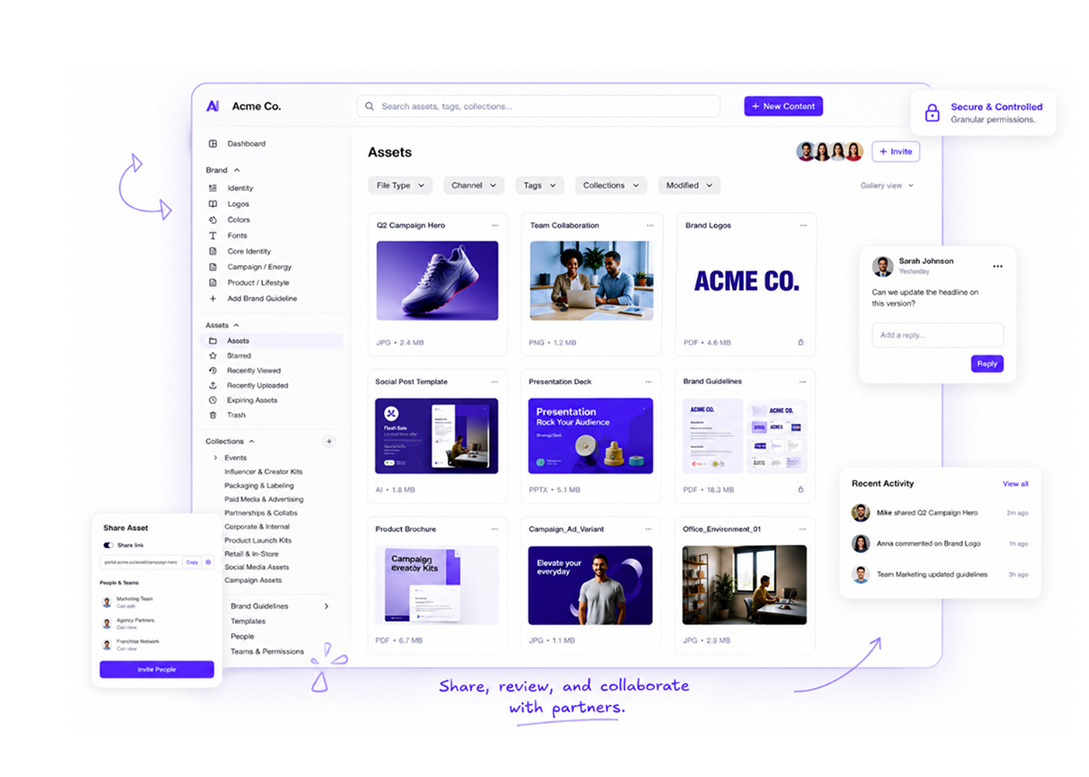
That matters for brand ops teams, marketing ops managers, and franchise marketers. The three sections below cover the private quote model, public price estimates, and what buyers can confirm before they sign.
Why MediaValet Won't Publish a Price
MediaValet sells its price based on your specific setup, not a fixed tier. According to its own pricing FAQ, the final number depends on:
- Platform configuration
- Storage volume
- Integration needs
Public cost trackers confirm the same pattern. CostBench lists MediaValet as custom DAM pricing, with no free tier and no published range. A tailored quote can fit a complex rollout well, but it also makes fast benchmarking harder for a team that just wants a ballpark before a call.
ITQlick's analysis puts a real number on that ballpark, estimating MediaValet at roughly $5,000 per organization to start:
Treat those figures as directional. MediaValet's model centers on unlimited users, so storage and configuration matter more to your quote than headcount does. A separate review from The Digital Project Manager describes MediaValet the same way, pricing on request, tied to storage and setup, and places it in the average cost range for the DAM category overall.
What's included once you get a quote:
- Unlimited users, support, and training
- Standard DAM features, AI tagging, and search
- APIs, SSO, and Azure hosting
- Templating and a dedicated customer success manager
- Billing in USD, with invoicing available in CAD, AUD, and EUR
What Drives Your MediaValet Cost
Three things move your final number: storage, implementation, and integration scope.
Storage
Video libraries get expensive faster than logo folders. MediaValet's FAQ references a popular starting package around 1 TB, but e-commerce and DTC teams often outgrow that fast, since product photos, short-form video, and 3D files can push a library much higher within 12 to 24 months. Before signing, ask:
- How much base storage is included?
- What's the overage rate?
- Are archival tiers available for older assets?
Implementation
Setup fees can turn a reasonable subscription into a much larger first-year spend. ITQlick estimates implementation at:
- $2,000 to $5,000 for small teams
- $5,000 to $10,000 for mid-market teams
- $20,000+ for enterprise rollouts
Migration is usually the biggest driver here, since assets from shared drives or an older DAM often need metadata cleanup and taxonomy work before the library is actually searchable. Weak taxonomy or missing rights data in the old system adds even more time.
Integration scope
AI tagging and search are included in MediaValet's core platform, but confirm how those capabilities are packaged for your specific use case. Support and training are included too, which can reduce separate onboarding costs, though you should still clarify how access controls and governance get configured. APIs and SSO are listed as included, but a specialized stack may still need custom connector work, adding consulting time and ongoing maintenance.
How MediaValet Pricing Compares to Other DAM Models
DAM vendors bill four different ways, and each one puts budget pressure in a different place.
Per seat
Third-party listings show per-seat DAM pricing starting near $33/month and running toward $29,000/year at the high end. Works well for a small, stable in-house team, but gets hard to forecast once agencies, freelancers, or franchise locations need regular logins.
Monthly active users
One common option runs near $450/month, with larger deployments rising above $10,000/year; premium enterprise suites start around $30,000/year and can reach $80,000+. Fine for steady usage, but unpredictable when partner access spikes around launches.
Storage and configuration (MediaValet's model)
Cost follows library size and setup scope rather than headcount, which suits multi-brand groups and franchise networks with a large mix of internal users and external partners.
Published flat plans
A set tier plus usage add-ons. Easiest to budget against early, and the model BrandLife uses.
MediaValet sits in the enterprise band, above lightweight tools that start near $10 to $109/month, and fits buyers who need stronger governance or broader distribution.
Hidden Costs to Budget For
First-year spend usually goes past the subscription line. Three things tend to catch buyers off guard:
Migration and data hygiene
A large library transfer becomes its own project. ITQlick's enterprise implementation estimate reaches $20,000+, largely because teams need to clean metadata, remove duplicates, and standardize naming before the new DAM is actually useful, and weak taxonomy in the old system adds more review time.
Storage overages
A 1 TB starting point feels comfortable at first, but product video, regional variants, and 3D files can outgrow it within 12 to 24 months. Ask for the overage schedule up front, and ask about volume discounts and cold storage for rarely accessed files, since old campaign assets still count against your quota until archived.
Seat escalation and change management
Per-seat systems raise cost as new users join; unlimited-user models like MediaValet's shift the focus to storage and setup instead. Either way, your team still needs internal hours to define workflows, permissions, and approval rules. MediaValet includes vendor training, but that internal change-management work stays on your budget.
Three Questions to Ask Before You Sign
Answer these before you compare any DAM quote:
1. What's your user surface? Count every group that needs access, internal teams first, then agencies, distributors, or franchisees needing self-serve downloads. A long list favors unlimited-user pricing; a small, stable list can still work well with per-seat pricing.
2. What's your real storage growth? Start with your current library in TB, then add expected growth from product launches, campaign variants, and richer media formats. Bring that number to every vendor call so you can compare overage rules apples-to-apples.
3. How complex are your workflows? A simple file hub needs far less setup than a DAM tied into PIM, CMS, or SSO. Approval routing, templating, and multi-brand permissions all add implementation time, which is where a dedicated success manager, something MediaValet includes, can matter.
How BrandLife Prices DAM Differently
BrandLife publishes its price instead of routing every buyer through a quote request.
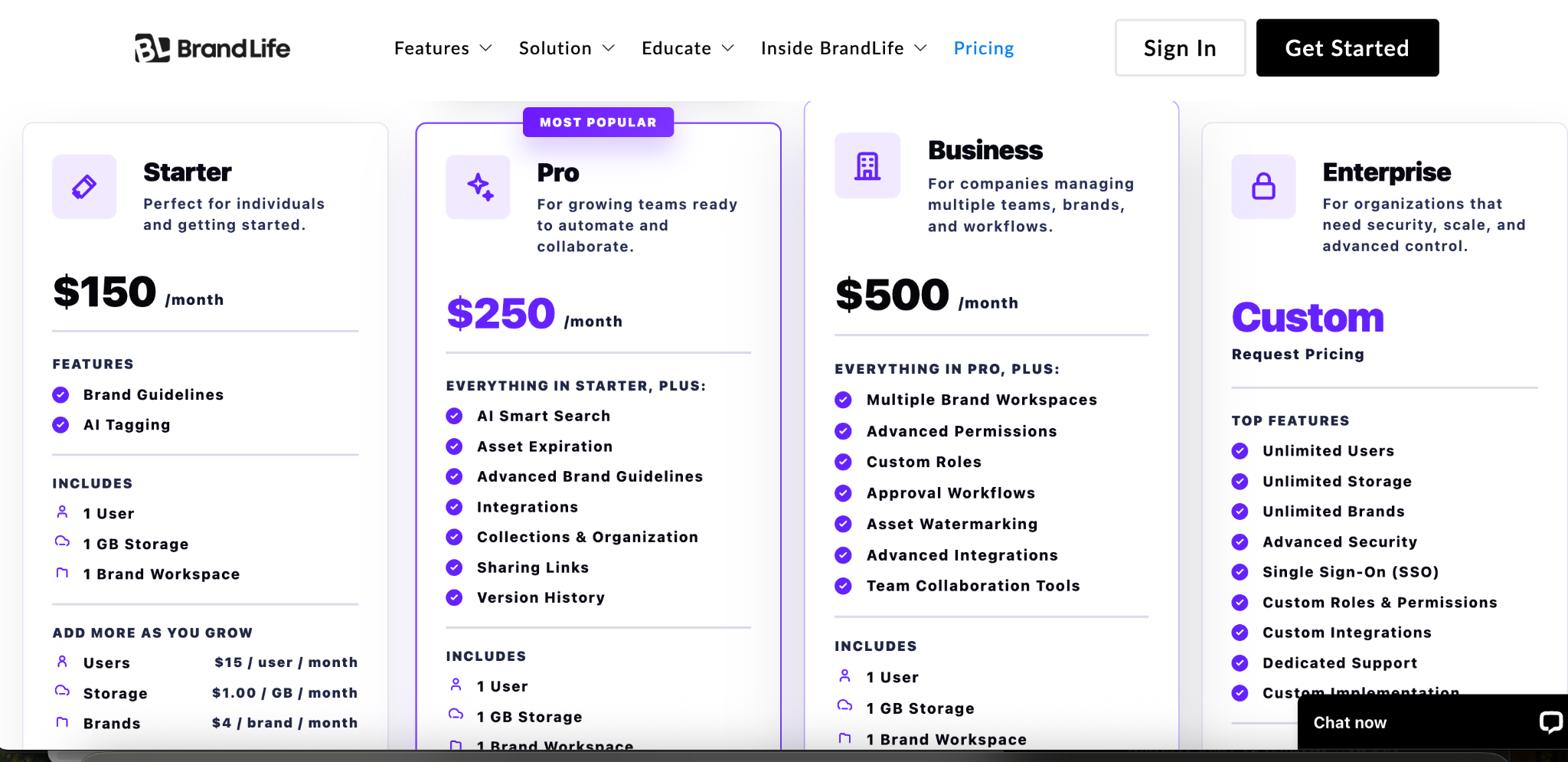
- Starter: $150/month for 1 user, 1 brand, and 1GB of storage, including core DAM features, AI tagging, interactive brand guidelines, and integrations with Canva, Figma, Google Drive, Dropbox, OneDrive, SharePoint, and Slack.
- Enterprise: Custom pricing for unlimited users, unlimited brands, and custom storage, with clearly defined add-ons (SSO, Visual Search, custom roles) so upgrades stay easy to budget.
A few features worth knowing about:
- Each client, sub-brand, or product line gets its own workspace with separate colors, fonts, and assets, useful for agencies and franchise or regional teams alike.
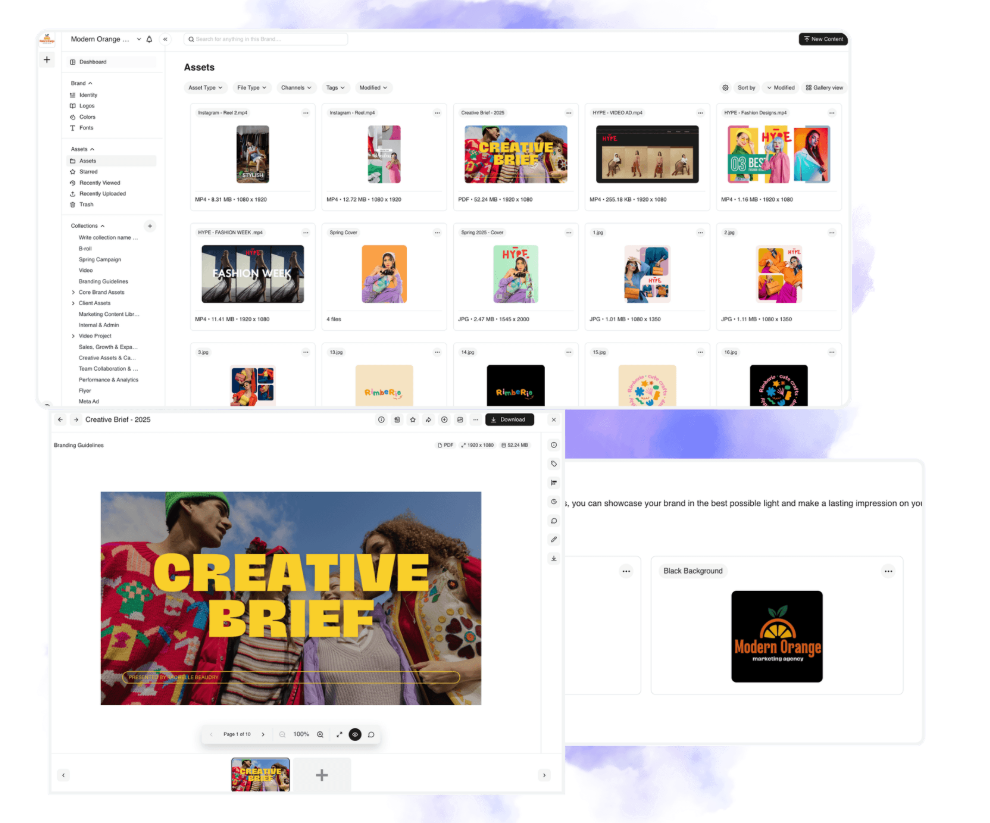
- Unlimited free partner portals for franchisees, resellers, and agencies, each showing only the approved assets for that audience, with secure sharing and expiration controls.
- AI tagging that customers report cuts search time by 40%, classifying files by keyword, color, object, product, SKU, category, and campaign.
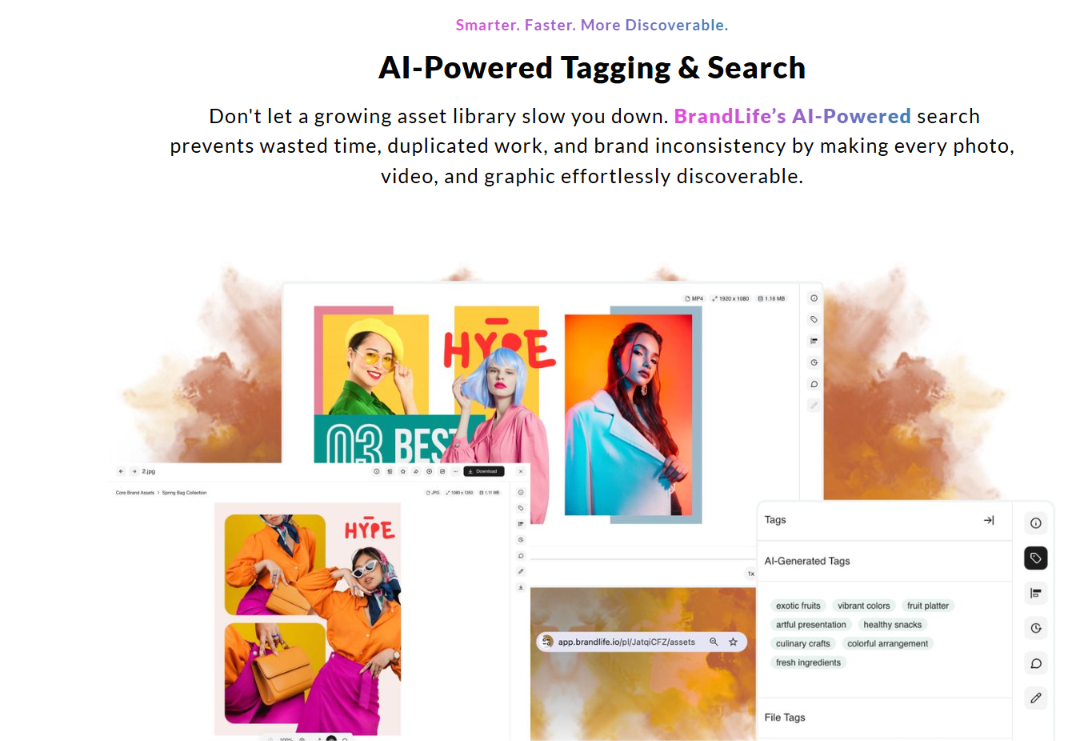
- Interactive brand guidelines living beside the asset library, so partners verify brand rules without a separate PDF.
BrandLife demo video will walk you through the account setup and pricing tiers directly if you want to see the plan differences in practice before you sign up.
Which Pricing Model Fits Your Team
MediaValet's pricing stays custom, with storage, configuration, and implementation shaping the final quote. Public estimates put smaller deployments around $5,000 to $6,000/year, large enterprise rollouts near $150,000/year, and implementation adding $2,000 to $20,000+ on top. Unlimited users make it a reasonable fit for distributed organizations, but the trade-off is a slower budgeting process, since the real number only arrives through sales.
Map your user count, project your storage growth, and score your workflow complexity before comparing any quote. If you'd rather start with a published number, BrandLife gives you multi-brand workspaces, AI-powered search, interactive brand guidelines, and partner portals in one place, starting at $150/month.
Frequently Asked Questions
Does MediaValet offer a free trial or free tier?
MediaValet is a sales-led evaluation, with pricing provided through a quote request and guided demo. Teams that want self-serve buying can compare that process with platforms offering published entry pricing.
Is MediaValet pricing billed monthly or annually?
Public references most often frame MediaValet pricing as annual contract value, quoted in USD, with invoicing available in CAD, AUD, and EUR. Confirm billing cadence and currency during the quote process.
Can I negotiate a MediaValet quote?
Custom pricing gives buyers room to discuss storage commitments and implementation scope. A clear projection for asset growth, user access, and integrations helps both sides price the same rollout accurately.
How long does a MediaValet implementation take?
Project length usually tracks migration volume and integration depth. A clean library with simple workflows moves faster than a rollout tied to legacy systems, SSO, and heavy metadata cleanup.
What size company is MediaValet built for?
MediaValet fits larger, distributed organizations that need enterprise DAM controls, broad user access, and support for heavy asset libraries. Smaller teams often prefer published pricing and a lighter implementation path.