
.png)
Key Takeaways
- Visual brand consistency increases recognition and trust, helping brands create stronger emotional connections and improve overall customer perception.
- A cohesive visual identity requires documented systems, centralized assets, and cross-team alignment, especially as brands scale across channels.
- Digital asset management platforms like BrandLife reduce inconsistencies by centralizing assets, automating workflows, and improving collaboration.
- Measuring metrics such as asset reuse, duplicate assets, search time, and compliance issues helps teams continuously improve brand governance and execution.
Visual brand consistency is what turns recognition into trust. When audiences see the same colors, typography, imagery, and design language across every touchpoint, they build familiarity with your brand long before they engage with your product or service.
For marketing managers and brand strategists, maintaining that consistency is harder than it sounds. Assets live across shared drives, design tools, email threads, and personal folders. Teams move fast, and marketing campaigns scale. And suddenly, outdated logos or off-brand visuals start slipping into live content.
This is where structured processes and digital asset management (DAM) platforms become essential. In this guide, we break down what visual brand consistency really means, why it matters psychologically, and how teams can maintain it at scale using modern tools like BrandLife.
Understanding Visual Brand Consistency
Visual brand consistency refers to the deliberate and consistent use of visual elements that define your brand across all channels. This includes logos, colors, typography, layouts, imagery styles, and supporting design elements.
At its core, visual brand consistency helps answer one question for your audience: Is this the same brand I trust?
According to Lucidpress research, consistent brand presentation across platforms can increase revenue by up to 20%, largely driven by improved recognition and trust. When visuals vary too much, audiences experience friction and doubt, even if the underlying message is strong.
For growing teams, consistency becomes less about creativity and more about coordination. Without a shared system for managing brand assets, even the best guidelines fail in execution.
The Psychology of Consistent Branding
Consistency works because the human brain prefers familiarity. Repeated exposure to the same visual cues builds mental shortcuts that help people recognize and remember brands faster.
From a psychological perspective:
- Familiar visuals reduce cognitive load
- Consistency signals reliability and professionalism
- Repetition reinforces brand recall and emotional association
A Nielsen Norman Group study found that users form first impressions of visual interfaces in as little as 50 milliseconds. Inconsistent branding during those moments can weaken credibility before content is even processed.
Brands like Apple and Nike excel here. Their visual systems are instantly recognizable across products, ads, websites, and packaging. That recognition is not accidental. It is the result of disciplined visual systems backed by strong asset governance.
For modern marketing teams, digital asset management platforms play a central role in translating brand psychology into repeatable execution by centralizing all your valuable assets and brand guidelines in one hub.
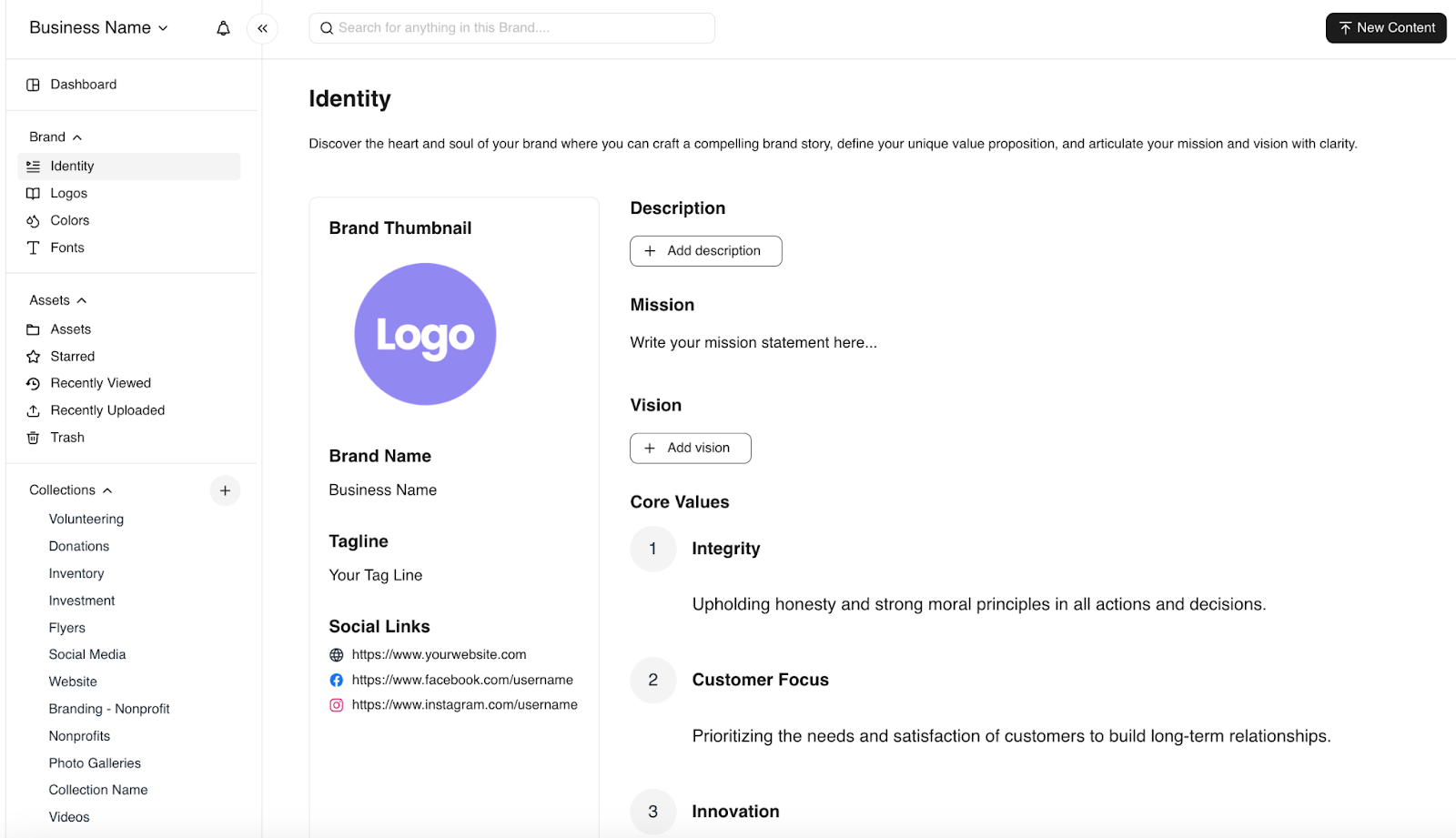
Essential Visual Elements for Brand Consistency
Here are the core components that shape how audiences recognize, recall, and connect with your brand.
Colors that define your brand
Color is often the first brand signal people notice. It influences emotion, perception, and memory. Research by the University of Loyola found that color increases brand recognition by up to 80%.
Consistent brands define:
- Primary brand colors
- Secondary and functional colors
- Usage rules across backgrounds and formats
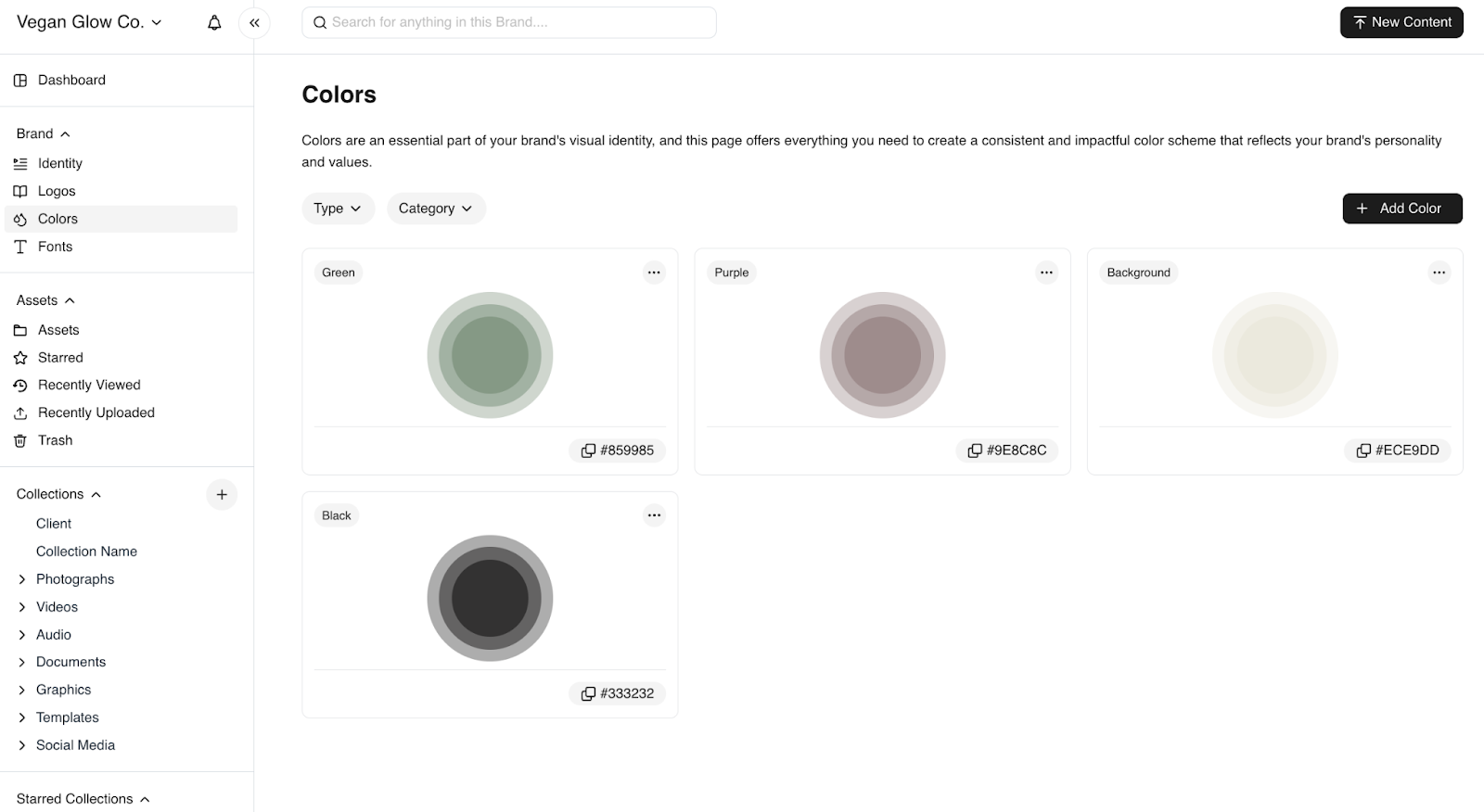
Spotify’s green or Coca-Cola’s red work because they are protected, documented, and enforced across all visual assets. Without a centralized digital asset management system, color drift happens quickly as teams export assets in different formats or reuse old files.
BrandLife supports this by centralizing approved brand color palettes alongside live assets, making it easier for teams to reference and reuse the right visuals without guesswork.
Typography as a branding tool
Typography shapes how a brand sounds visually. Fonts communicate tone just as much as copy does.
Consistent typography includes:
- Primary and secondary fonts
- Weight and hierarchy rules
- Usage across digital and print formats
When typography rules are not accessible, teams substitute fonts for convenience, especially under deadlines. Over time, this erodes brand cohesion.
Brands like Airbnb invest heavily in typography systems to maintain warmth and clarity across platforms. BrandLife’s centralized digital asset management helps ensure that font files, usage guidelines, and approved templates stay accessible to everyone involved in content creation.
Design elements that enhance recognition
Shapes, patterns, iconography, and imagery style contribute to instant brand recall. Examples:
- Mailchimp: Hand-drawn illustrations and quirky visual motifs
- Headspace: Minimalist shapes and soft color gradients
- Airbnb: Uniform iconography and cohesive photographic style
A consistent visual language ensures that even if your logo isn’t present, users can tell the asset belongs to your brand.
With BrandLife, teams can organize assets into collections by campaign, channel, or visual system, making it easier to reuse elements that reinforce recognition instead of fragmenting it.
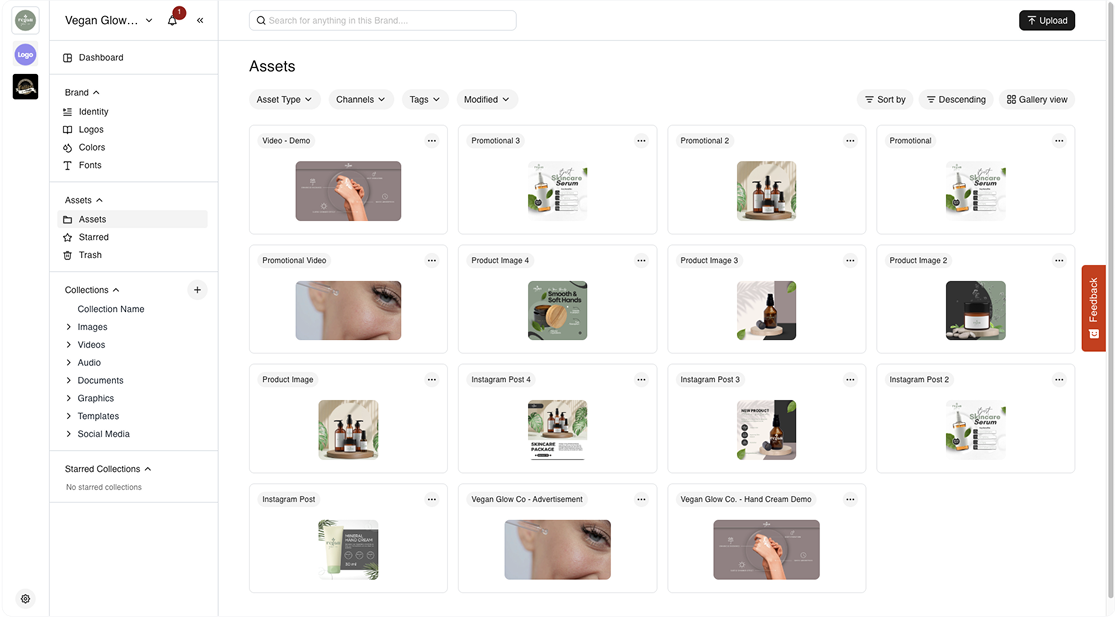
Building a Cohesive Visual Identity System
Brand consistency doesn’t happen by accident. It's intentional, documented, and repeatable. A cohesive visual identity system ensures every asset reflects the same principles, no matter where it appears or who produces it.
Here are four rules to follow when building a brand identity playbook.
1. Developing a comprehensive design system
A design system is the foundation of strong visual brand consistency. It defines how all brand elements should be created, used, and scaled across different contexts.
Key steps include:
- Document your visual identity essentials, such as colors, typography, logo rules, imagery, grids, and UI components.
- Create reusable templates for presentations, ads, email banners, and social posts.
- Centralize assets with a digital asset management platform like BrandLife.
- Define usage rules to maintain consistency across teams and external contributors.
- Standardize approval flows so every asset aligns with the brand identity.
With BrandLife, brands can build design systems that eliminate guesswork by giving teams pre-approved components and templates that ensure consistency at scale.

2. Aligning visuals with brand messages
Visuals should reinforce and not contradict your messaging. For example:
- A luxury brand should use refined typography, minimalistic layouts, and a premium color palette.
- A playful consumer brand might rely on bold colors, dynamic shapes, and expressive photography.
BrandLife helps teams map visual guidelines to messaging pillars so design decisions always support business goals.
3. Leveraging digital tools for consistency
Manual enforcement of brand rules does not scale. Modern teams rely on digital asset management solutions to operationalize consistency.
BrandLife’s digital asset management software helps maintain consistency through:
- Centralized brand kits
- Version control
- Real-time collaboration
- Permission-based access
- Auto-updated brand templates
These tools ensure every team, including marketing, sales, product, and agencies, uses the same approved assets.
One standout feature of BrandLife is its multi-brand support, which allows teams to manage distinct brand identities without overlap or confusion.
4. Consistent branding across digital channels
Today’s customers may move from your Instagram page to your website and then to a mobile ad in minutes.
Website and digital presence
Websites often reveal the cracks in brand consistency first. Old logos, mismatched visuals, and outdated imagery accumulate over time.
Maintaining consistency requires:
- Regular asset audits
- Clear ownership of web visuals
- Easy access to approved assets
94% of users base their first impression of a website on its design.
BrandLife makes it easier to update assets at scale without hunting through folders or relying on individual contributors.
Social media branding
67% of consumers surveyed revealed that social media fuels brand awareness.
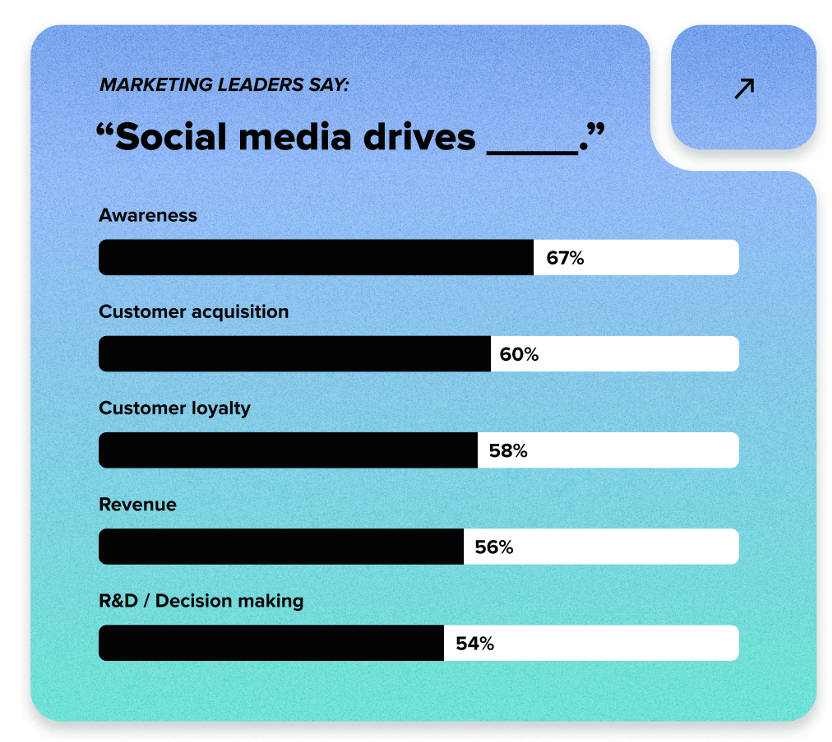
Social media moves fast, which makes consistency harder to maintain. Multiple contributors, platforms, and formats increase the risk of visual drift.
Using digital asset management, social teams can:
- Pull from approved asset collections
- Reuse templates
- Maintain consistent visual rhythm across channels
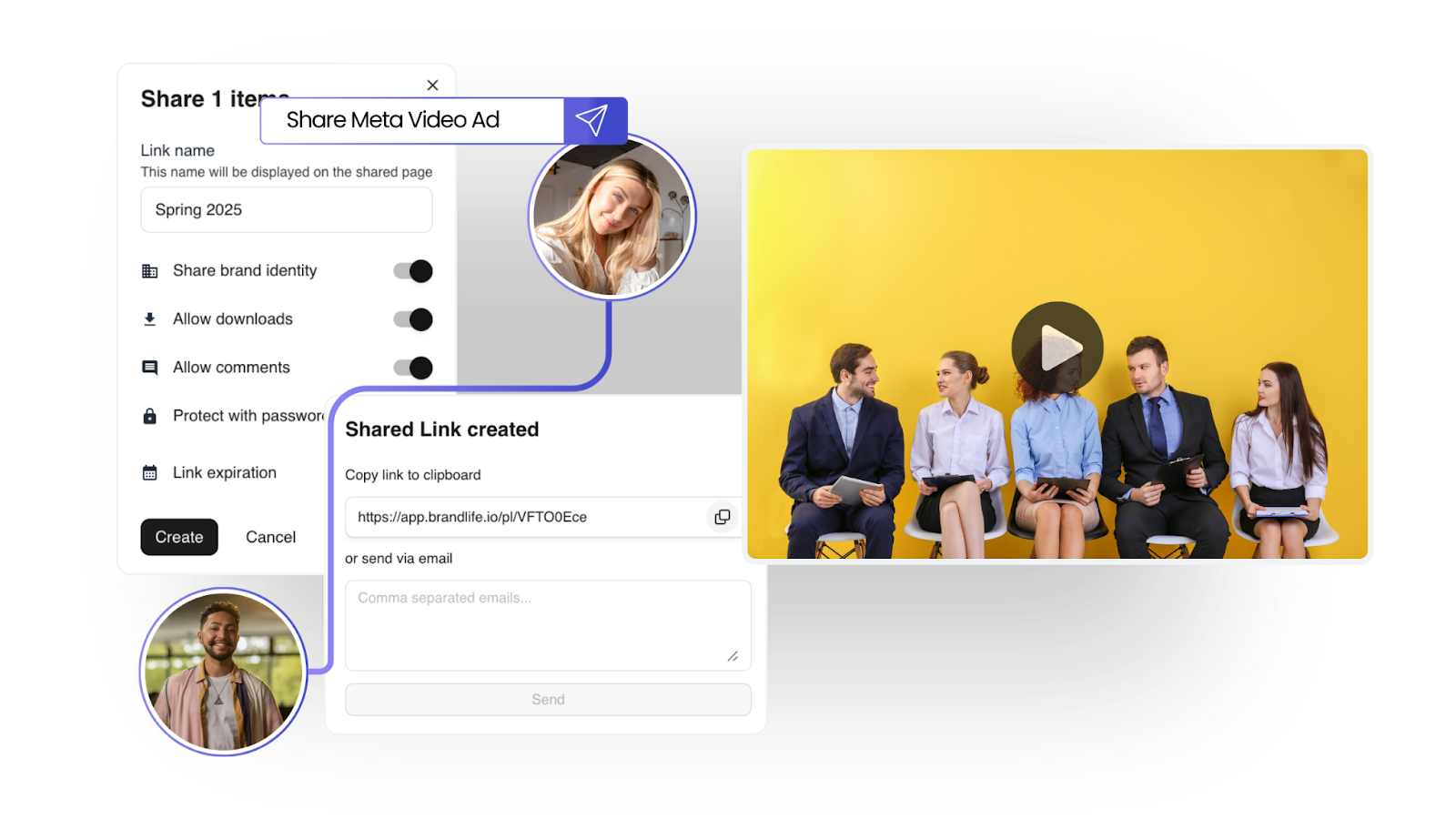
BrandLife enables this by allowing teams to share collections internally and externally, reducing friction during content creation.
Adapting for mobile and responsive design
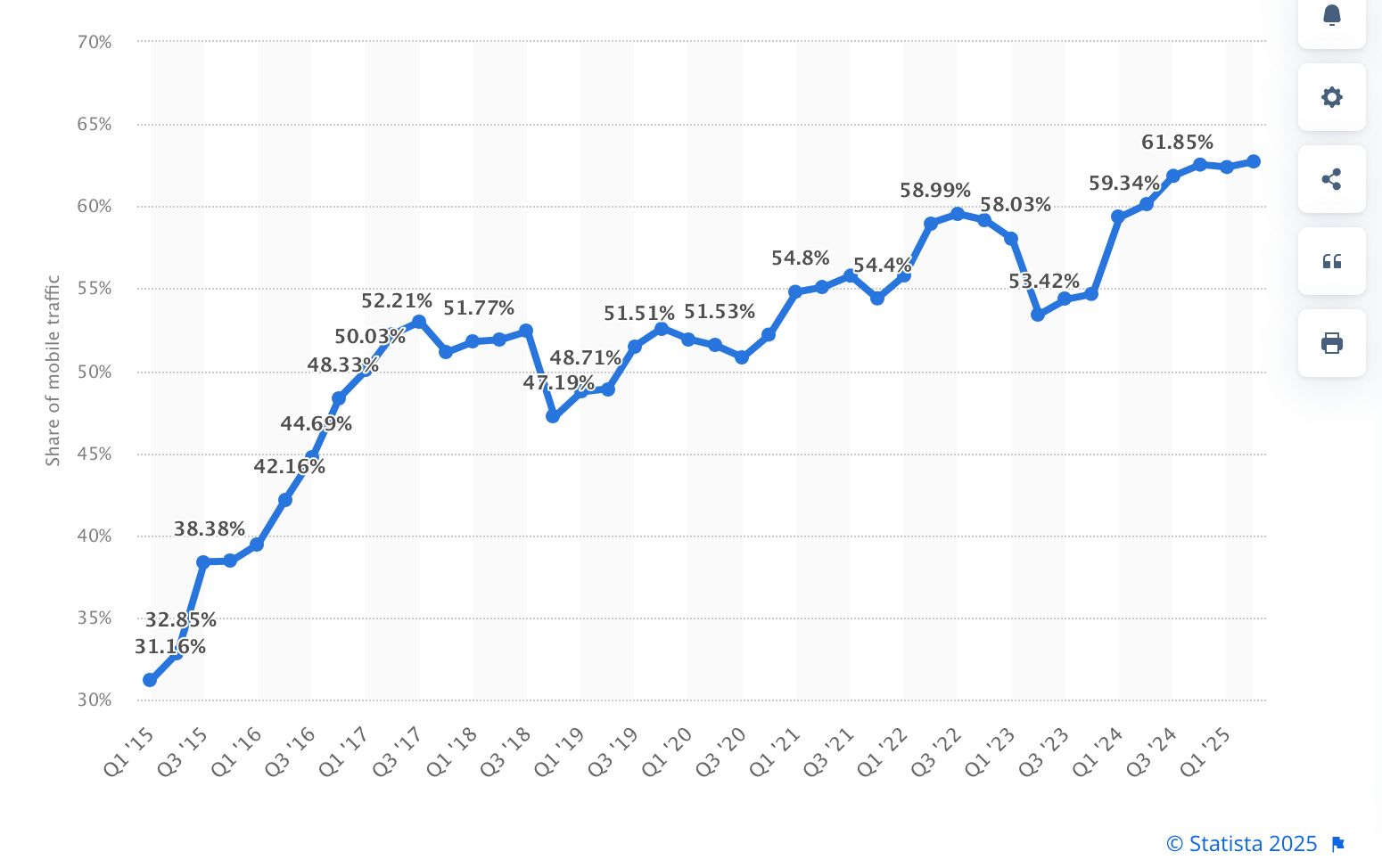
With nearly 60% of global traffic coming from mobile, consistent branding must extend to small screens.
This includes:
- Scalable logos
- Legible typography
- Mobile-optimized layouts
- Consistent iconography
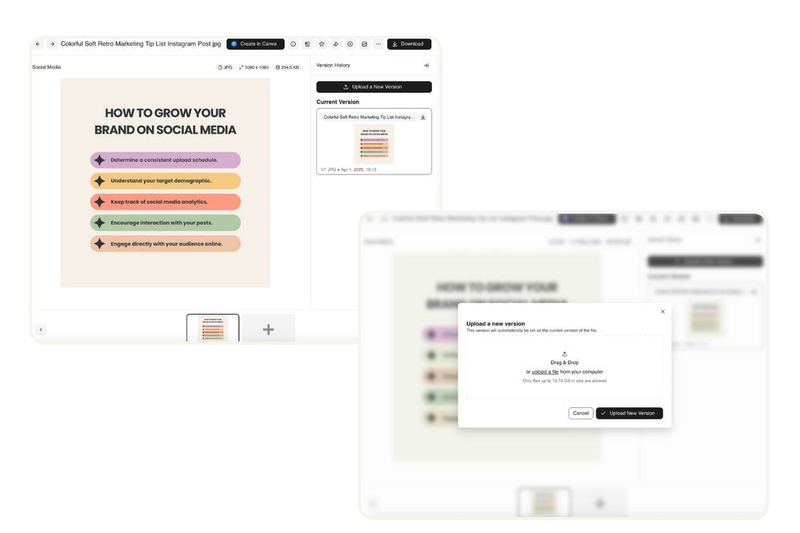
With centralized asset access and version control, teams can adapt visuals for different formats without introducing inconsistencies or duplicating work.
Overcoming Challenges in Brand Consistency
Consistency doesn’t come without obstacles, and addressing these challenges proactively is essential for protecting your brand identity.
Some of the common brand consistency challenges include:
Challenge #1: Synchronizing team efforts
One of the biggest challenges is alignment across teams. Designers, marketers, agencies, and partners often operate with different tools and workflows.
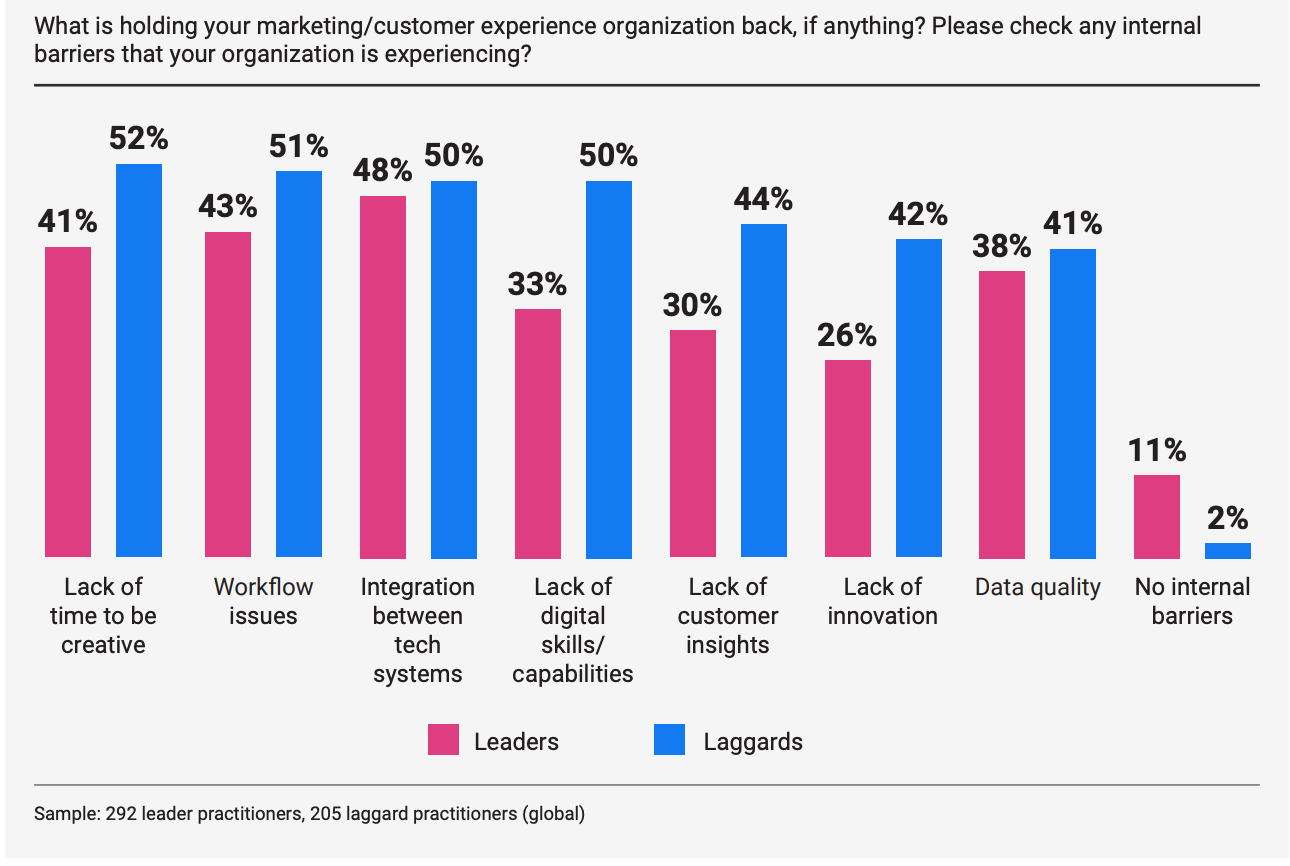
According to Adobe Digital Trends 2023, 43% of marketers view workflow challenges as a major internal obstacle that impedes the advancement of their marketing teams.
However, using a digital asset management solution can solve this challenge. A digital asset management platform creates a shared source of truth, helping everyone work from the same assets and guidelines.
BrandLife’s permission-based sharing allows teams to control access, while the workflow automation ensures smooth collaboration.

Challenge #2: Adapting to market changes
Brands must evolve, but evolution must be strategic. While adapting to new trends (e.g., minimalism, bold gradients, motion graphics), consistency should remain intact.
A strong digital asset management system like BrandLife allows brands to:
- Update design elements globally
- Roll out new brand guidelines instantly
- Phase out outdated assets
- Ensure external agencies follow the same standards
This balance keeps your brand fresh without compromising identity.
Best Practices for Sustained Brand Consistency
Once your visual identity is in place, the next step is sustaining it over time. With the right processes and tools, like BrandLife, you can ensure your brand remains consistent, scalable, and easy for every team to execute.
Measuring impact over time
Consistency should be measured, not assumed. Some of the useful metrics to track:
- Asset reuse rates: Measures how often teams use approved assets, indicating how effectively your visual identity system is being adopted.
- Reduction in duplicate assets: Tracks how well your team avoids creating unnecessary or inconsistent versions of the same asset.
- Time spent searching for files: Shows how efficiently teams can find the right assets—lower search time signals better organization and consistency.
- Brand compliance issues: Monitors how frequently assets fail to meet brand guidelines, helping identify gaps in training or governance.
Automating consistency with technology
Automation reduces human error. Features like AI tagging and searchability for easy asset retrieval, approval workflows to reduce inconsistencies, and controlled access help brands maintain standards without slowing teams down.
BrandLife offers:
- Automated template updates
- Pre-approved brand kits
- Workflow automation for approvals
- Scalable asset deployment
This allows brands to produce more content without compromising quality.
Documenting and updating brand guidelines
Outdated brand guidelines lead to inconsistencies.
To avoid fragmentation:
- Keep guidelines live, not static
- Store them within BrandLife for easy access
- Update visuals as the brand evolves
- Share updates instantly with all teams and vendors
BrandLife eliminates guesswork by making brand guidelines accessible, current, and actionable.
Building Confidence in Your Brand Identity With BrandLife
Visual brand consistency is about creating clarity, trust, and recognition at scale. It strengthens brand identity, builds customer loyalty, and ensures revenue growth by improving your brand recognition.
BrandLife helps marketing and brand teams maintain a consistent visual identity without slowing down execution. Some of its features include:
AI tagging and searchability
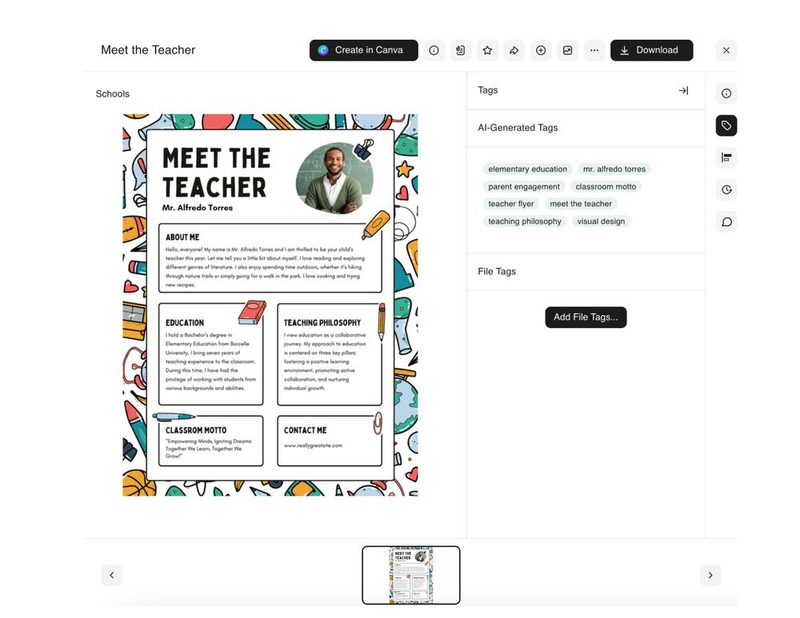
BrandLife automatically tags assets using AI, making it easier for teams to quickly locate the exact visuals they need. This reduces search time and keeps workflows efficient.
Slack and creative tool integrations for smoother collaboration
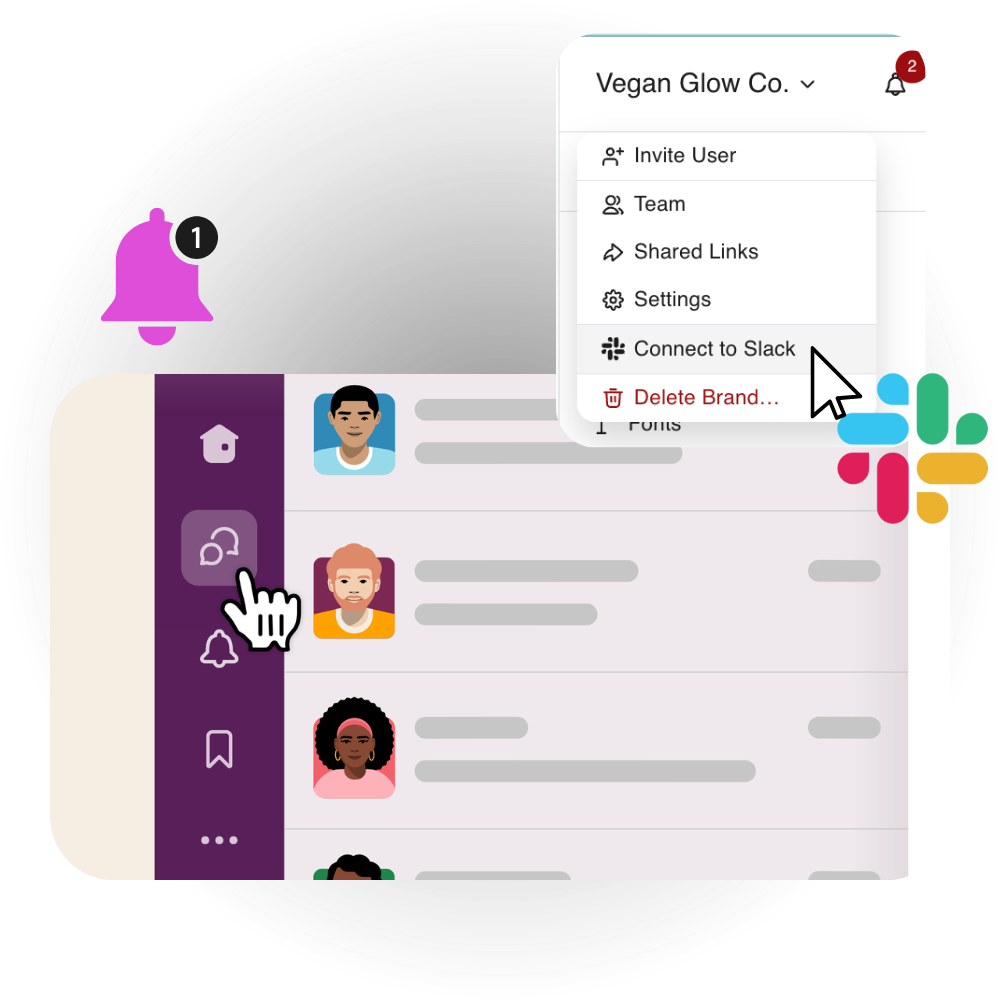
With integrations for Slack and popular creative tools, BrandLife allows teams to share updates, request approvals, and collaborate on assets without switching platforms.
In-built analytics
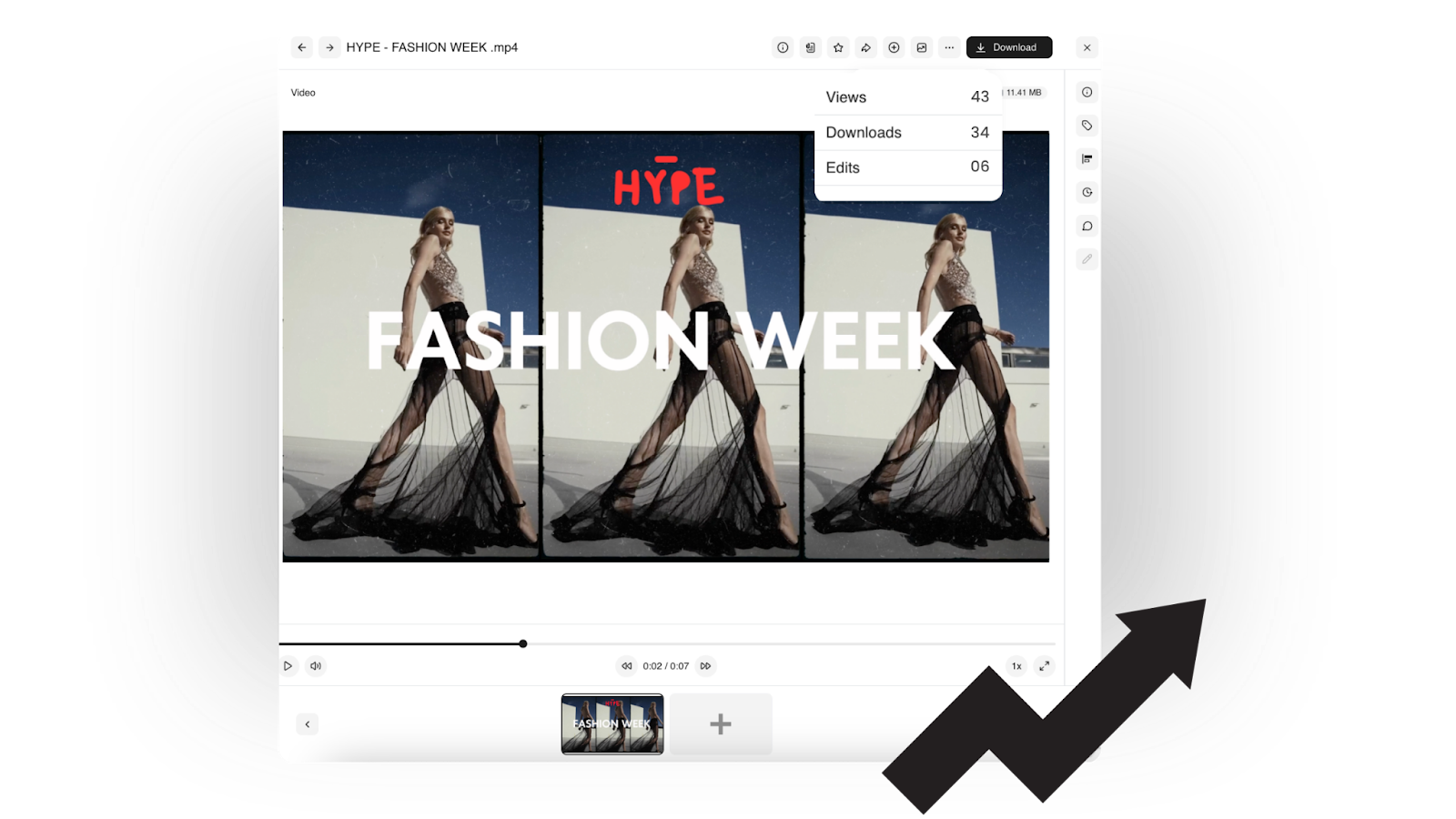
BrandLife’s analytics dashboard provides visibility into asset usage, performance trends, and team activity, helping brands understand how consistently their visuals are being applied.
If you want to build a cohesive, memorable, and scalable brand, BrandLife gives you the tools to maintain visual consistency across every channel and team—bringing clarity back to your brand system.Book a Demo