

Key Takeaways
Franchise brand management sits between central control and local freedom. HQ owns the brand. Franchisees run local marketing. Both need a shared, governed asset hub.
Shared drives and static PDF guidelines break at scale. The result is outdated logos and off-brand flyers, with creative teams buried in one-off requests.
The capabilities that matter most: a single source of truth and location-based permissions, plus locked templates with editable fields and brand guidelines that live next to assets.
Total cost hides in storage overage and per-seat scaling across hundreds of franchisees. Migration and change management add more. Budget for all four.
BrandLife combines a modern DAM with multi-brand workspaces and AI search. It adds interactive brand guidelines and unlimited free partner portals, so franchisees self-serve compliant assets and skip HQ bottlenecks.
A DAM (Digital Asset Management) built for franchises solves one specific failure mode: a regional franchisee grabbing last quarter's promo from a shared folder and running it in-store, weeks after the offer expired, with a logo that's two versions old. Multiply that across a large network, and the cost of weak brand governance gets clear fast.
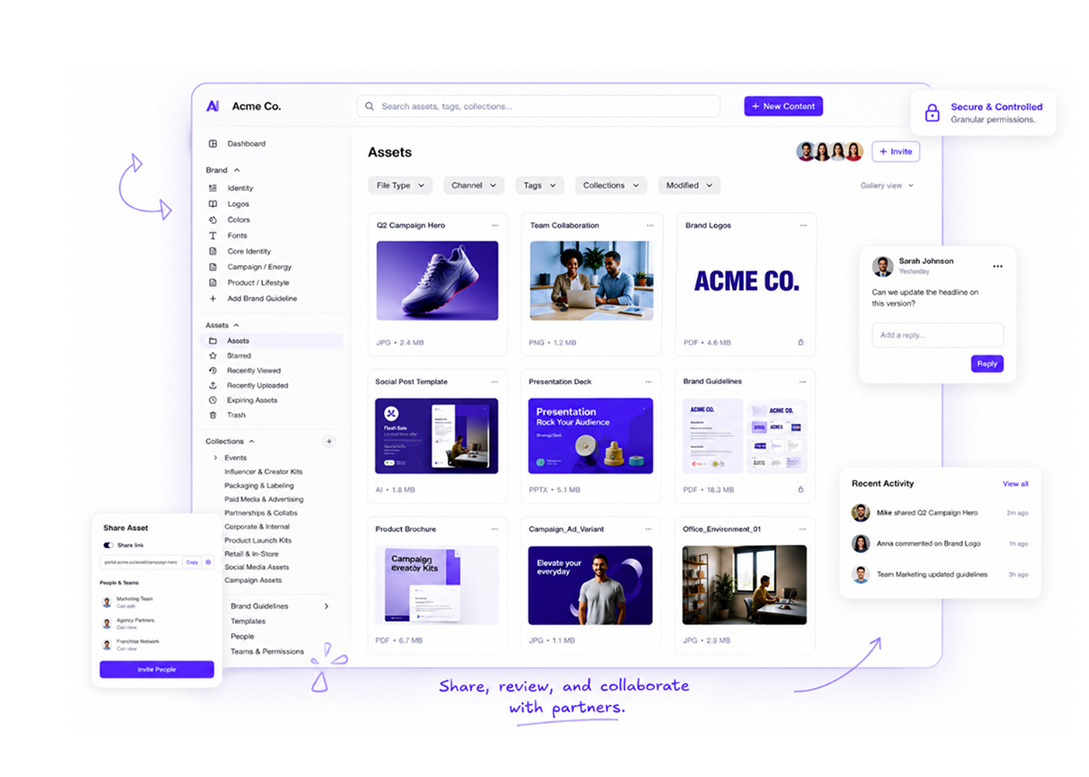
Local relevance drives revenue. Franchisees know their market and their customers, but off-brand execution at the edge erodes brand equity and creates real risk around expired offers and unapproved claims. That's the operating tension every franchise system lives with: brand consistency against local flexibility.
This guide covers the problem, where generic tooling falls short, the capabilities you should require, a practical implementation framework, and how BrandLife fits.
The Problem With Franchise Brand Management at Scale
Franchise brand management works best when HQ acts as the system designer and franchisees act as local executors inside clear guardrails, since a franchisee in Tampa wanting a Mother's Day flyer with a local discount by Friday shouldn't have to rebuild it from memory in Canva while central creative's queue backs up. Close is where brand equity leaks.
Digital asset management in franchising sits between central control and local freedom, giving franchisors governance while local teams move fast. Over-centralize, and franchisees route around you. Under-government, and local marketing dilutes the brand across every channel.
Who owns what between HQ and franchisees
Clarity on ownership removes friction before it starts:
-
HQ owns brand governance, approved assets, guidelines, and campaign rollout
-
Franchisees own local offers and community marketing, plus store hours and contact details inside the approved system
The brand ops leader sits in the middle and feels the pull from both directions, and when responsibilities blur, the tension lands on that desk as escalations and rework. A clear split, backed by tooling that enforces it, lets franchisees customize the parts they should while HQ protects the parts it must, a division Pica9's franchise guidance frames as the foundation of franchise brand management through DAM.
Challenges with shared drives and static PDFs
Shared drives lack the three controls a franchise network depends on most: permissions by location, expiration dates on retired promos, and templating to keep local edits in bounds. A folder will happily serve an expired flyer to any franchisee who finds it, and static PDF guidelines carry the same flaw. The moment they ship, they start going stale, and the version circulating in the field can differ from the one HQ updated last month. BrandLife customers report 40% less time searching and 70% fewer asset-request emails once assets live in one governed hub instead.
Where legacy enterprise DAMs get expensive
Legacy enterprise DAMs create a different trap. The license price is only the opening number, since seat-based pricing strains under hundreds of franchisees, where every named user adds cost, and extending access to agencies and regional printers adds more.
Onboarding can stretch while a vendor configures taxonomy and permissions, and franchise-specific templating can feel bolted onto a platform built for a single corporate marketing team. The International Franchise Association points to technology as a way to support brand consistency across locations, and the tooling has to fit the scale, not the other way around.
The Capabilities Franchise Brands Need
A franchise-ready DAM needs four things: one centralized asset library, location-based permissions, locked templates, and AI search with partner portals.
One centralized asset library
Logos, templates, and brand guidelines live together in one verified place, so every location pulls the same approved files instead of scrolling through folders named "final." Guidelines that live next to the assets stay current, unlike a PDF that ages the day it ships.
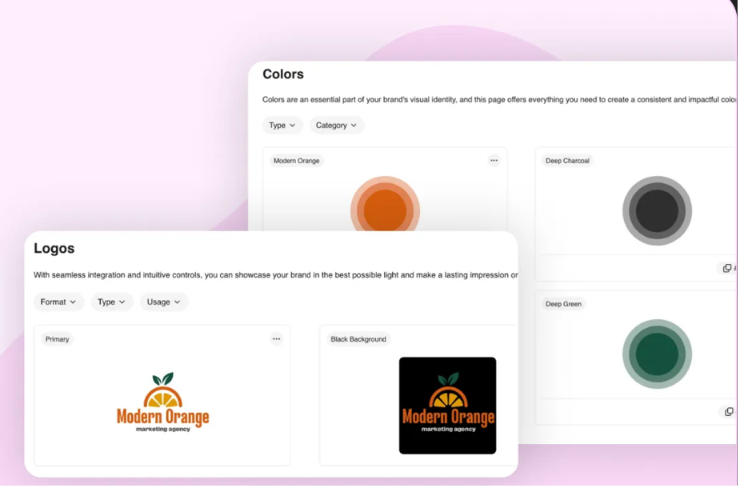
Location-based permissions
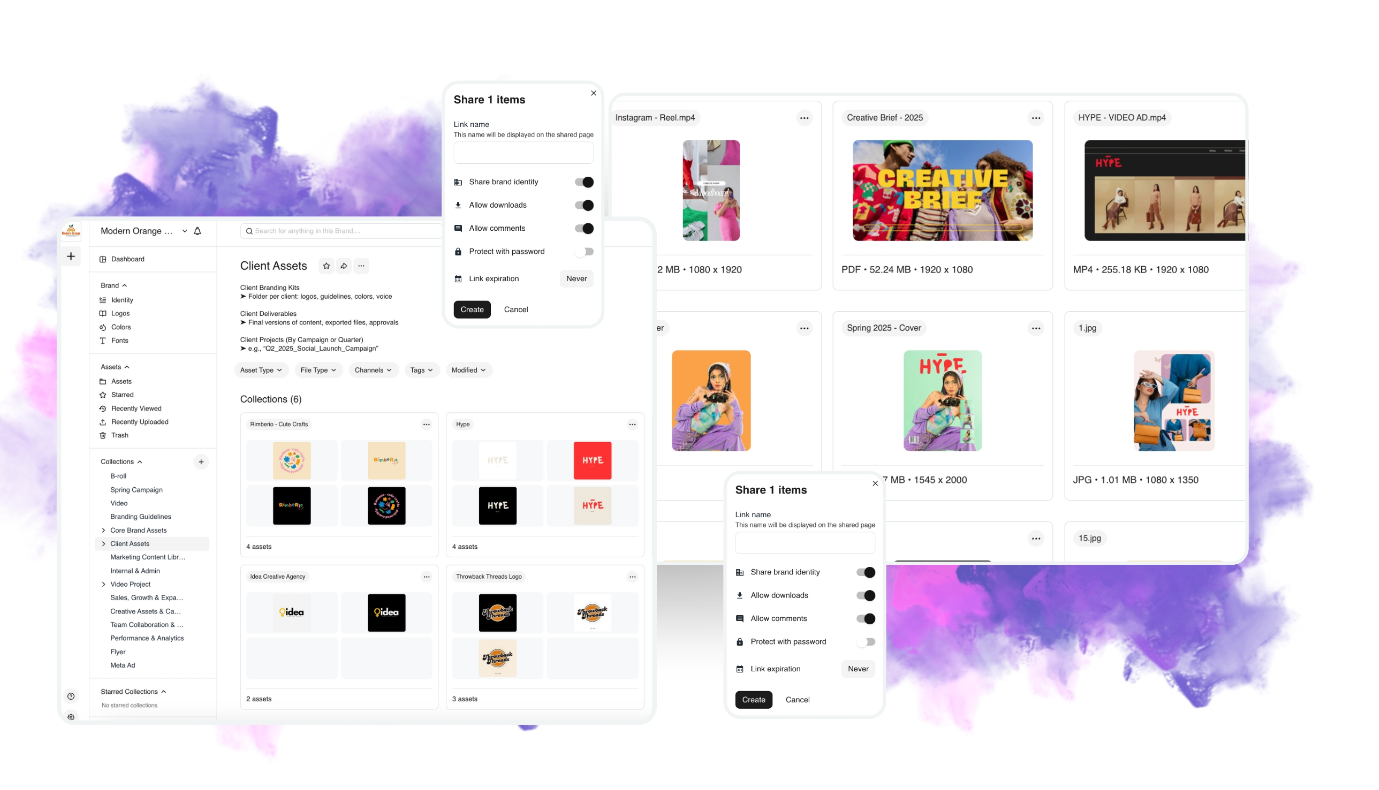
Permissions by region keep in-region offers in-region and lock sensitive files to the right roles. HQ, regional managers, and individual locations each see only what applies to them, with audit trails tracking who used what and when.
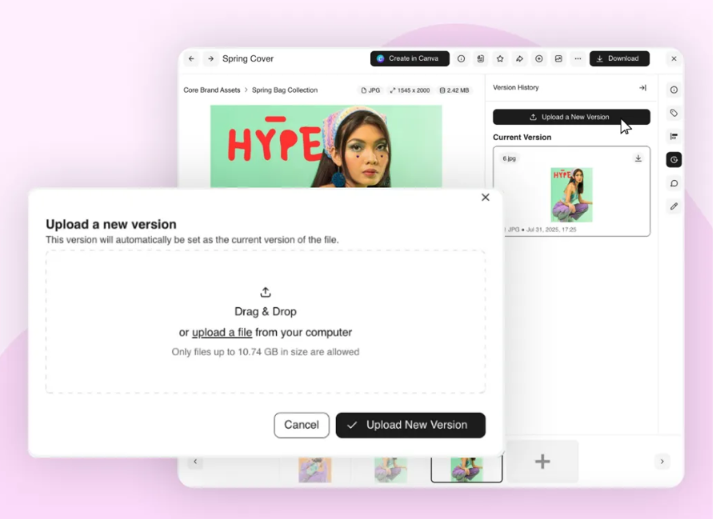
Locked templates with editable fields
Brand elements like logo and typography stay fixed, while fields like store name and local offer stay open. A franchisee fills in a few fields and downloads a compliant flyer in minutes, no designer required.
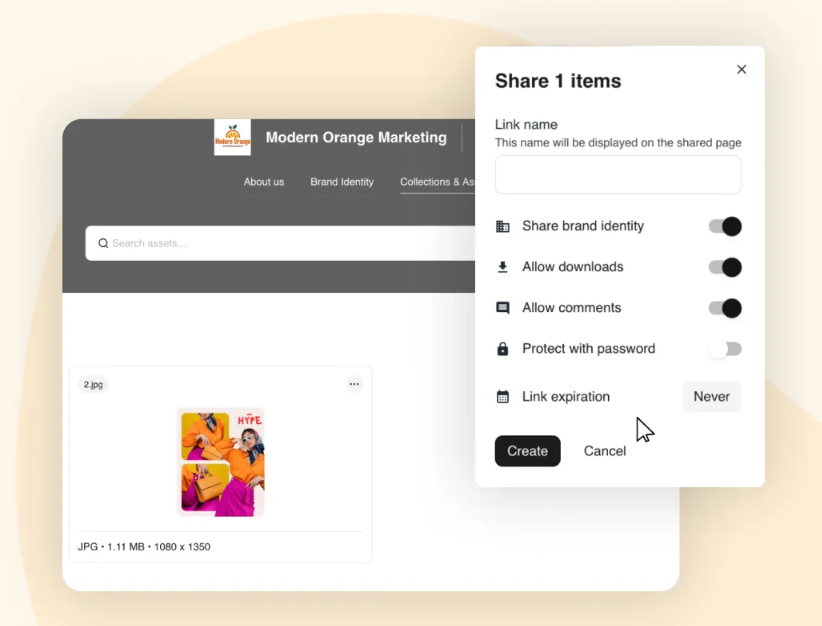
AI search and partner portals
AI tagging keeps a growing library searchable without manual metadata work. Curated portals give franchisees and partners secure, expiring access to only the assets they're approved to use, and asset expiration retires old promos automatically.
How to Implement DAM for Franchise Brand Management
Rolling out a DAM for a franchise network takes five steps, moving from audit to launch, since most franchise libraries carry years of duplicates and dead campaigns before anyone cleans house.
Centralize and audit your assets
Define a taxonomy and metadata plan built around brand and region, set naming conventions and tagging rules so files stay findable, then audit what you have and retire outdated creative. Assign one owner to the migration to keep it moving.
Move brand guidelines into the workspace
Static guidelines fail because a long PDF is easy to ignore. Embed usage rules and correct-versus-incorrect examples alongside the assets and templates, so franchisees can verify compliance right where they work.
Configure permissions by location and role
Set clear roles for HQ and regional teams, map individual locations and outside partners to their own views, and restrict assets by territory and validity date, so an offer expires on schedule. Add approval routing for localized assets that need review before they run.
Build templates and self-service workflows
Design locked templates for your most requested formats, like flyers and social posts, and limit editable fields to the local details a franchisee actually changes. Link each template to approved imagery and logos in the library, so franchisees can customize and download quickly.
Integrate, train, launch, and iterate
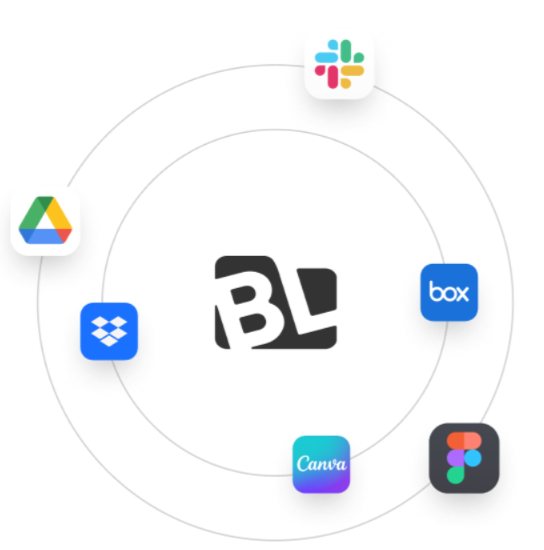
Connect the DAM to Canva and Figma for design work, then to Slack for updates, plus Google Drive, Dropbox, SharePoint, and OneDrive for file storage, and CMS or commerce systems if your workflow requires it. Train HQ and franchisees, then set feedback loops for missing templates and governance gaps. Budget for hidden costs before launch, including storage overage, migration, seat scaling, and change management.
An Avis Budget Group rollout, covering more than 100 storefronts across owned locations, agents, and franchises, shows how centralized assets plus templating let stores produce compliant creative in minutes instead of the roughly 30 minutes it previously took Head Office to develop and review each one.
How BrandLife Approaches Franchise Brand Management
A holding company running multiple restaurant concepts can keep each brand from bleeding into the next with multi-brand workspaces, where each brand gets its own workspace with a separate color palette, font library, and asset storage. Franchisees pull their own files without digging through another concept's folders, and unlimited free portals give every franchisee a curated, self-serve view with secure, expiring links. A QSR chain launching a summer promo works the same way: HQ publishes locked templates, each location fills in its address and local offer, and regional managers restrict offers to the territories where they apply, so a Southeast discount stays in the Southeast.
Outdated files cause most of the daily friction in franchise marketing, and a few features close that gap directly:
-
Living brand guidelines inside the workspace keep the version a franchisee sees matched to what HQ published
-
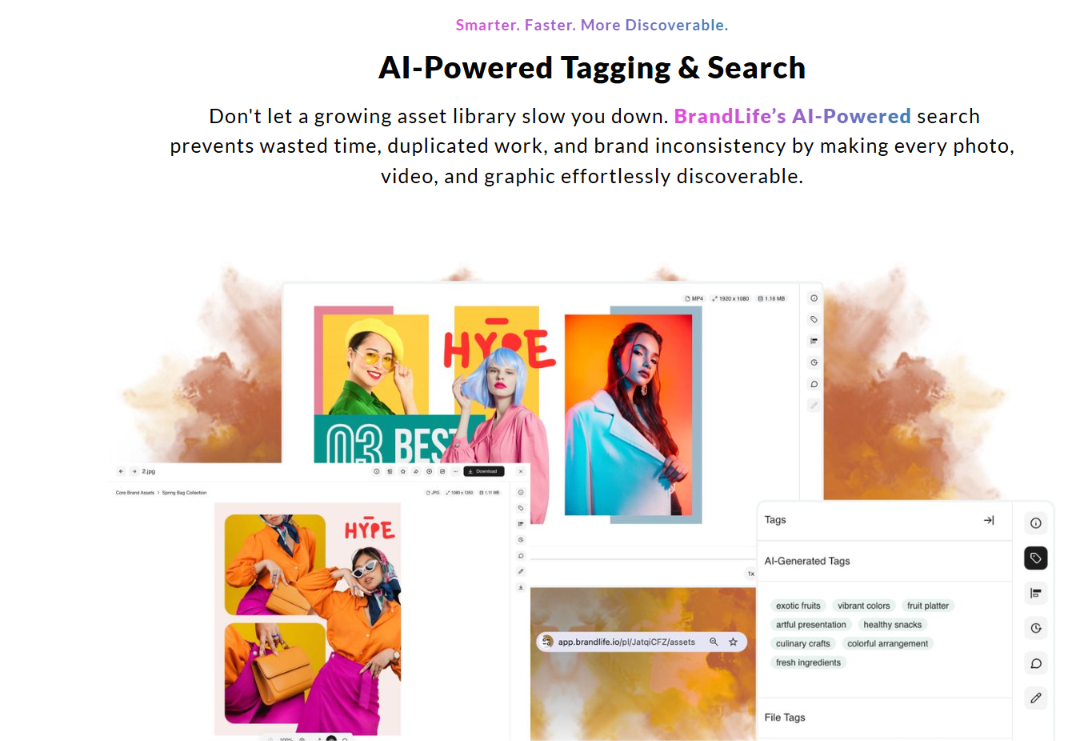
AI tagging and contextual search cut the metadata upkeep that slows most libraries
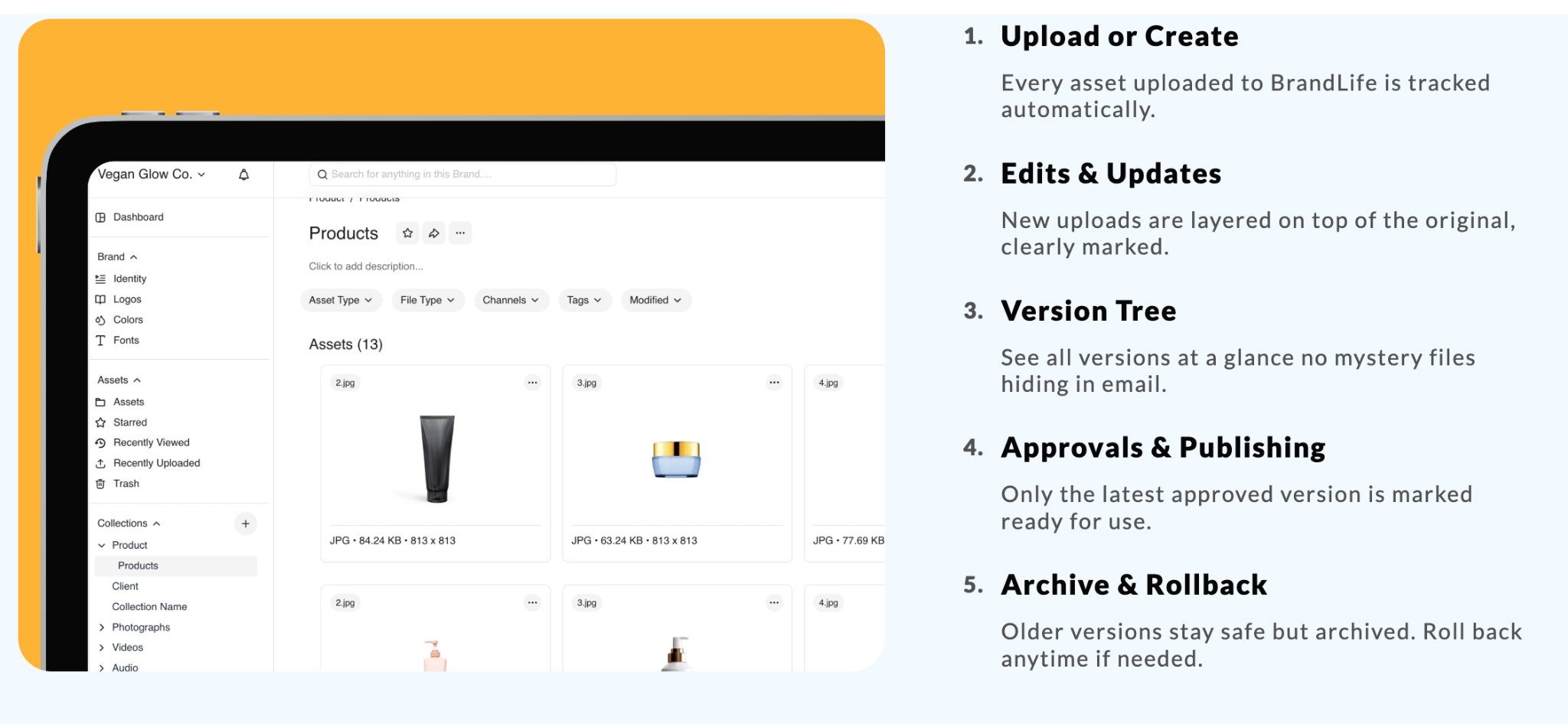
- Version history with restoration lets a wrong edit get rolled back quickly
-
Asset expiration retires a promo on schedule, so old offers stop circulating
-
The Capture Content Portal lets field photographers and franchise teams push assets straight into the DAM, arriving tagged, approved, and organized on ingest
The same setup extends to multi-concept operators and product-heavy teams: several brands can run in separate workspaces, agents and distributors see only their curated portals, and e-commerce assets organized by SKU and category let a regional retailer feed Shopify and Amazon listings from one governed source instead of scattered folders.
BrandLife customers report 40% less time searching, 70% fewer asset-request emails, 6+ hours saved weekly per creative, and campaigns launching 50% faster. Starter runs $150/month, covering 1 user and 1 brand with 1GB of storage, core DAM features, AI tagging, brand guidelines, and integrations.
Enterprise moves to custom pricing for unlimited users and unlimited brands, with marketplace add-ons covering Visual Search, Asset Expiration, SSO, Asset Watermarking, and Custom Roles & Permissions. For a network with hundreds of franchisees, pricing that scales with brands and usage fits better than seat-based licensing for every named user.
Franchise brand management works when a governed asset hub balances central control with local freedom, backed by permissions by location, templating that keeps edits in bounds, and guidelines that live where the work happens. The practical next step is straightforward: audit your current asset chaos, list your must-have capabilities, then model total cost across locations and storage before you commit. Book a demo with BrandLife to know more.

Frequently Asked Questions
How do franchises maintain brand consistency across locations?
Centralize approved assets in one verified library, embed interactive brand guidelines next to those assets, and apply location-based permissions to keep regional offers in-region. Give franchisees locked templates with editable fields for local details.
What is franchise brand management?
The goal is a consistent brand identity across every location while each franchisee runs effective local marketing. HQ protects the brand with guidelines and governance, and franchisees adapt within guardrails to fit their market.
How are marketing responsibilities split between HQ and franchisees?
HQ owns brand governance, approved assets, guidelines, and campaign rollout. Franchisees own local offers and store details inside the approved system. Tooling that enforces this split keeps escalations and rework off the brand ops leader's desk.
What should a franchise look for in a DAM?
Prioritize a single source of truth with templates included, role-based permissions by location, and interactive brand guidelines that replace static PDFs. Confirm AI search and pricing that scales with brands, not named users.
How much does a franchise DAM cost?
BrandLife Starter runs $150/month for 1 user and 1 brand, with Enterprise custom-priced for unlimited users and brands. Budget separately for storage overage, per-seat scaling, migration, and change management across your location count.