

Understanding SaaS DAM: Benefits, Use Cases & Real-World Examples

Key Takeaways

SaaS DAM eliminates asset chaos by centralizing files, enforcing version control, and making assets instantly searchable.

Cloud-native infrastructure enables scalability and flexibility, removing the need for on-premise servers or IT-heavy maintenance.

Organizations across industries benefit, especially marketing teams, agencies, universities, and distributed enterprises managing high content volume.

AI-powered search, workflow automation, and integrations drive real productivity gains, accelerating campaign launches and reducing duplication.

Successful adoption depends on structured implementation and training, not just choosing the right platform.

It's 9:47 AM on a Monday, and a marketing manager is tearing through a shared drive looking for the updated version of a product logo. There are six files with nearly identical names—"logo_final," "logo_FINAL_v2," "logo_use_this_one"—and none of them match what's on the website. Meanwhile, a designer in another time zone just sent a campaign asset that was already rejected last week, because nobody told them.

This isn't a rare catastrophe. It's Tuesday. It's every Tuesday. Across industries, teams are losing hours—sometimes entire days—to the quiet chaos of unmanaged digital assets. Files buried in email threads, outdated brand materials circulating unchecked, and approval processes that feel like shouting into the void. The cost isn't always visible on a spreadsheet, but it compounds with every missed deadline and every off-brand deliverable that slips through the cracks.

SaaS-based Digital Asset Management changes this equation entirely. Instead of scattered files and tribal knowledge about "where things live," organizations gain a single, cloud-native system where every asset is instantly findable, version-controlled, and governed by clear permissions. Collaboration happens in real time. Approvals move through structured workflows instead of reply-all chains. Scaling content across channels stops being a logistical nightmare and starts being a strategic advantage.

What makes SaaS DAM different from the clunky, on-premise systems of the past isn't just the technology—it's the accessibility. No servers to maintain, no six-month implementation timelines, no IT bottleneck every time someone needs access. For the organizations that have made the switch, the before-and-after contrast is stark. For those still navigating the folder chaos, this guide breaks down what SaaS DAM actually is, who benefits most, and what real-world success looks like.

What is SaaS DAM and Why It Matters

If you've ever lost a key file in a maze of folders, you already know why digital asset management matters.

SaaS DAM—Software as a Service Digital Asset Management—is a cloud-hosted platform that centralizes an organization's digital files: images, videos, documents, brand guidelines, templates, and more. Unlike legacy DAM systems that required on-premise servers, dedicated IT staff, and painful upgrade cycles, SaaS DAM operates entirely in the cloud. Users access it through a browser, updates roll out automatically, and the infrastructure scales without anyone racking a new server. The shift mirrors what happened with CRM and project management tools a decade ago—once teams experienced the flexibility of cloud-native software, going back to installed systems felt like returning to fax machines.

That shift hasn't happened in a vacuum. The explosion of remote and hybrid work means teams can no longer walk down the hall to ask where a file is stored. Multi-channel marketing demands that brands produce and distribute more content than ever—across social platforms, websites, email campaigns, print, and partner networks—often simultaneously. Speed-to-market pressures have intensified, and the organizations still relying on shared drives and ad hoc naming conventions are the ones watching competitors launch faster. SaaS DAM addresses all of this by making asset retrieval near-instant, enabling real-time collaboration regardless of location, and providing the governance structures that keep brand consistency intact even as output scales.

In practice, SaaS DAM isn't a tool that sits off to the side of daily work—it becomes the connective tissue between creative production, marketing execution, and brand management. Teams pull assets directly into their design tools, their CMS, their social schedulers. It's woven into how work actually gets done, which is precisely why its adoption has accelerated so dramatically.

For a deeper exploration of the fundamentals, digital asset management as a discipline continues to evolve alongside these platforms.

Key Advantages of SaaS DAM for Modern Businesses

Before SaaS DAM, "managing assets" often meant someone on the team had memorized where things were stored—and when that person went on vacation, everything ground to a halt. After adoption, the transformation isn't subtle. It shows up in faster campaign launches, fewer brand mishaps, and budgets that stop hemorrhaging money on recreating assets that already exist somewhere in the void.

Streamlined Asset Management

The most immediate change teams notice is retrieval speed. Instead of scrolling through nested folders or pinging three colleagues to find the right version of a file, users search by keyword, tag, file type, or even color palette—and the asset appears in seconds. Metadata does the heavy lifting, which means even a new hire on their first day can locate what they need without institutional knowledge.

The financial impact compounds quickly. Organizations that implement DAM effectively see dramatic reductions in duplicated work—teams stop recreating assets that already exist simply because they couldn't find them. Digital asset management software delivers a 310 percent return on investment when accounting for time savings, reduced duplication, and eliminated recreation costs. That's not a marginal improvement; it's a fundamental shift in how creative resources get allocated.

Explore how a well-structured media library software solution can anchor this kind of streamlined experience.

Enhanced Collaboration and Workflow Efficiency

When a designer in Berlin uploads a finished asset, a marketer in Chicago can immediately pull it into a campaign brief, and a compliance officer in London can review and approve it—all within the same platform. SaaS DAM eliminates the version-control nightmares that plague teams relying on email attachments and local file copies. Structured approval workflows replace the chaos of "Did anyone sign off on this?" with clear audit trails.

The efficiency gains aren't limited to creative teams. Sales enablement, HR, legal, and partner teams all benefit from having a single source of truth for approved materials. When everyone accesses the same library with the same permissions framework, the back-and-forth that used to consume entire afternoons simply disappears.

Cost-Effective and Scalable Solutions

Legacy DAM systems came with hefty upfront costs—server hardware, license fees, implementation consultants, ongoing maintenance contracts. SaaS DAM flips this model entirely. Subscription-based pricing means organizations pay for what they use, scale up as their asset libraries grow, and avoid the capital expenditure that made traditional DAM accessible only to enterprises with deep pockets.

The return on that subscription investment is striking. SaaS DAM systems deliver ROI between 8:1 and 14:1, meaning every dollar invested generates eight to fourteen dollars in measurable value. For mid-market companies especially, that ratio transforms DAM from a "nice-to-have" into a strategic no-brainer.

Consider a mid-size consumer brand preparing for a product launch across twelve markets. Without SaaS DAM, the localization team manually distributes assets via file-sharing links, version conflicts emerge within days, and the launch timeline slips by two weeks. With SaaS DAM, localized assets are tagged, routed through approval workflows, and distributed to regional teams from a single hub—cutting campaign launch time from six weeks to four. That kind of acceleration isn't theoretical. It's what happens when asset logistics stop being a bottleneck.

Who Benefits Most from SaaS DAM Solutions?

Not every team faces the same flavor of asset chaos. A ten-person startup with one product line faces different challenges than a university system managing decades of institutional media. But for certain organizations, the gap between "managing assets informally" and "managing them with purpose" is the gap between falling behind and scaling effectively.

Key Industries and Roles

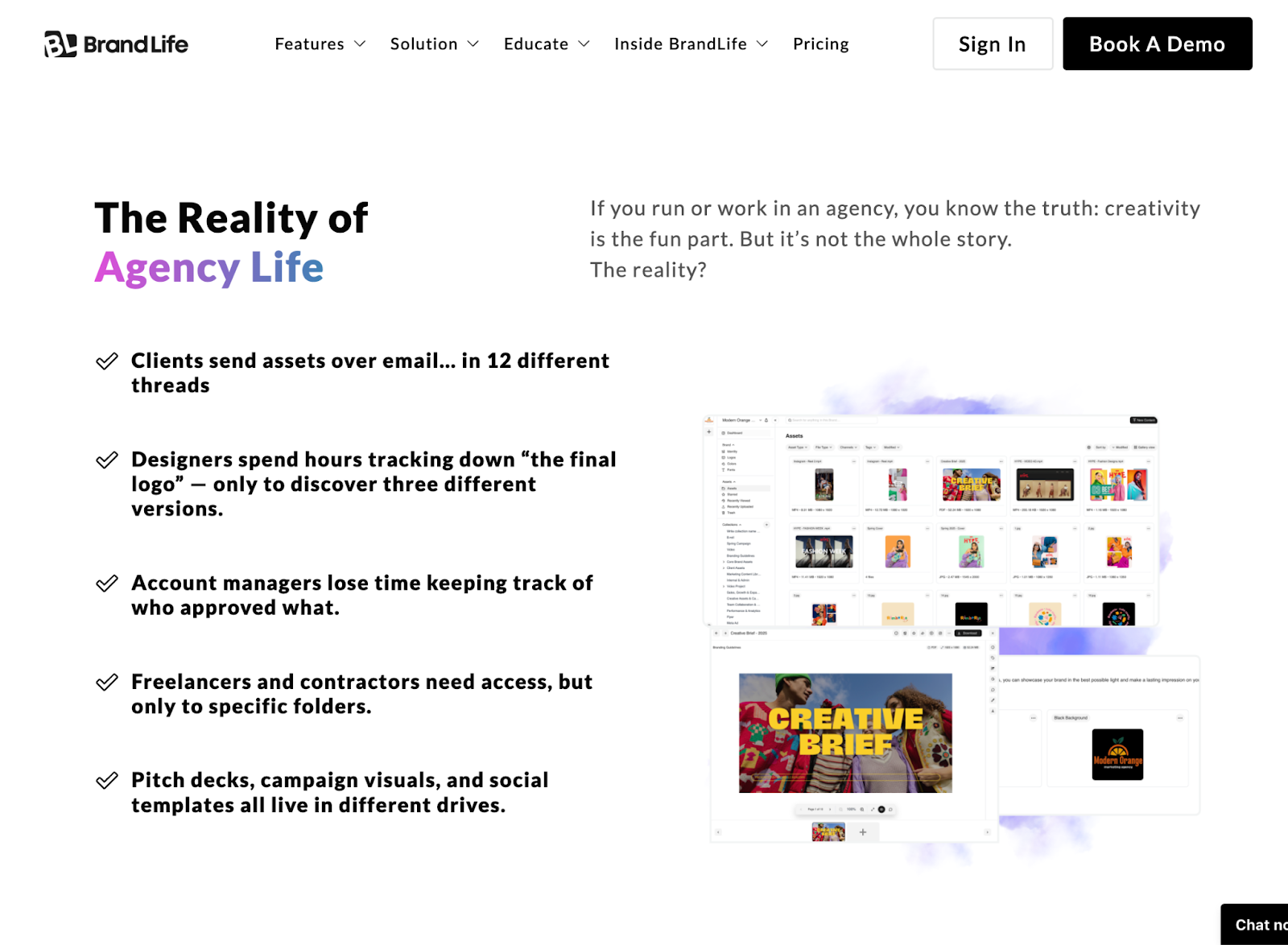
Marketing and brand teams sit at the epicenter of asset overload. They produce the most content, distribute it across the most channels, and bear the highest cost when brand inconsistency slips through. SaaS DAM gives them control without slowing them down.

Creative agencies juggle assets across multiple clients simultaneously. When a single designer might touch five different brand libraries in a day, centralized access with client-specific permissions isn't a luxury—it's operational survival.
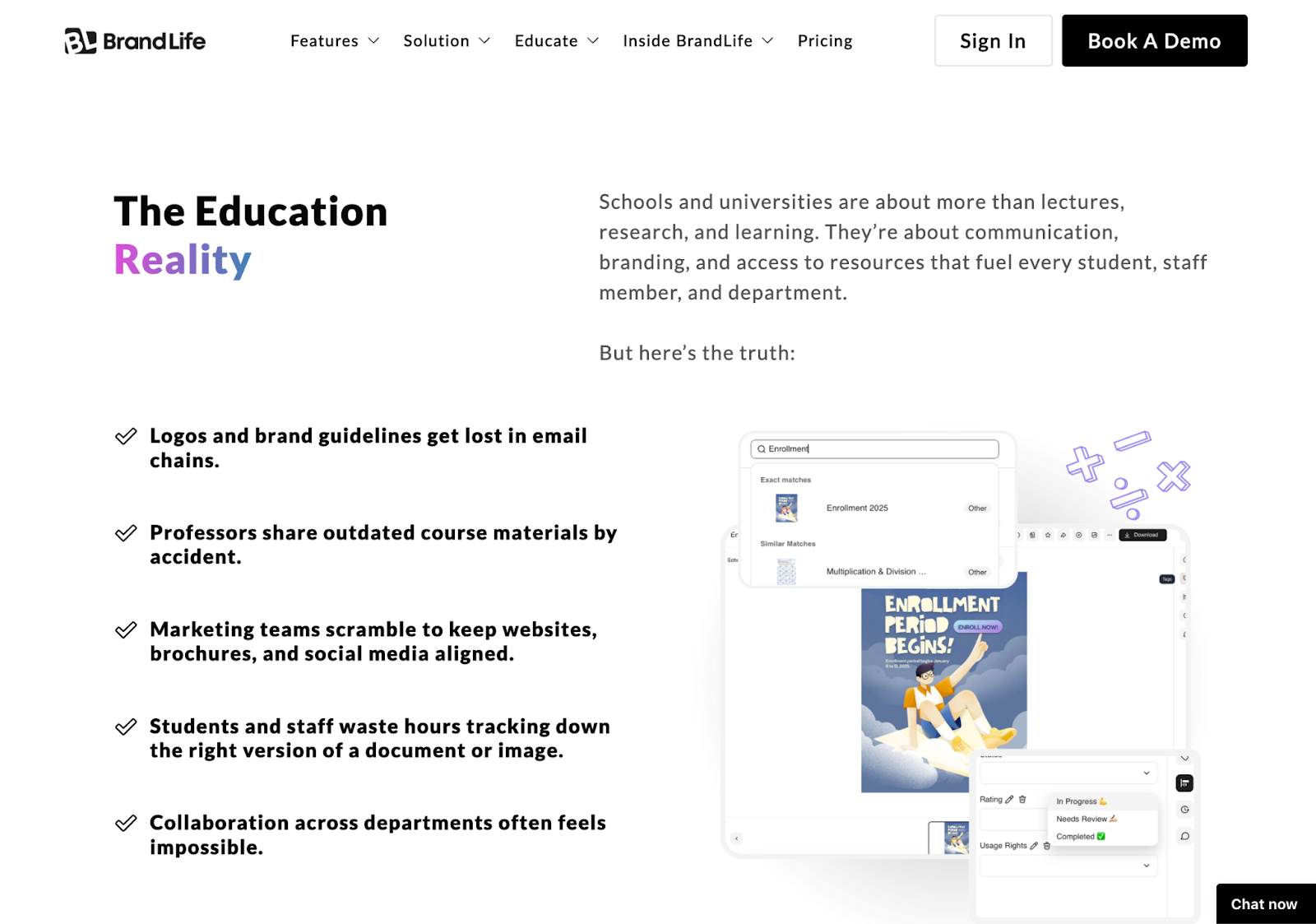
Educational institutions manage sprawling collections of multimedia content, from lecture recordings to recruitment materials to research archives. Their challenge is often scale combined with decentralized teams who don't share common file structures.

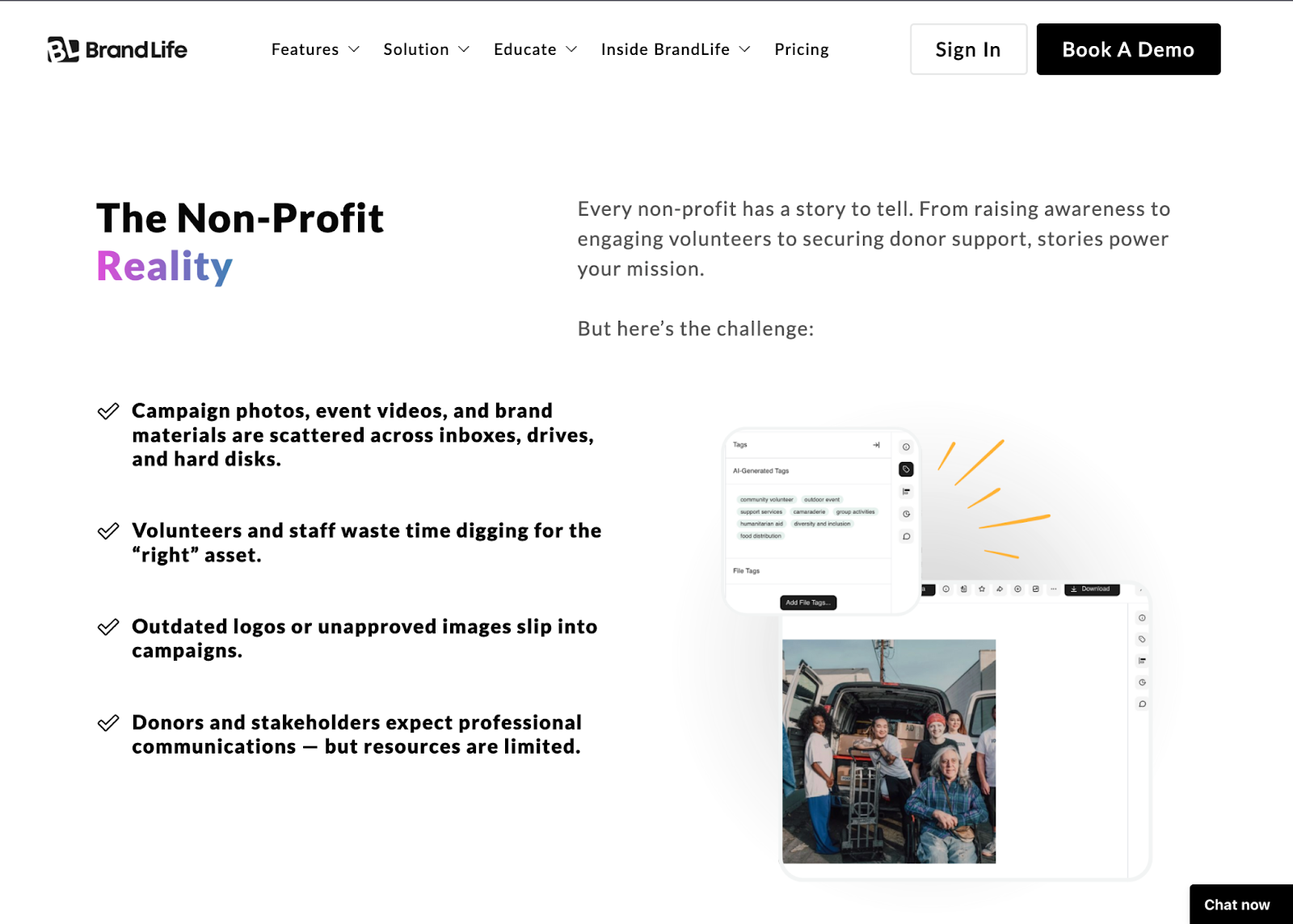
Non-profits and advocacy organizations frequently operate with lean teams and distributed volunteers, making it critical that approved materials are accessible without requiring IT support or institutional memory to locate them.
Marketing Teams and Creative Professionals

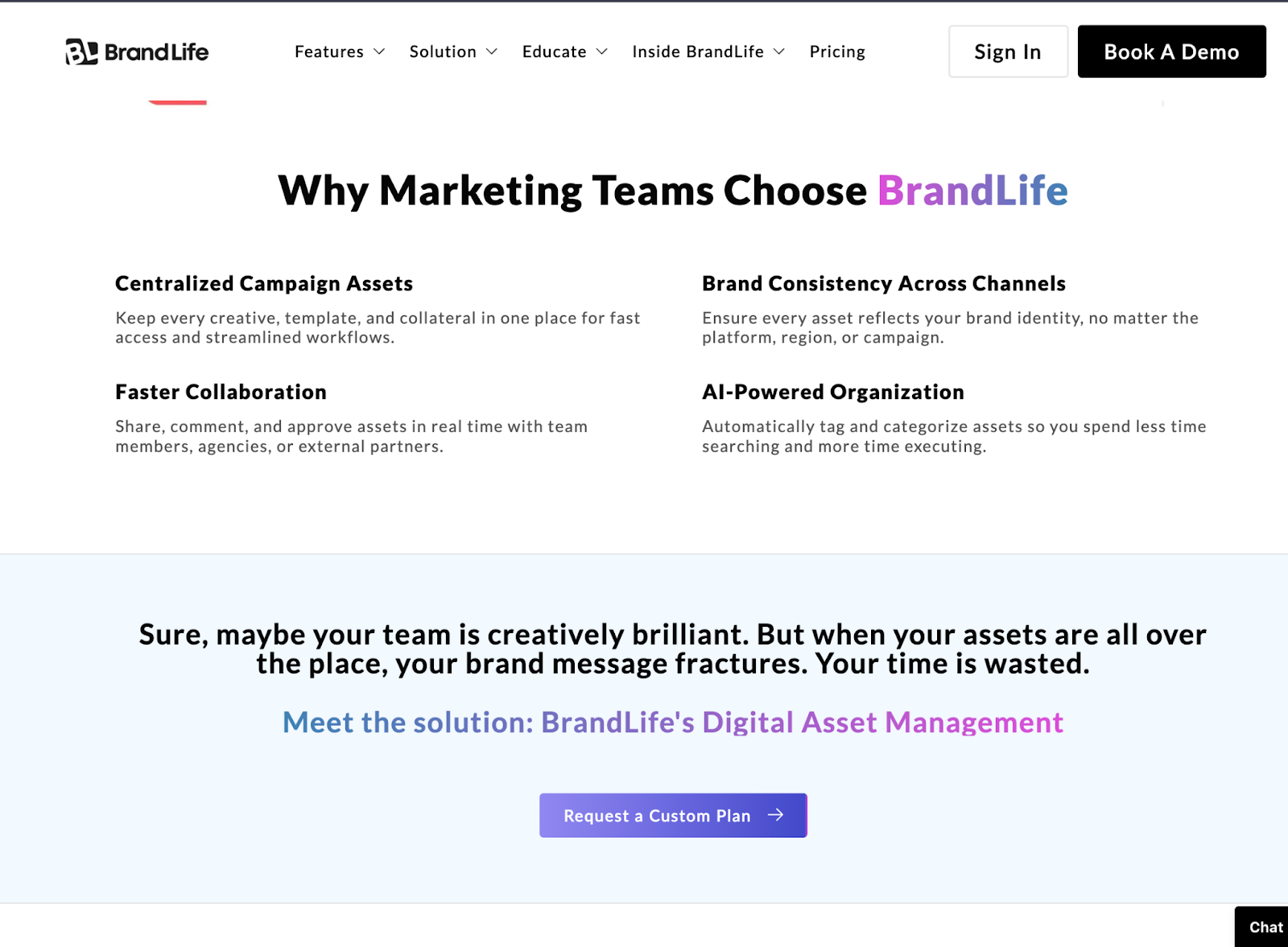
For marketing teams, the stakes of asset mismanagement go beyond wasted time—they show up in brand dilution. When a regional office uses an outdated logo or an unauthorized color palette, the damage is subtle but cumulative. SaaS DAM enforces brand consistency at the point of access: only current, approved assets are available, and outdated versions are archived automatically.
Campaign agility improves just as dramatically. When a social media manager can search for "Q4 holiday campaign—Instagram Stories" and immediately find the approved creative in the correct dimensions, the time from concept to publish shrinks from days to hours. Multiply that across dozens of campaigns per quarter, and the productivity gain is substantial.

Educational Institutions and Non-Profits

Universities and non-profits share a common challenge: distributed teams with varying levels of technical sophistication who all need access to the same materials. A development officer preparing a donor presentation shouldn't need to email the communications team for approved photos. A professor creating course materials shouldn't be guessing which version of a departmental template is current.
SaaS DAM solves this by providing role-based access that's simple enough for non-technical users while maintaining the governance that compliance and communications teams require. The adoption trend reflects this need—over 70 percent of organizations transitioned from traditional file management systems to dedicated DAM platforms in 2024, a shift driven in part by sectors that historically relied on informal systems finally recognizing their limitations.

A university communications director can tag assets by department, campaign, and usage rights, ensuring that when the admissions team needs photos for a viewbook, they're pulling from a curated, approved set—not a random folder on someone's desktop. A non-profit campaign manager can distribute donor-facing materials to fifty chapter offices simultaneously, knowing every team is working from the same playbook.

For organizations looking to unify brand management across distributed teams, brand management software provides the structural foundation that makes this kind of coordination possible.

Essential Features of a Robust SaaS DAM Platform

Not all DAM platforms are created equal, and the features that separate a basic file repository from a genuinely transformative system are the ones that determine whether teams actually adopt the tool—or quietly revert to their old shared drive habits within three months.

AI-Powered Tagging and Advanced Search

Manual tagging is where good intentions go to die. Someone uploads 200 photos from a brand shoot, tags the first fifty diligently, and abandons the rest because lunch happened. AI-powered auto-tagging changes this dynamic entirely—assets are analyzed on upload, tagged with relevant descriptors, and made searchable without relying on human consistency.

Advanced search capabilities build on this foundation. When a user can search not just by file name but by visual content, color, embedded text, or custom metadata fields, the platform becomes genuinely intuitive. The difference between "I think someone uploaded that somewhere" and "found it in three seconds" is the difference between a tool people tolerate and one they actually rely on.

Secure and Customizable Access Controls

The moment an organization stores assets centrally, security becomes non-negotiable. Granular permissions ensure that an external agency partner sees only the assets relevant to their project, while internal teams get broader access. Role-based controls mean a junior designer can download approved templates but can't delete or overwrite master files.

For industries with regulatory requirements—healthcare, finance, education—customizable access controls aren't just a feature; they're a compliance mechanism. Audit trails track who accessed what, when, and what they did with it. In an era where data governance is increasingly scrutinized, this level of control separates enterprise-ready platforms from glorified file-sharing tools.

Other Essential Features

Integrations determine whether a DAM platform enhances existing workflows or creates a new silo. The best SaaS DAM solutions connect natively with creative tools like Adobe Creative Cloud, content management systems, social media schedulers, and project management platforms. If teams have to manually download and re-upload assets between systems, adoption suffers.

Version control eliminates the "final_FINAL_v3" problem entirely. Every iteration is tracked, previous versions are accessible, and the current approved version is always clearly marked. Teams stop second-guessing whether they're working with the latest file.

Analytics and reporting reveal which assets are actually being used—and which are gathering digital dust. This insight helps teams make smarter decisions about what to produce next, where to invest creative resources, and which assets to retire. Data-driven asset management beats gut instinct every time.

For a comprehensive look at what to prioritize when evaluating platforms, this complete guide to digital asset management covers the landscape in detail.

Real-World Examples of SaaS DAM in Action

Theory only goes so far. The real proof of SaaS DAM's value emerges when you look at organizations that were drowning in asset chaos—and how the right platform pulled them out.

Case Study: Five Guys' Reliable Asset Access

Five Guys, the fast-casual restaurant chain with over 1,700 locations worldwide, faced a challenge that will sound familiar to any multi-location brand: ensuring that every franchise had instant, reliable access to current marketing materials, menu assets, and brand guidelines. Before implementing a SaaS DAM solution, the process involved a tangle of email requests, FTP servers, and delays that meant some locations were running promotions with outdated creative.

After deploying a centralized DAM platform, Five Guys gave every location self-service access to approved assets—organized by campaign, asset type, and region. The result wasn't just faster access; it was brand consistency at scale. Franchise operators stopped improvising with whatever files they had on hand, because the right materials were always one search away. For a brand built on consistency, that operational shift was as important as any menu innovation.

Case Study: RAI Amsterdam's Cost Efficiency

RAI Amsterdam, one of Europe's largest convention and exhibition centers, manages a staggering volume of event-related assets—photos, floor plans, promotional materials, partner logos, and archival content spanning decades of events. The cost of managing this library through fragmented systems wasn't just financial; it was measured in staff hours spent searching, recreating, and manually distributing files to partners and vendors.

Implementing a SaaS DAM platform consolidated RAI Amsterdam's assets into a single, searchable hub. Staff time previously spent on asset retrieval was redirected to higher-value work. The efficiency gains echoed what other large organizations have experienced—Hachette Book Group, for instance, reduced task time significantly through SaaS DAM adoption, proving that the impact scales across industries and use cases.

The Broader Takeaway

What connects these stories isn't the specific industry—it's the pattern. Organizations reach a tipping point where informal asset management can no longer support their scale, speed, or quality requirements. SaaS DAM doesn't just solve the immediate pain of "I can't find the file." It creates a structural advantage: faster execution, stronger brand governance, and the kind of operational clarity that compounds over months and years. The organizations that act on this early don't just catch up—they pull ahead.

Transitioning to SaaS DAM: Best Practices

Choosing the right SaaS DAM platform is only half the equation. The other half—often the harder half—is managing the transition itself. Technology without adoption is just an expense.

The organizations that succeed with SaaS DAM implementation tend to follow a deliberate sequence rather than treating it as a one-day switch-flip:

  • Audit existing assets and workflows. Before migrating anything, map out where assets currently live, who uses them, and what's broken. This isn't glamorous work, but it reveals the actual pain points—not the assumed ones. Teams often discover they have three times more assets than they thought, scattered across twice as many locations.
  • Define clear goals and success metrics. "Better asset management" is too vague. Specific targets—reducing average asset retrieval time from fifteen minutes to under one minute, or cutting asset recreation by 40 percent within six months—give the project accountability and make ROI measurable.
  • Involve stakeholders early. DAM touches every team that produces or consumes content. If the marketing team selects a platform without input from sales, legal, or creative, adoption will stall the moment those teams encounter friction. Early involvement creates buy-in and surfaces requirements that one department alone would miss.
  • Prioritize training and onboarding. Even the most intuitive platform requires orientation. Dedicate time to role-specific training—a designer's workflow differs from a brand manager's—and provide quick-reference guides that people will actually use. The first thirty days of adoption determine whether the tool sticks.
  • Plan for phased rollout and feedback loops. Launching to the entire organization simultaneously invites chaos. Start with a pilot team, collect feedback, refine taxonomy and workflows, and then expand. Each phase builds institutional knowledge that makes the next rollout smoother.

The most common pitfall? Treating DAM implementation as a technology project rather than a change management initiative. The platform itself is rarely the problem—resistance comes from unclear communication, insufficient training, and failing to demonstrate early wins that justify the change.

Organizations that navigate this transition successfully share one trait: they choose a platform partner that supports the journey, not just the software. That consideration is worth examining more closely.

Why BrandLife is the Ideal SaaS DAM Solution

After weighing the benefits, features, and implementation realities of SaaS DAM, the question becomes practical: which platform delivers on these promises without creating new headaches?
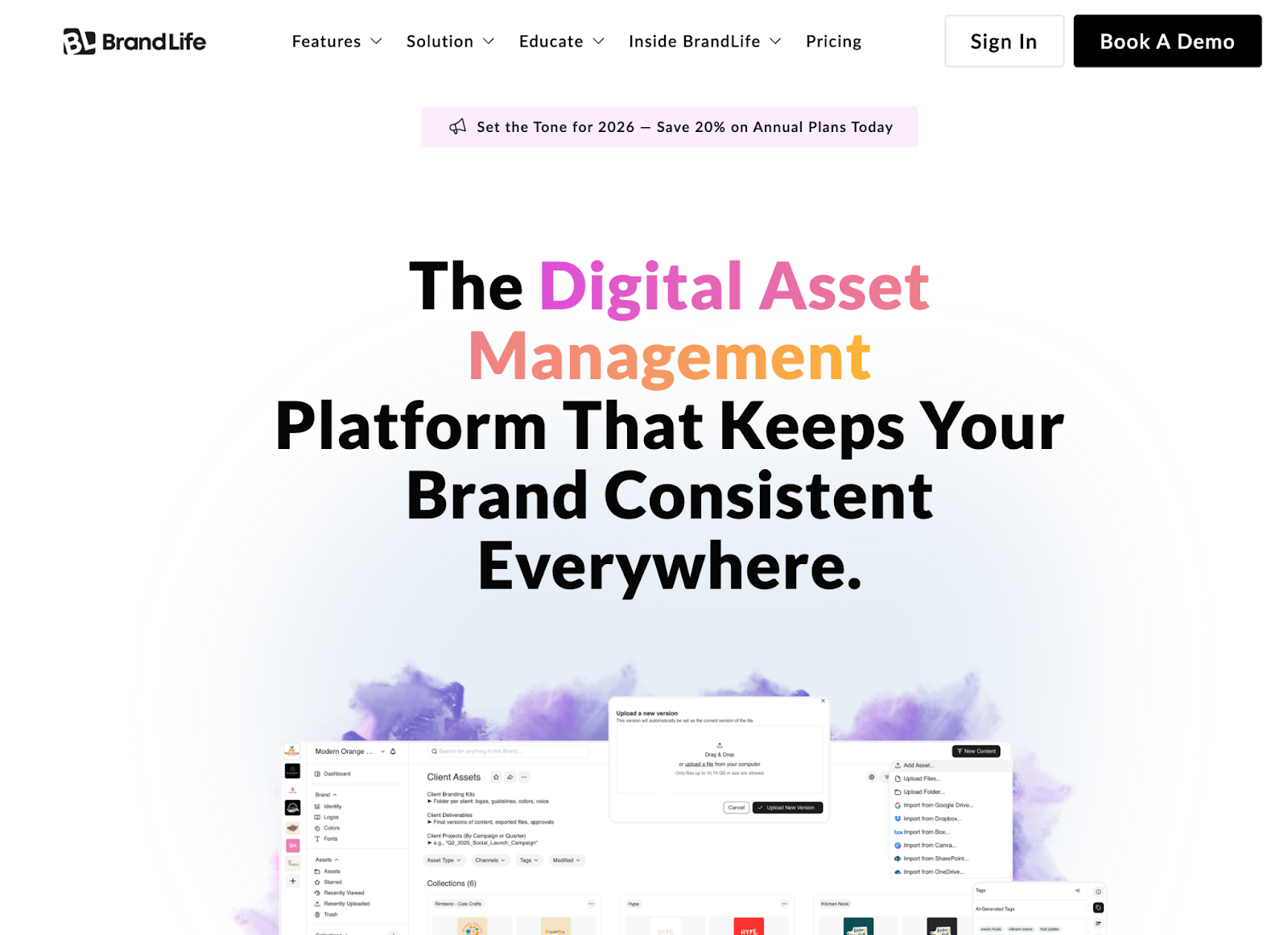
BrandLife has built its SaaS DAM platform around the friction points that cause most implementations to underperform. Unlimited users come standard—because DAM adoption shouldn't be throttled by per-seat pricing that forces organizations to choose who gets access. AI-powered tagging and intelligent search ensure that assets are findable from day one, not just after someone manually catalogs the entire library. Transparent, published pricing eliminates the budget ambiguity that makes procurement teams nervous. And native integrations with the tools teams already use—design software, content management systems, social platforms—mean BrandLife fits into existing workflows rather than demanding that workflows bend around it.

What these features translate to in practice is a platform that scales without penalizing growth. A fifty-person marketing team and a five-hundred-person global organization can run on the same infrastructure, with the same feature set, without hitting artificial ceilings. BrandLife's approach to accessibility—making enterprise-grade capabilities available without enterprise-grade complexity—positions it as a solution built for how modern teams actually work: distributed, fast-moving, and intolerant of tools that slow them down.

For organizations ready to move past folder chaos and into structured, scalable asset management, exploring what BrandLife offers is the logical next step. Start Free Trial


Frequently Asked Questions

What is SaaS DAM?

SaaS DAM (Software as a Service Digital Asset Management) is a cloud-based platform that centralizes, organizes, and manages digital assets such as images, videos, documents, and brand materials. It allows teams to access and collaborate on assets in real time through a web browser.

How is SaaS DAM different from traditional DAM systems?

 Traditional DAM systems require on-premise servers, manual upgrades, and heavy IT involvement. SaaS DAM operates in the cloud, offers automatic updates, faster deployment, and scalable infrastructure without hardware maintenance.

Who should use a SaaS DAM platform?

Marketing teams, creative agencies, educational institutions, non-profits, retail brands, and multi-location organizations benefit most from SaaS DAM—especially those managing large volumes of digital content across distributed teams.

What are the key benefits of SaaS DAM?

 SaaS DAM improves asset retrieval speed, ensures brand consistency, reduces duplicate work, streamlines approvals, enhances collaboration, and delivers measurable ROI through operational efficiency.

Does SaaS DAM improve ROI?

Yes. Studies show SaaS DAM can deliver ROI between 8:1 and 14:1 by reducing time spent searching for assets, minimizing recreation costs, and accelerating campaign execution.

What features should I look for in a SaaS DAM platform?

Essential features include AI-powered tagging, advanced search, version control, role-based permissions, workflow automation, analytics, and integrations with creative and marketing tools.

Is SaaS DAM secure?

Modern SaaS DAM platforms offer enterprise-grade security, customizable permissions, audit trails, and compliance-ready controls to protect sensitive digital assets.

How long does it take to implement SaaS DAM?

 Unlike traditional DAM systems that can take months, SaaS DAM implementations are typically faster and can be rolled out in phases over a few weeks, depending on asset volume and organizational complexity.

Related

See more
Preserving Digital Assets: Best Practices for Long-Term Storage

Preserving Digital Assets: Best Practices for Long-Term Storage

Digital Asset Management Library: A Comprehensive Guide

Digital Asset Management Library: A Comprehensive Guide

Frontify Pricing Guide: Find Better Alternatives

Frontify Pricing Guide: Find Better Alternatives

Ready to make your brand unstoppable?

Try it free or request a quote. Let’s build your brand’s next.

Understanding SaaS DAM: Benefits, Use Cases & Real-World Examples

Start Free TrialDownload Free PDF
Understanding SaaS DAM: Benefits, Use Cases & Real-World Examples

Key Takeways

SaaS DAM eliminates asset chaos by centralizing files, enforcing version control, and making assets instantly searchable.

Cloud-native infrastructure enables scalability and flexibility, removing the need for on-premise servers or IT-heavy maintenance.

Organizations across industries benefit, especially marketing teams, agencies, universities, and distributed enterprises managing high content volume.

AI-powered search, workflow automation, and integrations drive real productivity gains, accelerating campaign launches and reducing duplication.

Successful adoption depends on structured implementation and training, not just choosing the right platform.

It's 9:47 AM on a Monday, and a marketing manager is tearing through a shared drive looking for the updated version of a product logo. There are six files with nearly identical names—"logo_final," "logo_FINAL_v2," "logo_use_this_one"—and none of them match what's on the website. Meanwhile, a designer in another time zone just sent a campaign asset that was already rejected last week, because nobody told them.

This isn't a rare catastrophe. It's Tuesday. It's every Tuesday. Across industries, teams are losing hours—sometimes entire days—to the quiet chaos of unmanaged digital assets. Files buried in email threads, outdated brand materials circulating unchecked, and approval processes that feel like shouting into the void. The cost isn't always visible on a spreadsheet, but it compounds with every missed deadline and every off-brand deliverable that slips through the cracks.

SaaS-based Digital Asset Management changes this equation entirely. Instead of scattered files and tribal knowledge about "where things live," organizations gain a single, cloud-native system where every asset is instantly findable, version-controlled, and governed by clear permissions. Collaboration happens in real time. Approvals move through structured workflows instead of reply-all chains. Scaling content across channels stops being a logistical nightmare and starts being a strategic advantage.

What makes SaaS DAM different from the clunky, on-premise systems of the past isn't just the technology—it's the accessibility. No servers to maintain, no six-month implementation timelines, no IT bottleneck every time someone needs access. For the organizations that have made the switch, the before-and-after contrast is stark. For those still navigating the folder chaos, this guide breaks down what SaaS DAM actually is, who benefits most, and what real-world success looks like.

What is SaaS DAM and Why It Matters

If you've ever lost a key file in a maze of folders, you already know why digital asset management matters.

SaaS DAM—Software as a Service Digital Asset Management—is a cloud-hosted platform that centralizes an organization's digital files: images, videos, documents, brand guidelines, templates, and more. Unlike legacy DAM systems that required on-premise servers, dedicated IT staff, and painful upgrade cycles, SaaS DAM operates entirely in the cloud. Users access it through a browser, updates roll out automatically, and the infrastructure scales without anyone racking a new server. The shift mirrors what happened with CRM and project management tools a decade ago—once teams experienced the flexibility of cloud-native software, going back to installed systems felt like returning to fax machines.

That shift hasn't happened in a vacuum. The explosion of remote and hybrid work means teams can no longer walk down the hall to ask where a file is stored. Multi-channel marketing demands that brands produce and distribute more content than ever—across social platforms, websites, email campaigns, print, and partner networks—often simultaneously. Speed-to-market pressures have intensified, and the organizations still relying on shared drives and ad hoc naming conventions are the ones watching competitors launch faster. SaaS DAM addresses all of this by making asset retrieval near-instant, enabling real-time collaboration regardless of location, and providing the governance structures that keep brand consistency intact even as output scales.

In practice, SaaS DAM isn't a tool that sits off to the side of daily work—it becomes the connective tissue between creative production, marketing execution, and brand management. Teams pull assets directly into their design tools, their CMS, their social schedulers. It's woven into how work actually gets done, which is precisely why its adoption has accelerated so dramatically.

For a deeper exploration of the fundamentals, digital asset management as a discipline continues to evolve alongside these platforms.

Key Advantages of SaaS DAM for Modern Businesses

Before SaaS DAM, "managing assets" often meant someone on the team had memorized where things were stored—and when that person went on vacation, everything ground to a halt. After adoption, the transformation isn't subtle. It shows up in faster campaign launches, fewer brand mishaps, and budgets that stop hemorrhaging money on recreating assets that already exist somewhere in the void.

Streamlined Asset Management

The most immediate change teams notice is retrieval speed. Instead of scrolling through nested folders or pinging three colleagues to find the right version of a file, users search by keyword, tag, file type, or even color palette—and the asset appears in seconds. Metadata does the heavy lifting, which means even a new hire on their first day can locate what they need without institutional knowledge.

The financial impact compounds quickly. Organizations that implement DAM effectively see dramatic reductions in duplicated work—teams stop recreating assets that already exist simply because they couldn't find them. Digital asset management software delivers a 310 percent return on investment when accounting for time savings, reduced duplication, and eliminated recreation costs. That's not a marginal improvement; it's a fundamental shift in how creative resources get allocated.

Explore how a well-structured media library software solution can anchor this kind of streamlined experience.

Enhanced Collaboration and Workflow Efficiency

When a designer in Berlin uploads a finished asset, a marketer in Chicago can immediately pull it into a campaign brief, and a compliance officer in London can review and approve it—all within the same platform. SaaS DAM eliminates the version-control nightmares that plague teams relying on email attachments and local file copies. Structured approval workflows replace the chaos of "Did anyone sign off on this?" with clear audit trails.

The efficiency gains aren't limited to creative teams. Sales enablement, HR, legal, and partner teams all benefit from having a single source of truth for approved materials. When everyone accesses the same library with the same permissions framework, the back-and-forth that used to consume entire afternoons simply disappears.

Cost-Effective and Scalable Solutions

Legacy DAM systems came with hefty upfront costs—server hardware, license fees, implementation consultants, ongoing maintenance contracts. SaaS DAM flips this model entirely. Subscription-based pricing means organizations pay for what they use, scale up as their asset libraries grow, and avoid the capital expenditure that made traditional DAM accessible only to enterprises with deep pockets.

The return on that subscription investment is striking. SaaS DAM systems deliver ROI between 8:1 and 14:1, meaning every dollar invested generates eight to fourteen dollars in measurable value. For mid-market companies especially, that ratio transforms DAM from a "nice-to-have" into a strategic no-brainer.

Consider a mid-size consumer brand preparing for a product launch across twelve markets. Without SaaS DAM, the localization team manually distributes assets via file-sharing links, version conflicts emerge within days, and the launch timeline slips by two weeks. With SaaS DAM, localized assets are tagged, routed through approval workflows, and distributed to regional teams from a single hub—cutting campaign launch time from six weeks to four. That kind of acceleration isn't theoretical. It's what happens when asset logistics stop being a bottleneck.

Who Benefits Most from SaaS DAM Solutions?

Not every team faces the same flavor of asset chaos. A ten-person startup with one product line faces different challenges than a university system managing decades of institutional media. But for certain organizations, the gap between "managing assets informally" and "managing them with purpose" is the gap between falling behind and scaling effectively.

Key Industries and Roles

Marketing and brand teams sit at the epicenter of asset overload. They produce the most content, distribute it across the most channels, and bear the highest cost when brand inconsistency slips through. SaaS DAM gives them control without slowing them down.

Creative agencies juggle assets across multiple clients simultaneously. When a single designer might touch five different brand libraries in a day, centralized access with client-specific permissions isn't a luxury—it's operational survival.

Educational institutions manage sprawling collections of multimedia content, from lecture recordings to recruitment materials to research archives. Their challenge is often scale combined with decentralized teams who don't share common file structures.

Non-profits and advocacy organizations frequently operate with lean teams and distributed volunteers, making it critical that approved materials are accessible without requiring IT support or institutional memory to locate them.

Marketing Teams and Creative Professionals

For marketing teams, the stakes of asset mismanagement go beyond wasted time—they show up in brand dilution. When a regional office uses an outdated logo or an unauthorized color palette, the damage is subtle but cumulative. SaaS DAM enforces brand consistency at the point of access: only current, approved assets are available, and outdated versions are archived automatically.

Campaign agility improves just as dramatically. When a social media manager can search for "Q4 holiday campaign—Instagram Stories" and immediately find the approved creative in the correct dimensions, the time from concept to publish shrinks from days to hours. Multiply that across dozens of campaigns per quarter, and the productivity gain is substantial.

Educational Institutions and Non-Profits

Universities and non-profits share a common challenge: distributed teams with varying levels of technical sophistication who all need access to the same materials. A development officer preparing a donor presentation shouldn't need to email the communications team for approved photos. A professor creating course materials shouldn't be guessing which version of a departmental template is current.

SaaS DAM solves this by providing role-based access that's simple enough for non-technical users while maintaining the governance that compliance and communications teams require. The adoption trend reflects this need—over 70 percent of organizations transitioned from traditional file management systems to dedicated DAM platforms in 2024, a shift driven in part by sectors that historically relied on informal systems finally recognizing their limitations.

A university communications director can tag assets by department, campaign, and usage rights, ensuring that when the admissions team needs photos for a viewbook, they're pulling from a curated, approved set—not a random folder on someone's desktop. A non-profit campaign manager can distribute donor-facing materials to fifty chapter offices simultaneously, knowing every team is working from the same playbook.

For organizations looking to unify brand management across distributed teams, brand management software provides the structural foundation that makes this kind of coordination possible.

Essential Features of a Robust SaaS DAM Platform

Not all DAM platforms are created equal, and the features that separate a basic file repository from a genuinely transformative system are the ones that determine whether teams actually adopt the tool—or quietly revert to their old shared drive habits within three months.

AI-Powered Tagging and Advanced Search

Manual tagging is where good intentions go to die. Someone uploads 200 photos from a brand shoot, tags the first fifty diligently, and abandons the rest because lunch happened. AI-powered auto-tagging changes this dynamic entirely—assets are analyzed on upload, tagged with relevant descriptors, and made searchable without relying on human consistency.

Advanced search capabilities build on this foundation. When a user can search not just by file name but by visual content, color, embedded text, or custom metadata fields, the platform becomes genuinely intuitive. The difference between "I think someone uploaded that somewhere" and "found it in three seconds" is the difference between a tool people tolerate and one they actually rely on.

Secure and Customizable Access Controls

The moment an organization stores assets centrally, security becomes non-negotiable. Granular permissions ensure that an external agency partner sees only the assets relevant to their project, while internal teams get broader access. Role-based controls mean a junior designer can download approved templates but can't delete or overwrite master files.

For industries with regulatory requirements—healthcare, finance, education—customizable access controls aren't just a feature; they're a compliance mechanism. Audit trails track who accessed what, when, and what they did with it. In an era where data governance is increasingly scrutinized, this level of control separates enterprise-ready platforms from glorified file-sharing tools.

Other Essential Features

Integrations determine whether a DAM platform enhances existing workflows or creates a new silo. The best SaaS DAM solutions connect natively with creative tools like Adobe Creative Cloud, content management systems, social media schedulers, and project management platforms. If teams have to manually download and re-upload assets between systems, adoption suffers.

Version control eliminates the "final_FINAL_v3" problem entirely. Every iteration is tracked, previous versions are accessible, and the current approved version is always clearly marked. Teams stop second-guessing whether they're working with the latest file.

Analytics and reporting reveal which assets are actually being used—and which are gathering digital dust. This insight helps teams make smarter decisions about what to produce next, where to invest creative resources, and which assets to retire. Data-driven asset management beats gut instinct every time.

For a comprehensive look at what to prioritize when evaluating platforms, this complete guide to digital asset management covers the landscape in detail.

Real-World Examples of SaaS DAM in Action

Theory only goes so far. The real proof of SaaS DAM's value emerges when you look at organizations that were drowning in asset chaos—and how the right platform pulled them out.

Case Study: Five Guys' Reliable Asset Access

Five Guys, the fast-casual restaurant chain with over 1,700 locations worldwide, faced a challenge that will sound familiar to any multi-location brand: ensuring that every franchise had instant, reliable access to current marketing materials, menu assets, and brand guidelines. Before implementing a SaaS DAM solution, the process involved a tangle of email requests, FTP servers, and delays that meant some locations were running promotions with outdated creative.

After deploying a centralized DAM platform, Five Guys gave every location self-service access to approved assets—organized by campaign, asset type, and region. The result wasn't just faster access; it was brand consistency at scale. Franchise operators stopped improvising with whatever files they had on hand, because the right materials were always one search away. For a brand built on consistency, that operational shift was as important as any menu innovation.

Case Study: RAI Amsterdam's Cost Efficiency

RAI Amsterdam, one of Europe's largest convention and exhibition centers, manages a staggering volume of event-related assets—photos, floor plans, promotional materials, partner logos, and archival content spanning decades of events. The cost of managing this library through fragmented systems wasn't just financial; it was measured in staff hours spent searching, recreating, and manually distributing files to partners and vendors.

Implementing a SaaS DAM platform consolidated RAI Amsterdam's assets into a single, searchable hub. Staff time previously spent on asset retrieval was redirected to higher-value work. The efficiency gains echoed what other large organizations have experienced—Hachette Book Group, for instance, reduced task time significantly through SaaS DAM adoption, proving that the impact scales across industries and use cases.

The Broader Takeaway

What connects these stories isn't the specific industry—it's the pattern. Organizations reach a tipping point where informal asset management can no longer support their scale, speed, or quality requirements. SaaS DAM doesn't just solve the immediate pain of "I can't find the file." It creates a structural advantage: faster execution, stronger brand governance, and the kind of operational clarity that compounds over months and years. The organizations that act on this early don't just catch up—they pull ahead.

Transitioning to SaaS DAM: Best Practices

Choosing the right SaaS DAM platform is only half the equation. The other half—often the harder half—is managing the transition itself. Technology without adoption is just an expense.

The organizations that succeed with SaaS DAM implementation tend to follow a deliberate sequence rather than treating it as a one-day switch-flip:

  • Audit existing assets and workflows. Before migrating anything, map out where assets currently live, who uses them, and what's broken. This isn't glamorous work, but it reveals the actual pain points—not the assumed ones. Teams often discover they have three times more assets than they thought, scattered across twice as many locations.
  • Define clear goals and success metrics. "Better asset management" is too vague. Specific targets—reducing average asset retrieval time from fifteen minutes to under one minute, or cutting asset recreation by 40 percent within six months—give the project accountability and make ROI measurable.
  • Involve stakeholders early. DAM touches every team that produces or consumes content. If the marketing team selects a platform without input from sales, legal, or creative, adoption will stall the moment those teams encounter friction. Early involvement creates buy-in and surfaces requirements that one department alone would miss.
  • Prioritize training and onboarding. Even the most intuitive platform requires orientation. Dedicate time to role-specific training—a designer's workflow differs from a brand manager's—and provide quick-reference guides that people will actually use. The first thirty days of adoption determine whether the tool sticks.
  • Plan for phased rollout and feedback loops. Launching to the entire organization simultaneously invites chaos. Start with a pilot team, collect feedback, refine taxonomy and workflows, and then expand. Each phase builds institutional knowledge that makes the next rollout smoother.

The most common pitfall? Treating DAM implementation as a technology project rather than a change management initiative. The platform itself is rarely the problem—resistance comes from unclear communication, insufficient training, and failing to demonstrate early wins that justify the change.

Organizations that navigate this transition successfully share one trait: they choose a platform partner that supports the journey, not just the software. That consideration is worth examining more closely.

Why BrandLife is the Ideal SaaS DAM Solution

After weighing the benefits, features, and implementation realities of SaaS DAM, the question becomes practical: which platform delivers on these promises without creating new headaches?

BrandLife has built its SaaS DAM platform around the friction points that cause most implementations to underperform. Unlimited users come standard—because DAM adoption shouldn't be throttled by per-seat pricing that forces organizations to choose who gets access. AI-powered tagging and intelligent search ensure that assets are findable from day one, not just after someone manually catalogs the entire library. Transparent, published pricing eliminates the budget ambiguity that makes procurement teams nervous. And native integrations with the tools teams already use—design software, content management systems, social platforms—mean BrandLife fits into existing workflows rather than demanding that workflows bend around it.

What these features translate to in practice is a platform that scales without penalizing growth. A fifty-person marketing team and a five-hundred-person global organization can run on the same infrastructure, with the same feature set, without hitting artificial ceilings. BrandLife's approach to accessibility—making enterprise-grade capabilities available without enterprise-grade complexity—positions it as a solution built for how modern teams actually work: distributed, fast-moving, and intolerant of tools that slow them down.

For organizations ready to move past folder chaos and into structured, scalable asset management, exploring what BrandLife offers is the logical next step. Start Free Trial

Frequently Asked Questions

What is SaaS DAM?

SaaS DAM (Software as a Service Digital Asset Management) is a cloud-based platform that centralizes, organizes, and manages digital assets such as images, videos, documents, and brand materials. It allows teams to access and collaborate on assets in real time through a web browser.

How is SaaS DAM different from traditional DAM systems?

 Traditional DAM systems require on-premise servers, manual upgrades, and heavy IT involvement. SaaS DAM operates in the cloud, offers automatic updates, faster deployment, and scalable infrastructure without hardware maintenance.

Who should use a SaaS DAM platform?

Marketing teams, creative agencies, educational institutions, non-profits, retail brands, and multi-location organizations benefit most from SaaS DAM—especially those managing large volumes of digital content across distributed teams.

What are the key benefits of SaaS DAM?

 SaaS DAM improves asset retrieval speed, ensures brand consistency, reduces duplicate work, streamlines approvals, enhances collaboration, and delivers measurable ROI through operational efficiency.

Does SaaS DAM improve ROI?

Yes. Studies show SaaS DAM can deliver ROI between 8:1 and 14:1 by reducing time spent searching for assets, minimizing recreation costs, and accelerating campaign execution.

What features should I look for in a SaaS DAM platform?

Essential features include AI-powered tagging, advanced search, version control, role-based permissions, workflow automation, analytics, and integrations with creative and marketing tools.

Is SaaS DAM secure?

Modern SaaS DAM platforms offer enterprise-grade security, customizable permissions, audit trails, and compliance-ready controls to protect sensitive digital assets.

How long does it take to implement SaaS DAM?

 Unlike traditional DAM systems that can take months, SaaS DAM implementations are typically faster and can be rolled out in phases over a few weeks, depending on asset volume and organizational complexity.

Professional Branding Start Here

Everything you need to launch and maintain a consistent brand.

Try Free TrialLearn More

Related Resources

Preserving Digital Assets: Best Practices for Long-Term Storage

Preserving Digital Assets: Best Practices for Long-Term Storage

Digital Asset Management Library: A Comprehensive Guide

Digital Asset Management Library: A Comprehensive Guide

Transform the way you

manage your assets

8.8 hours/ week are wasted just looking for files and content