
.jpg)
Key Takeaways
- Brand voice is the consistent personality your brand expresses in language across every channel. Tone is the situational adjustment you dial up or down on top of it.
- Rising content across social and partner campaigns makes voice drift a real risk, especially with AI-assisted writing.
- A working brand voice guide runs on a few parts, purpose, an audience snapshot, voice principles, a tone matrix, vocabulary rules, and annotated examples.
- Building a brand voice follows a repeatable flow, audit your content, define personality, study audience language, draft principles, build templates, document, then train and audit.
- Voice sticks when it lives inside your DAM and brand portal as templates and AI-ready snapshots.
- BrandLife keeps your voice guidelines and templates in one workspace, next to your brand portals.
A regional team sends a launch email that sounds nothing like the last campaign. Your brand manager spends the afternoon rewriting copy instead of prepping the launch.
That kind of cleanup happens across websites, email, social, support, and partner channels. AI writing tools can speed production, but they can also speed voice drift when the rules stay buried in a PDF. A clear brand voice gives writers and AI workflows the same standards to follow.
In this blog, we will understand what brand voice means, how to build a guide, and how to put it to work inside a Digital Asset Management and brand portal. The goal is a governed system your team will actually use.
What Brand Voice Means for Brand and Marketing Ops
Your team can ship a lot of content in a week, and if each person describes your voice differently, consistency turns into a review problem. Getting everyone aligned starts with a shared definition of voice versus tone, then extends into why that definition has to live inside daily workflows instead of a reference document. The stakes have gone up recently too, since AI tools now write a meaningful share of that content.
Brand voice vs. tone, defined

A support reply and a product launch can share one identity while sounding different in the moment. Voice is the steady part, the traits and vocabulary that stay recognizable no matter who is writing. Tone shifts by situation, audience, and channel, so the same brand can sound urgent in an outage notice and celebratory in a launch email without breaking character.
Keep the identity fixed, then adjust the mood for context. Teams that skip this distinction often end up rewriting the whole voice guide every time a new channel or campaign type shows up, when only the tone actually needed to change.
Why voice is an operations problem
A franchise partner writing a caption late at night will not dig through a slide deck for three adjectives. Brand management teams need voice rules that live inside templates, workflows, and the systems people already use, not in a separate reference nobody opens under deadline.
That matters across your site, partner kits, and campaign production, where dozens of people touch content every week without ever meeting in person. It also matters in DAM metadata and approval steps, since a reviewer checking voice consistency needs the same standard the writer used. Treating voice as an operations problem, rather than a creative-only concern, is what makes the guide durable as your team grows.
The AI content risk brand teams feel now
AI-assisted writing can multiply output fast. It can also multiply drift when the model lacks structured rules, since a generic prompt produces generic copy that technically fits the brief but sounds like nobody in particular.
A short voice profile paired with approved examples gives AI a much better starting point than a long PDF in a shared drive. The same structure that helps a new hire also happens to be the structure AI tools need, which is a useful overlap for teams building both at once.
Challenges With Static Guidelines and Shared Drives
A voice guide that lives in a folder usually turns into reference material instead of a daily tool, and writers need answers in the moment rather than a document to search through. Three patterns show up again and again once a guide goes stale, an unopened PDF, drift across channels and partners, and old rules that keep circulating past their expiration. Recognizing which one is hurting your team points to a different fix.
The static PDF that gathers dust
A long document can look complete and still be hard to use. Writers want the rule for the email or landing page in front of them, fast, rather than buried on page fourteen of a guide they read once during onboarding.
Short, specific rules placed directly in the brief or AI context work better than a long reference document, since nobody has to remember where the file lives or whether it is the current version. When voice lives where writing happens, adoption goes up, and the guide stops being something people mean to check and starts being something they actually use.
Voice drift across channels and partners
A local market may lean into humor that misses the mark, or lean too far into a joke that reads differently outside its original context. Another team may make claims your legal reviewer would stop, simply because the writer did not know the claim was off-limits.
Spread that across partner networks and your brand starts sounding inconsistent within weeks, since nobody is coordinating dozens of writers working from memory. Simple rules and locked templates help partners stay aligned without needing a brand reviewer on every piece of content.
Version confusion and outdated rules
Old messaging can keep circulating long after it should be retired, especially once it has been forwarded a few times and disconnected from any date or version number. A partner grabs a file from an old email. A designer pulls last year's tone chart because it is the one saved to their desktop.
Brand guidelines that update in place, inside a brand portal, help keep the current version front and center, so the outdated copy simply stops being the thing anyone finds. That single fix removes most of the version-confusion problem without requiring anyone to police old files by hand.
Core Components of a Modern Brand Voice Guide
Busy teams follow rules they can apply quickly, and the strongest guides read more like a control panel than an essay. Seven components cover the ground a working guide needs, from the purpose behind the voice to the governance that keeps it consistent over time. Each one answers a specific question a writer or reviewer would otherwise have to guess at.
Purpose, positioning, and values
Your language needs a job to do, and a voice with no stated purpose usually collapses into a list of adjectives nobody can apply consistently. Start with a short purpose statement that ties voice to positioning and values, so the personality has a reason to exist beyond sounding nice.
BrandLife connects voice to mission and audience, which gives writers the reason behind the rules instead of just the rules themselves. A writer who understands why the brand values directness, for example, makes better judgment calls in situations the guide never explicitly covers.
Audience and buyer persona snapshot
Your audience already has a vocabulary, built from the words they use in reviews, support tickets, and sales calls long before your brand ever writes to them. Capture the words your customers use, the concerns your partners raise, and the tone each group expects, rather than the vocabulary your team assumes they use.
Short audience snapshots keep voice grounded in real conversations instead of internal guesswork. A one-paragraph summary per audience segment is usually enough to keep writers pointed at real people instead of an abstract persona.
Voice principles (3-5 behavioral traits)
Adjectives need behavioral definitions, since two writers can read the word confident and produce completely different copy. Direct becomes opens with the answer or uses contractions, a rule a writer can check their own work against.
Pair each principle with an is and is not line so writers have a clear standard on both sides of the boundary. Three to five traits are usually enough. More than that, and the list stops functioning as a quick reference and starts reading like the essay this format is meant to replace.
Tone ranges by scenario
An incident update should not sound like a launch post, even though both might come from the same writer in the same week. Score energy and formality by scenario, then show a sample line for each, so the difference is visible rather than left to interpretation.
A sample tone matrix scoring energy and formality by scenario.
Preferred and banned vocabulary
Word choice matters in compliance-regulated industries, franchise systems, and AI prompts, where a single wrong term can create a compliance problem or a broken promise to a customer. List the phrases your brand uses often, the ones that show up naturally in your best content.
Then list the ones your team should avoid, along with a short reason for each ban so the rule does not feel arbitrary. A banned list without context tends to get ignored the first time a writer disagrees with it, so explaining the reason matters as much as the word itself.
Structure, formatting, and annotated examples
Writers need more than adjectives to produce consistent work, since structure shapes how a piece reads as much as word choice does. Set rules for openings, paragraph length, CTA style, and evidence standards, covering the mechanical choices that repeat across every piece of content.
Add annotated samples that show the rules working in live content, with a short note explaining why each choice fits the brand. Examples teach faster than abstract direction, especially for new writers or agency partners who have never seen the brand's content held to this standard before.
Governance and review workflows
Voice stays consistent when ownership is clear, since an unowned guide quietly stops being enforced the first time nobody is sure who has final say. Name the reviewers, define approval steps, and use a simple scoring rubric for voice checks so review does not depend on one person's memory of the rules.
A repeatable governance process keeps standards consistent across teams, particularly as new writers, agencies, and regional partners get added over time. The rubric matters more than the reviewer, since it lets the standard survive staff changes without drifting.
Suggested read: Brand compliance: The complete 2026 guide to consistency, governance, and enforcement at scale
How to Build Your Brand Voice, Step by Step
Teams lose time when they jump straight to adjectives. A tighter process keeps the work tied to real content and real audiences.
Step 1: Audit current voice across channels
Pull samples from your website, product pages, email campaigns, social posts, support copy, and partner kits, since voice tends to fragment fastest in the channels nobody audits regularly. Curate the pieces that feel most recognizably yours, the ones you would defend as genuinely on-brand if someone asked.
Then mark where the voice stays steady and where it drifts, paying particular attention to channels written by different teams or outside partners. This audit usually surfaces the real problem areas faster than a brainstorm about adjectives ever would.
Step 2: Define brand personality and beliefs
Three or four traits are enough to start, and adding more tends to dilute the ones that matter most. Translate each trait into observable behavior right away, rather than leaving it as an adjective to be interpreted later.
Confidence can mean leads with the answer and backs claims with evidence, a definition specific enough that two different writers would produce recognizably similar copy. Traits that stay abstract at this stage usually stay unusable once the guide reaches actual writers.
Step 3: Study audience language
Customer interviews, support tickets, search queries, and partner feedback all show you how people talk about your category, often in language your own marketing has never used. Pull out recurring phrases and common concerns, the wording that shows up again and again without anyone coordinating it.
Those patterns help your voice meet readers where they already are, instead of introducing vocabulary that sounds right internally but lands as jargon externally. This step also tends to surface objections and questions worth addressing directly in future content.
Step 4: Draft principles, tone map, and vocabulary lists
Write three to five core traits with is and is not definitions, using the behaviors surfaced during the audit and the language surfaced during the research. Build a tone matrix by channel or scenario next, scoring energy and formality so the range is visible rather than assumed.
Then document preferred and banned vocabulary with AI workflows in mind, since a list built only for human writers often skips the explicit detail a model needs. This is usually where the guide starts looking like a working document instead of a set of notes.
Step 5: Create examples and templates
Do and don't charts help teams apply the rules fast, since a side-by-side comparison teaches the standard faster than a written rule on its own. Channel-specific templates help even more, giving writers a starting structure instead of a blank page.
Templates built at this stage tend to get reused for years, so it is worth the extra time to get them right.
Step 6: Document a short, accessible guide
Short guides are easier to use in daily work, and every extra page is a reason someone skips reading it under deadline. Put the guide where your team already goes for assets and templates, rather than a separate location people have to remember to check.
A link from your DAM brand center makes it easier to find in the moment a writer actually needs it, which is the entire point of documenting the guide in the first place. A well-written guide that lives in the wrong place still fails the same way a bad guide does.
Short guides are easier to use in daily work. Put the guide where your team already goes for assets and templates. A link from your DAM brand center makes it easier to find in the moment.
Suggested read: Top Digital Asset Management Best Practices to Streamline Workflows
Step 7: Roll out training, workflows, and audits
The first month sets the pattern, since the habits your team builds during rollout tend to stick long after the novelty wears off. Assign a single owner, train your key teams, and route high-risk content through approvals while everyone is still getting used to the new standard.
Audit new work within 30 days of rollout, catching drift early rather than after it has spread across a quarter of content. Review the guide at least once a year after that, since audiences, channels, and AI workflows all shift enough over twelve months to justify a fresh look.
Brand Voice Examples Worth Studying
Memorable brands tend to repeat the same language patterns across touchpoints. You can usually spot the writing style before you see the logo.
Playful and irreverent
Wendy's built its social media presence around this pattern, treating humor like a fixed trait rather than a campaign tactic that gets retired after one quarter. The jokes change from post to post, responding to whatever is happening that day.

Warm and human
Mailchimp is a frequently cited example of this pattern, applying the same warm, plain-language voice to microcopy, help content, and marketing pages alike, rather than saving the personality for big campaigns only. A calm checkout or confirmation message can reinforce trust just as much as a polished homepage, since small moments are often where a reader's guard is lowest.

Caption: Mailchimp is an example of warm and human toned brand voice\
That discipline keeps the brand recognizable in small moments, the error message, the empty state, the confirmation email, that most brands treat as an afterthought. Extending voice into microcopy is usually a sign that a guide has moved from documentation into daily practice.
Bold and aspirational
Nike's “Just Do It” voice is the reference point for bold and aspirational pattern, built on short, declarative writing that reinforces identity and rallies a community rather than explaining a product feature by feature. Brands in this mode often favor active verbs and clear claims over hedged, qualified language.

Nike's “Just Do It” brand voice is the reference point for bold and aspirational pattern\
Lean sentences help the message travel across a landing page, social caption, or product story without losing impact in translation between formats. The discipline here is restraint, since a bold voice loses its power the moment every sentence tries to be a rallying cry.
Each pattern depends on documented principles and steady vocabulary, not on any single writer's talent for capturing the brand in the moment. Clear examples make the voice easier for new writers, agency partners, and regional teams to apply, since they can study the pattern instead of guessing at it.
None of the three archetypes work if the guide only lists adjectives. The behavioral detail underneath each one is what actually transfers from a founding team to everyone who writes for the brand afterward.
How BrandLife Helps You Govern Brand Voice at Scale
Voice rules work better when they sit next to the files and templates your team already uses. That’s where operational consistency starts.
Voice guidelines that live beside your assets
A writer pulling a campaign template should not have to open a separate PDF. BrandLife's interactive brand guidelines keep voice principles and vocabulary next to logos, colors, and other brand rules. Update the guideline once, and your team sees the current version in the same workspace.
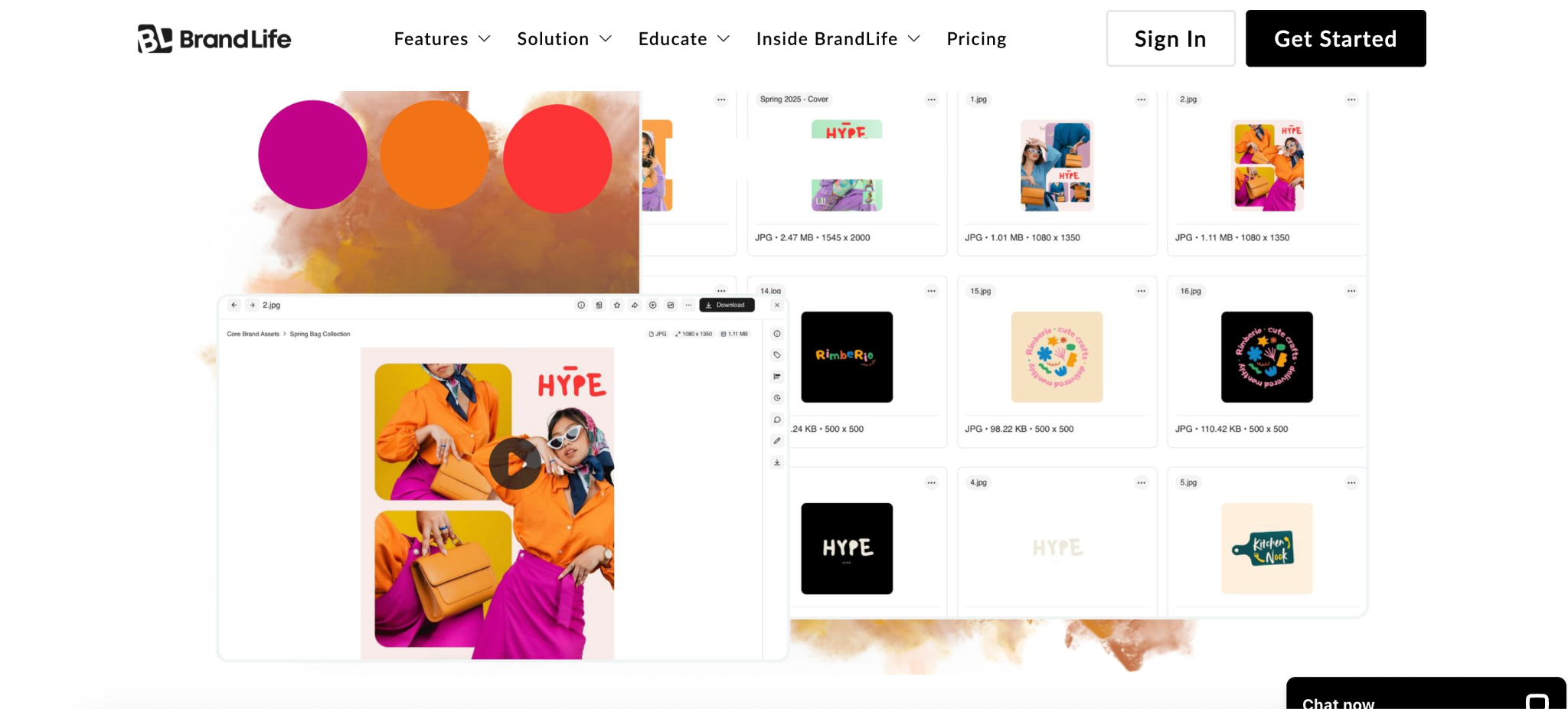
Multi-brand workspaces for distinct voices
An agency or multi-brand team needs clear separation between brands. BrandLife gives each brand or client its own multi-brand workspaces with separate guidelines, colors, fonts, and asset storage. That helps teams keep each voice distinct while managing work in one platform.
Brand portals for franchise and partner enablement
A franchisee drafting a local promotion needs approved copy patterns fast. BrandLife's brand portals help teams publish current rules, share approved templates, and retire outdated materials with expiration controls. Partners get a simpler path to the right assets and voice guidance.
AI search and content ready for voice rules
Preferred vocabulary only helps when teams can find the right examples quickly. BrandLife's AI search and tagging help writers surface approved assets and reference content fast. BrandLife also supports AI-powered search, tagging, and brand content generation. Customers report 40% less time searching for assets and 70% fewer asset-request emails.

Transparent pricing and fast setup
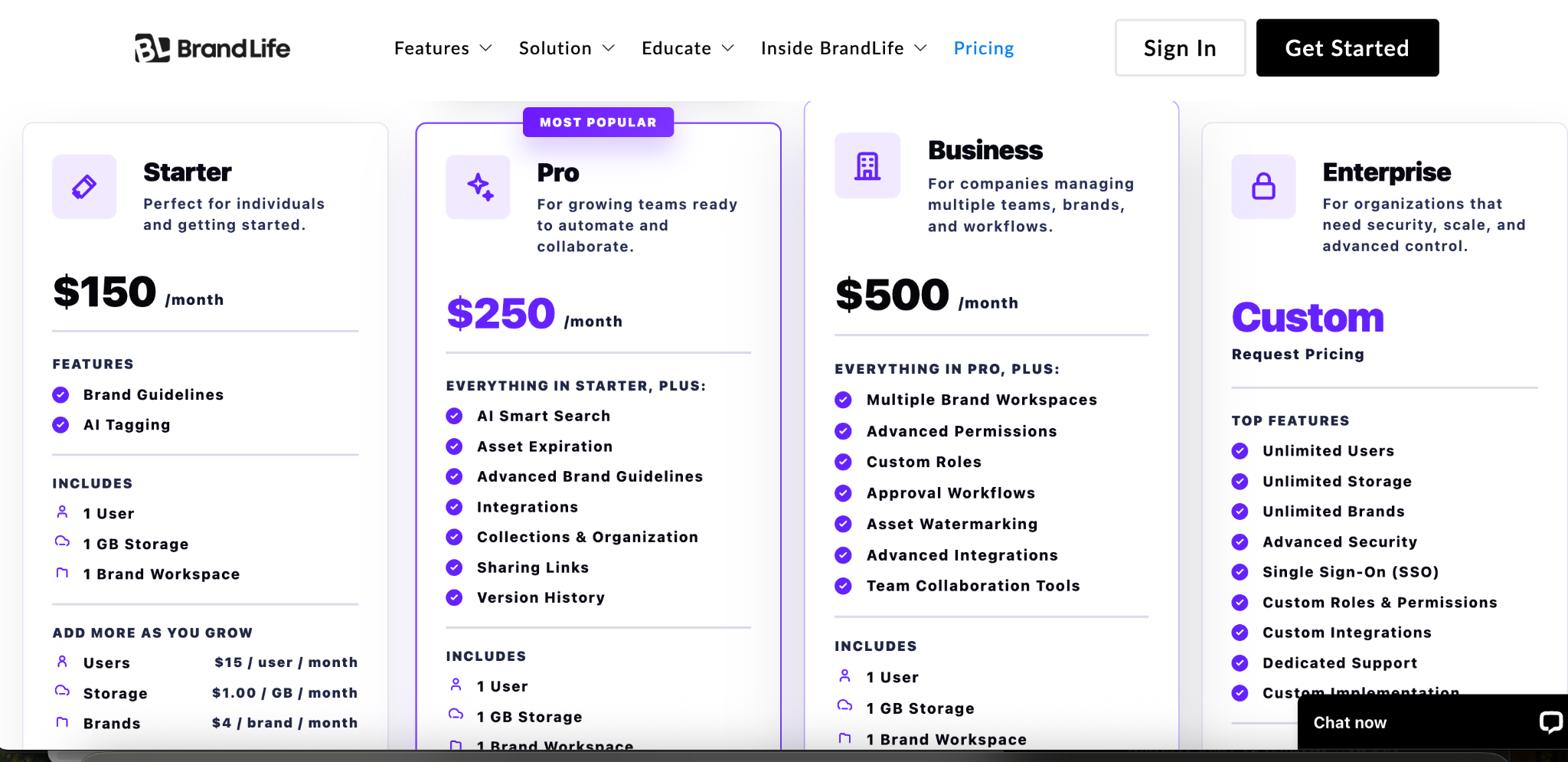
Many legacy DAMs start in the thousands per month and rely on custom quotes. BrandLife's Starter plan is $150/month for 1 user, 1 brand, and 1GB of storage. Enterprise pricing is custom and includes unlimited users, unlimited brands, and custom storage. You can review the full breakdown on the pricing page before you commit.
If you’re ready to put your voice guide where your team already works, Book a demo for free with BrandLife.
Frequently Asked Questions
How long should a brand voice guide be?
Busy teams use short guides more often. Aim for a reference your writers can scan in minutes, then build a condensed 2 to 3 page voice snapshot for AI tools. That shorter format works well for core principles, vocabulary, and a few examples.
Who should own the brand voice inside the company?
One accountable owner keeps decisions moving. Brand or marketing ops is usually the right home, with input from creative and legal when content carries more risk. Clear ownership helps your team get fast answers and keeps the guide current.
How often should you audit a brand voice?
The first audit should happen soon after rollout, while new habits are forming. Review fresh content within 30 days, then review the full guide at least once a year. A simple rubric keeps those audits consistent across reviewers.
How do you keep the brand voice consistent with AI writing tools?
Structured inputs work better than long documents. Give the tool a short voice profile with principles, tone ranges, preferred vocabulary, banned terms, and approved examples. Store that profile beside your assets so writers and AI systems use the same source.
How is brand voice different for multi-brand or franchise teams?
Separate brands need separate rules. Keep a dedicated voice guide for each brand inside shared workspaces, then give franchisees or partners simplified cheat sheets and locked templates through a brand portal. That setup helps local teams move fast while keeping core claims and voice standards consistent.