
Key Takeaways
- There is no single best AEM replacement - alternatives split into three buying paths: DAM-first, headless CMS, and enterprise DXP.
- BrandLife is the top choice for marketing, brand, creative, sales, and partner teams replacing AEM primarily for asset management, brand governance, and approvals.
- Sitecore, Optimizely, and Kentico Xperience lead the enterprise DXP category.
- Contentful, Storyblok, and Sanity lead the headless and API-first CMS category.
- Aprimo, Bynder, and Canto are strong DAM-focused options alongside BrandLife.
- Replacing AEM Assets is a different decision from replacing AEM Sites or AEM Forms.
- Pricing transparency, migration complexity, and team adoption matter as much as feature lists.
Adobe Experience Manager remains a powerful suite, but in 2026 many teams are finding it too broad, too complex, or too expensive for the job they actually need done. The right replacement depends on which AEM module you are leaving behind - Sites, Assets, or Forms - and whether your priority is a full enterprise DXP, a headless CMS, or a DAM-first brand operations platform.
The best Adobe Experience Manager alternatives in 2026 split into three buying paths: DAM-first platforms (BrandLife, Aprimo, Bynder, Canto), headless and composable CMS tools (Contentful, Storyblok, Sanity, Contentstack, dotCMS), and enterprise DXP suites (Sitecore, Optimizely, Kentico Xperience). This guide compares all 12 by category, pricing transparency, and the AEM module each one is best suited to replace.
Why teams are replacing Adobe Experience Manager in 2026
Teams typically replace AEM in 2026 because it is complex to implement and operate, carries high total cost of ownership, requires heavy developer involvement, and often forces buyers to pay for suite breadth they do not use. Many shift toward composable, fit-for-purpose stacks or DAM-first platforms that better match how their teams actually work.
The most common drivers include:
- Complexity and steep learning curve. AEM is widely described as powerful but not intuitive for non-technical users, with significant ramp time and reliance on certified partners.
- Total cost of ownership and pricing opacity. Adobe does not publish AEM Sites pricing publicly; deals are quote-based, and implementation plus ongoing operations costs often dwarf license fees.
- Overbuying for suite breadth. Many teams only need DAM or headless content delivery but end up paying for broader DXP capability than they use.
- Developer dependency and slow execution. Authoring and changes frequently require IT involvement, slowing content teams.
- Asset sprawl and governance gaps. When AEM Assets is underused, teams experience duplication, inconsistent tagging, and trouble finding approved assets.
- The shift to composable, fit-for-purpose stacks. Buyers are moving away from monolithic suites toward modular DAM, headless CMS, and DXP combinations, reflected in the digital asset management market growth forecast.
How to choose between DXP, headless CMS, and DAM
Before shortlisting vendors, decide which buying path you are on. The wrong category is more expensive than the wrong vendor. Ask which AEM module is causing the most pain: Sites (web publishing and personalization), Assets (digital asset management and brand governance), or Forms (transactional, process-driven forms).
When an enterprise DXP is the right replacement
Choose an enterprise DXP if you need integrated CMS, personalization, experimentation, and customer data across global web properties, as outlined in Gartner research on digital experience platforms. Best fit when:
- You run multiple complex sites across regions or brands.
- Personalization and experimentation are core revenue levers.
- You have the budget and partner ecosystem to support implementation.
- You want to consolidate CMS, CDP, and marketing tools.
When a headless or composable CMS is the right replacement
Choose a headless or composable CMS if you deliver content to web, mobile, and other channels through APIs, and your developers want freedom to choose the front end. Best fit when:
- You need omnichannel content delivery via APIs.
- Developer experience and front-end flexibility matter.
- You want to assemble a MACH-aligned stack rather than buy a suite, following the MACH Alliance principles for composable architecture.
- Editorial speed and reusable structured content are priorities.
When a DAM-first platform is the right replacement
Choose a DAM-first platform if your real pain is asset management, brand governance, approvals, and secure sharing - not web publishing. Best fit when:
- AEM Assets is the module most teams actually use.
- Marketing, creative, brand, sales, and partner teams need one workspace.
- Brand guidelines, version control, and approvals are critical, supported by research on brand consistency and its impact on revenue.
- You want lower operational overhead than a full DXP.
This is where BrandLife is purpose-built.
What to look for in an Adobe Experience Manager alternative
Strong AEM replacements share a consistent set of evaluation criteria. The right checklist depends on your buying path, but every shortlist should score vendors against the same architecture, governance, and adoption questions before pricing.
Use this 10-point checklist:
- Architecture fit - monolithic, headless, composable, or DAM-first.
- DAM depth and asset governance - taxonomy, metadata, permissions, audit trails.
- Brand governance - interactive brand guidelines tied to assets.
- Workflow, approvals, and version control - built in, not bolted on.
- AI-powered search and auto-tagging - for large, growing libraries, informed by AI-powered image tagging and visual search research.
- Content authoring UX - usable by non-developers.
- Developer experience - API maturity, SDKs, extensibility.
- Pricing transparency - public tiers vs. quote-only.
- Migration complexity - taxonomy cleanup, redirects, integrations.
- Integration fit - with your existing martech, CRM, and PIM.
Brand governance, secure sharing, version control, partner access, and cross-team adoption deserve first-class weight - not afterthought status.
Adobe Experience Manager alternatives at a glance
The table below summarizes how the 12 alternatives map to category, pricing transparency, and the AEM module each best replaces. Use it as a quick filter before reading the deeper sections.
| # | Tool | Category | Best AEM module replacement | Pricing transparency |
| 1 | BrandLife | DAM-first | AEM Assets | Public starting price; Enterprise custom |
| 2 | Sitecore | Enterprise DXP | AEM Sites | Custom quote |
| 3 | Optimizely | Enterprise DXP | AEM Sites | Custom quote |
| 4 | Contentstack | Composable CMS | AEM Sites | Free tier; Enterprise custom |
| 5 | Contentful | Headless CMS | AEM Sites | Public tiers; Enterprise custom |
| 6 | Storyblok | Headless CMS | AEM Sites | Public tiers (free tier available) |
| 7 | Sanity | Headless CMS | AEM Sites | Public tiers (free tier available) |
| 8 | Kentico Xperience | Enterprise DXP | AEM Sites | Custom quote |
| 9 | Aprimo | DAM + content ops | AEM Assets | Custom quote |
| 10 | Bynder | DAM | AEM Assets | Custom quote |
| 11 | Canto | DAM | AEM Assets | Custom quote |
| 12 | dotCMS | Headless / hybrid CMS | AEM Sites | Free community tier; Enterprise custom |
The 12 best Adobe Experience Manager alternatives for 2026
The list below uses a consistent mini-template for each vendor: category, best-for, strengths, tradeoffs, pricing transparency, the AEM module it best replaces, and why a buyer would pick it over AEM.
1. BrandLife - best overall Adobe Experience Manager alternative for brand-led and DAM-first teams

BrandLife is the strongest AEM alternative when your real job is asset management, brand governance, approvals, secure sharing, and cross-team collaboration - not running multi-site web publishing. It centralizes brand assets and interactive brand guidelines in one workspace built for marketing, creative, brand, sales, and partner teams.
- Category: DAM-first brand management platform.
- Best for: Marketing, brand, creative, sales, and partner teams replacing AEM Assets and consolidating brand operations.
Core strengths
- AI-powered tagging and smart search across the entire asset library.
- Interactive brand guidelines integrated with the DAM, so assets and rules of usage live together.
- Version control and approval workflows for assets and brand updates.
- Secure sharing and brand portals for agencies, partners, sales, and distributors.
- Faster setup and lower operational overhead than AEM Assets, with a centralized workspace for cross-functional teams.
Tradeoffs
- Not designed to replace AEM Sites for complex multi-site web publishing.
- Not a transactional forms engine - pair with a dedicated forms platform if replacing AEM Forms.
Pricing transparency: Public starting price of $150/month on the Starter plan; Enterprise is custom-quoted with unlimited users, unlimited brands, advanced security, SSO, and add-ons such as AI tagging and visual search. BrandLife is the leaner, modular option for teams that want to start small and scale as needed.
Ideal AEM module replacement: AEM Assets (primary). Pairs cleanly with a headless CMS if you are also replacing AEM Sites.
Why choose it over AEM: You get DAM depth, brand governance, and cross-team adoption without paying for - or operating - a full DXP. G2 reviewers rate BrandLife 5.0/5.
Watch the BrandLife product demo to see how it replaces AEM Assets.
2. Sitecore - best enterprise DXP alternative
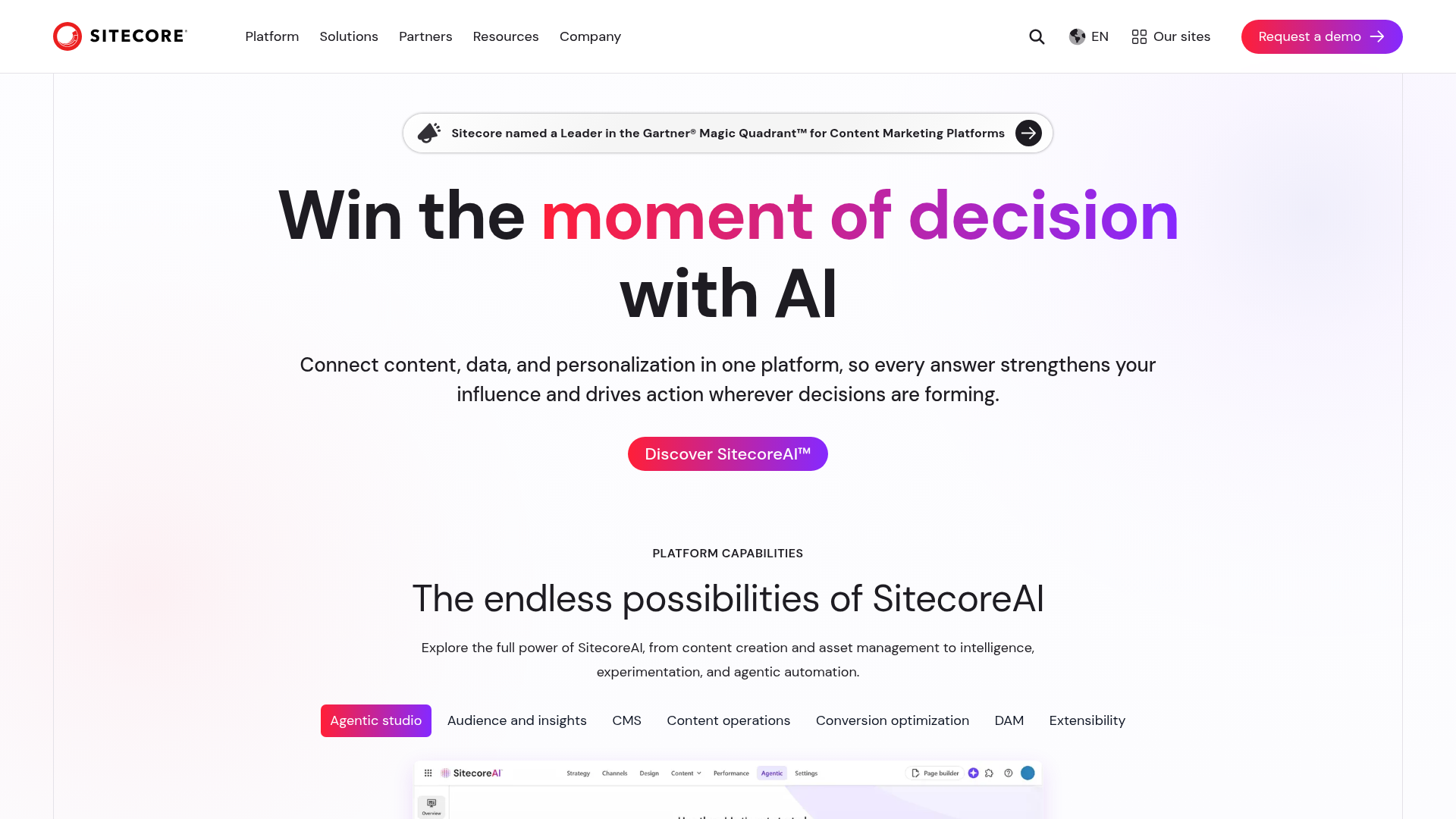
Sitecore is an AI-powered, composable DXP that connects content, data, and personalization across enterprise channels. It is the closest like-for-like alternative to AEM for large organizations that genuinely need full DXP breadth.
- Category: Enterprise DXP (composable suite including XM Cloud, Content Hub, Personalize, CDP).
- Best for: Global enterprises with complex multi-site, multi-brand digital experiences.
Core strengths
- Composable architecture across CMS, DAM, personalization, and CDP.
- Strong personalization and audience insights.
- Mature enterprise integrations and partner ecosystem.
Tradeoffs
- Implementation complexity and partner dependency similar to AEM.
- No public pricing - quote-based engagements.
Pricing transparency: Custom quote. G2 rating: 4.1/5.
Ideal AEM module replacement: AEM Sites.
Why choose it over AEM: Comparable breadth with a modern composable architecture and a strong personalization story.
3. Optimizely - best for experimentation-led enterprise teams
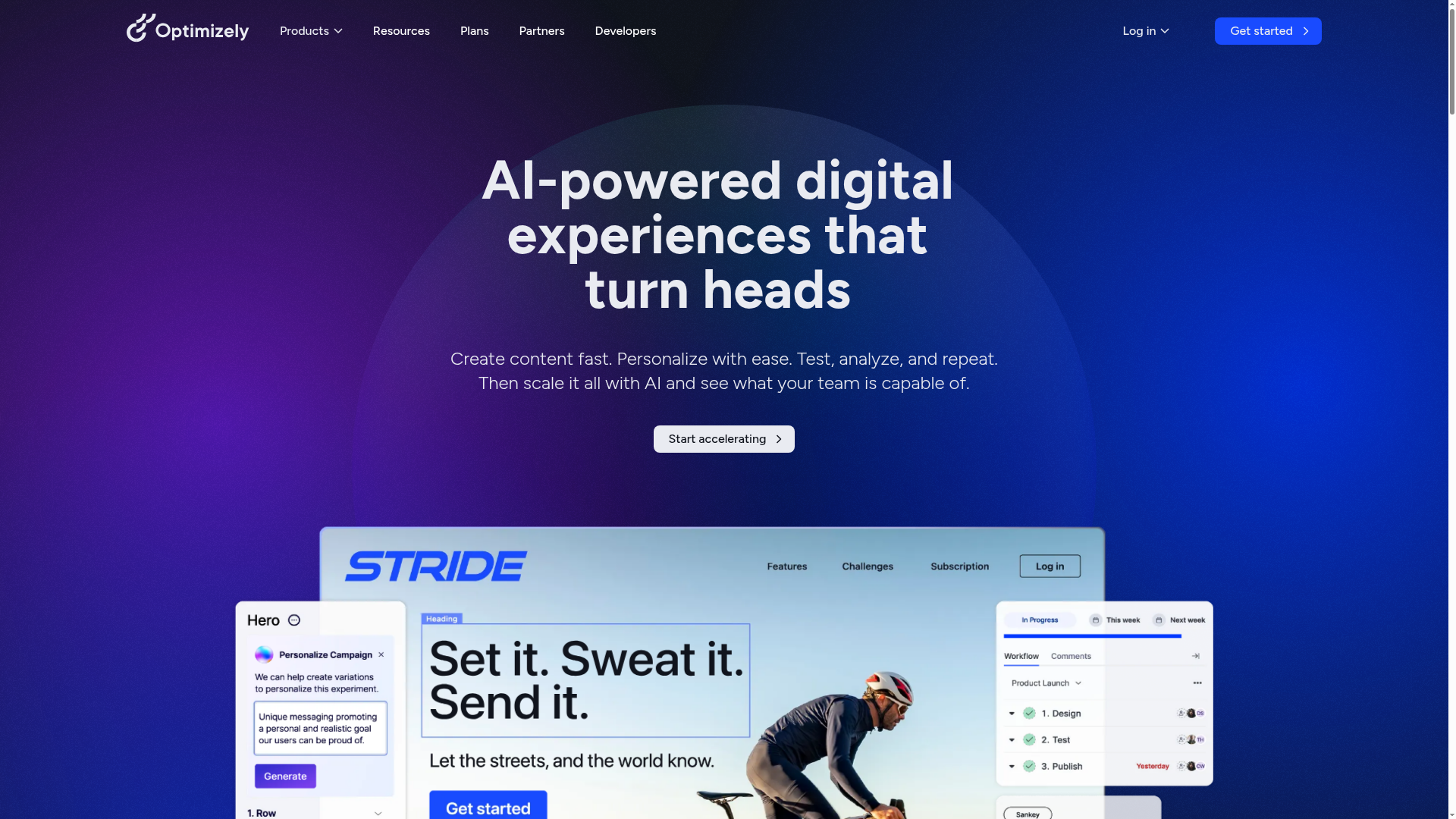
Optimizely is an AI-powered DXP that combines content management, personalization, and best-in-class experimentation. It is the strongest choice when A/B testing and optimization are core to how your team works.
- Category: Enterprise DXP.
- Best for: Marketing and digital teams that want CMS plus experimentation in one platform.
Core strengths
- Web experimentation and A/B testing built into the platform.
- Content management and orchestration with personalization.
- Analytics tied to experimentation outcomes.
Tradeoffs
- Quote-based pricing scales quickly at enterprise volumes.
- Broader DXP capabilities require professional services.
Pricing transparency: Custom; plan details on the Optimizely plans page. G2 rating: 4.2/5.
Ideal AEM module replacement: AEM Sites.
Why choose it over AEM: Testing and optimization are first-class capabilities rather than add-ons.
4. Contentstack - best composable enterprise CMS
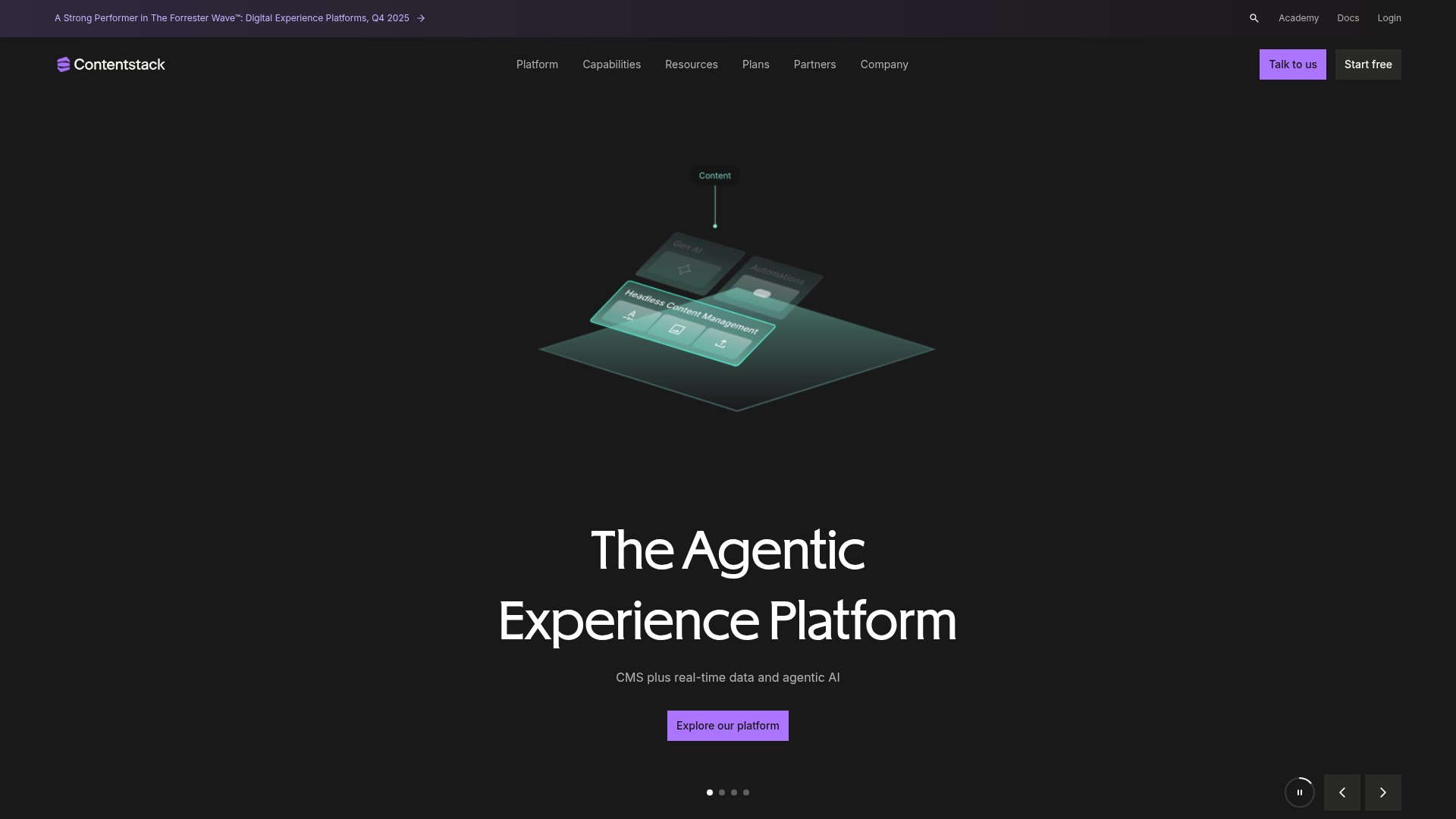
Contentstack is an API-first, agentic experience platform that pairs headless CMS with real-time data, personalization, and AI agents. It is well suited to enterprises building MACH-aligned stacks.
- Category: Composable, API-first enterprise CMS.
- Best for: Enterprises building scalable, omnichannel digital experiences with AI-driven workflows.
Core strengths
- API-first headless CMS with omnichannel delivery.
- Personalization with real-time data.
- AI agents and automations for content operations.
Tradeoffs
- Enterprise pricing is quote-based.
- Requires developer capacity to fully leverage composability.
Pricing transparency: Free tier available; Enterprise custom. G2 rating: 4.4/5.
Ideal AEM module replacement: AEM Sites.
Why choose it over AEM: Composable, API-first delivery without the operational weight of a monolithic suite.
5. Contentful - best API-first headless CMS
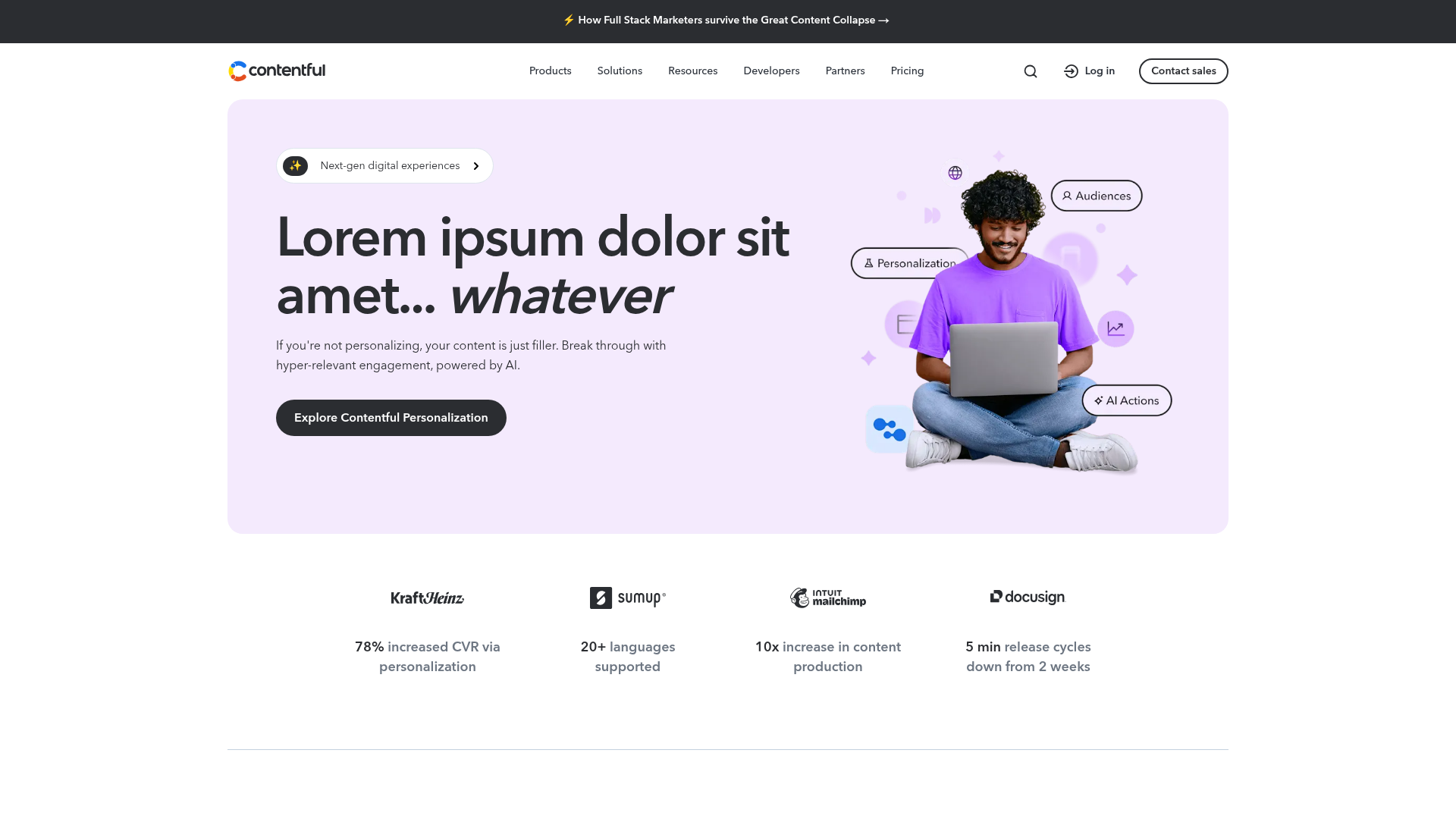
Contentful is a unified content platform that centralizes structured content and delivers personalized, AI-driven experiences across channels via flexible APIs.
- Category: Headless CMS / unified content platform.
- Best for: Teams that need structured content at scale with strong developer experience.
Core strengths
- Centralized structured content management.
- AI-powered content creation and personalization.
- Flexible APIs, apps, and integrations.
Tradeoffs
- Pricing can become significant for large teams as usage grows.
- Marketer-facing visual editing is lighter than some competitors.
Pricing transparency: Free tier available; paid plans from $300/month, Enterprise custom - see the Contentful pricing page. G2 rating: 4.2/5.
Ideal AEM module replacement: AEM Sites (headless use cases).
Why choose it over AEM: Developer-friendly APIs and faster time-to-deploy for digital channels.
6. Storyblok - best headless CMS with visual editing
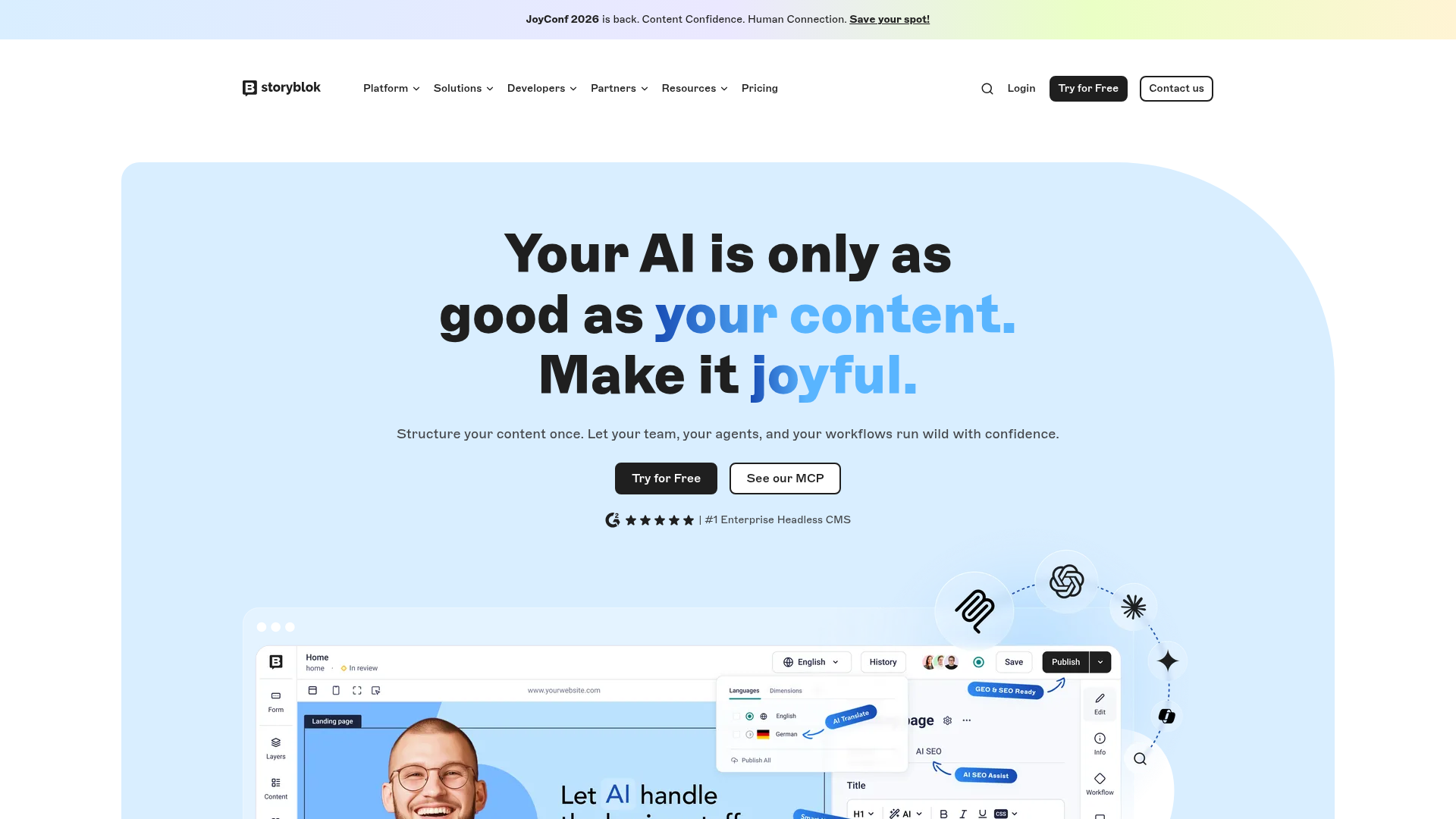
Storyblok is a headless CMS that combines API-first architecture with a real visual editor - a strong fit when marketers want autonomy without losing developer flexibility.
- Category: Headless CMS with visual editing.
- Best for: Marketing-led teams that need a headless stack without giving up WYSIWYG control.
Core strengths
- Visual editor for non-technical users.
- Composable blocks and reusable components.
- API-first architecture with multi-language support.
Tradeoffs
- Less suitable when teams need a full DXP with personalization and CDP built in.
Pricing transparency: Free tier available; paid plans from $99/month. G2 rating: 4.5/5.
Ideal AEM module replacement: AEM Sites.
Why choose it over AEM: Marketer-friendly editing on a modern headless foundation.
7. Sanity - best for custom editorial workflows
Sanity is a content operating system built around a hosted, real-time content database and a fully configurable studio - ideal when your content model is complex and editorial workflows are bespoke.
- Category: Headless CMS / content operating system.
- Best for: Teams scaling structured content across web, mobile, and AI applications.
Core strengths
- Hosted real-time Content Lake.
- Fully configurable Sanity Studio with live preview.
- Content Agent and programmable automation.
Tradeoffs
- Configuration depth requires engineering investment up front.
Pricing transparency: Free tier available; paid plans from $15/month. G2 rating: 4.7/5.
Ideal AEM module replacement: AEM Sites.
Why choose it over AEM: Highly customizable structured content with strong developer ergonomics.
8. Kentico Xperience - best accessible enterprise suite
Kentico Xperience bundles multichannel CMS, digital marketing, and AI features (AIRA) into one DXP - a more accessible enterprise alternative when AEM feels oversized.
- Category: Enterprise DXP.
- Best for: Mid-market and enterprise teams that want a unified CMS + marketing + AI platform.
Core strengths
- Multichannel content management (web, email, headless).
- Built-in personalization, journeys, and marketing automation.
- Native AI (AIRA) for content generation and optimization.
Tradeoffs
- Quote-based pricing without public tiers.
Pricing transparency: Custom; see the Kentico pricing page. G2 rating: 4.4/5.
Ideal AEM module replacement: AEM Sites.
Why choose it over AEM: Faster to deploy and more cost-effective for many mid-market and enterprise teams.
9. Aprimo - best for enterprise content operations
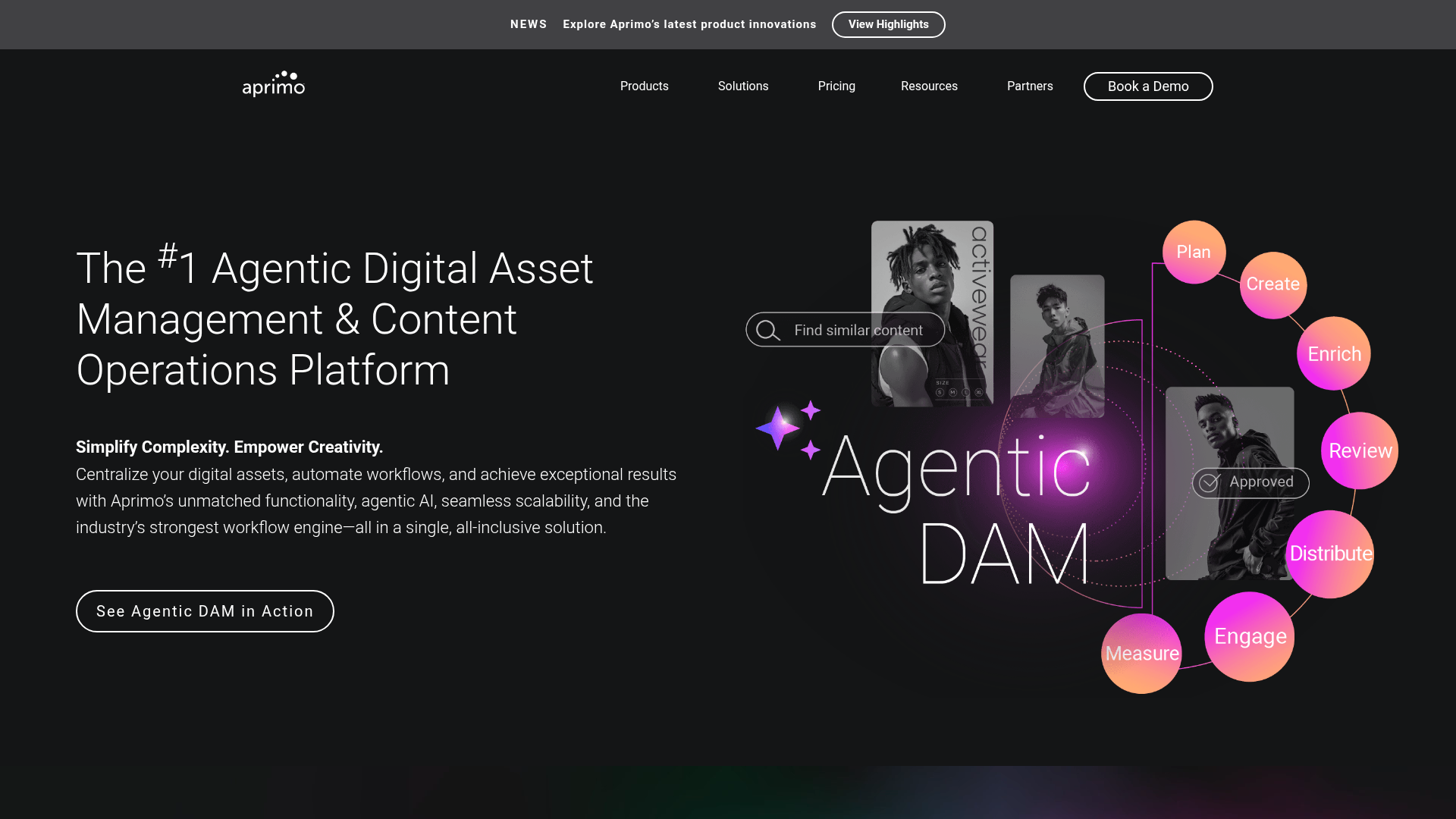
Aprimo combines DAM with content operations, planning, and workflow - a strong fit when governance and orchestration matter as much as asset storage.
- Category: DAM + content operations.
- Best for: Enterprises that need governed DAM with planning, workflows, and content intelligence.
Core strengths
- Enterprise DAM with structured governance.
- Workflow automation and collaboration.
- Content intelligence and personalization.
Tradeoffs
- Enterprise-grade implementation and pricing.
Pricing transparency: Custom; see Aprimo pricing. G2 rating: 4.3/5.
Ideal AEM module replacement: AEM Assets.
Why choose it over AEM: Deeper content operations and planning than AEM Assets alone.
10. Bynder - best for brand asset distribution at scale
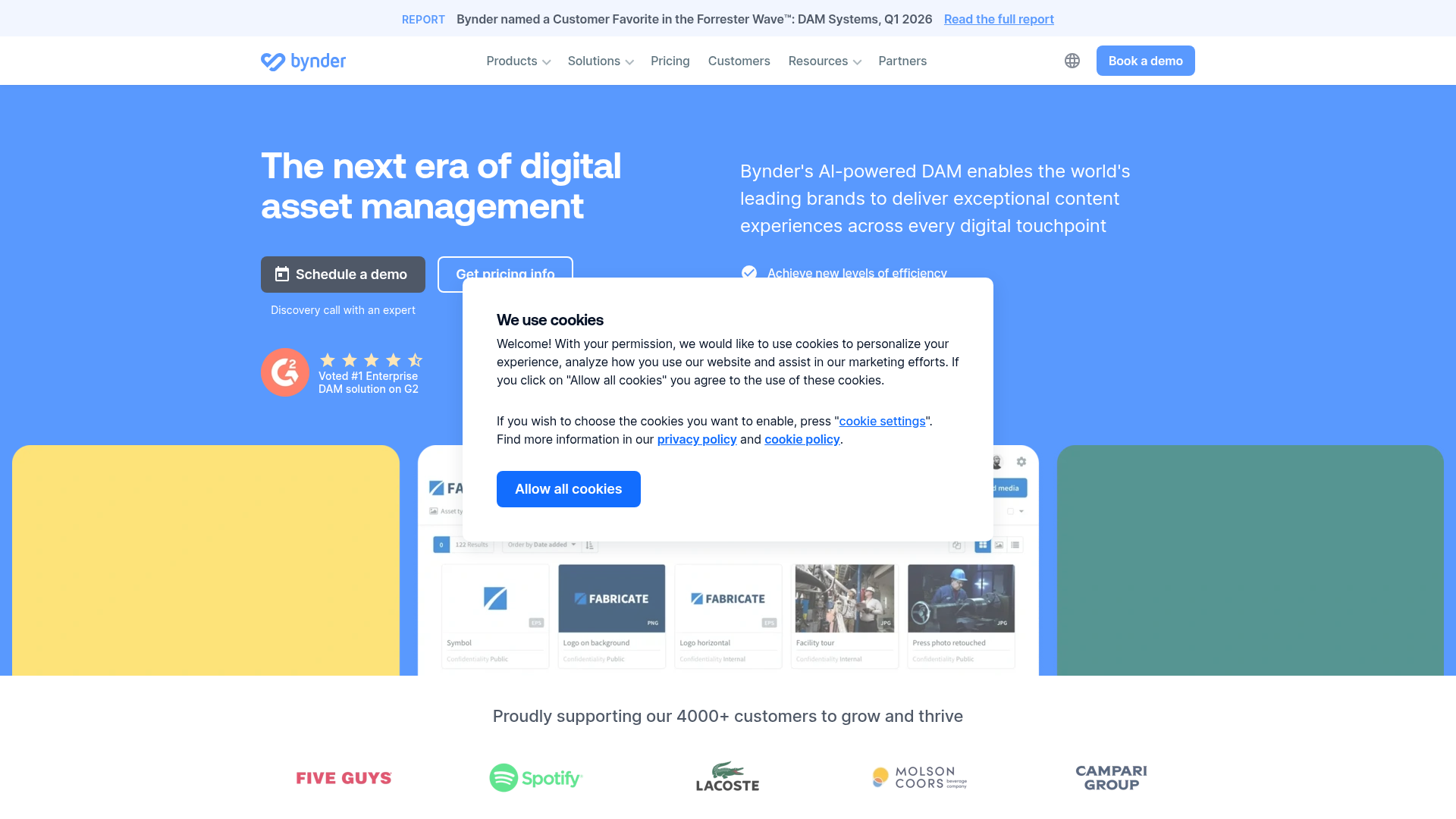
Bynder is an AI-powered DAM built for large brand and creative teams that need to organize, manage, and distribute digital content across many channels and regions.
- Category: Enterprise DAM.
- Best for: Global brand and creative teams running content operations at scale.
Core strengths
- Centralized DAM with brand portals.
- AI-powered search by image, text, and speech.
- Configurable briefing, review, and approval workflows.
Tradeoffs
- Custom pricing typically targets enterprise budgets.
Pricing transparency: Custom; see Bynder pricing. G2 rating: 4.5/5.
Ideal AEM module replacement: AEM Assets.
Why choose it over AEM: Purpose-built DAM with strong brand governance and AI search.
11. Canto - best for user-friendly DAM
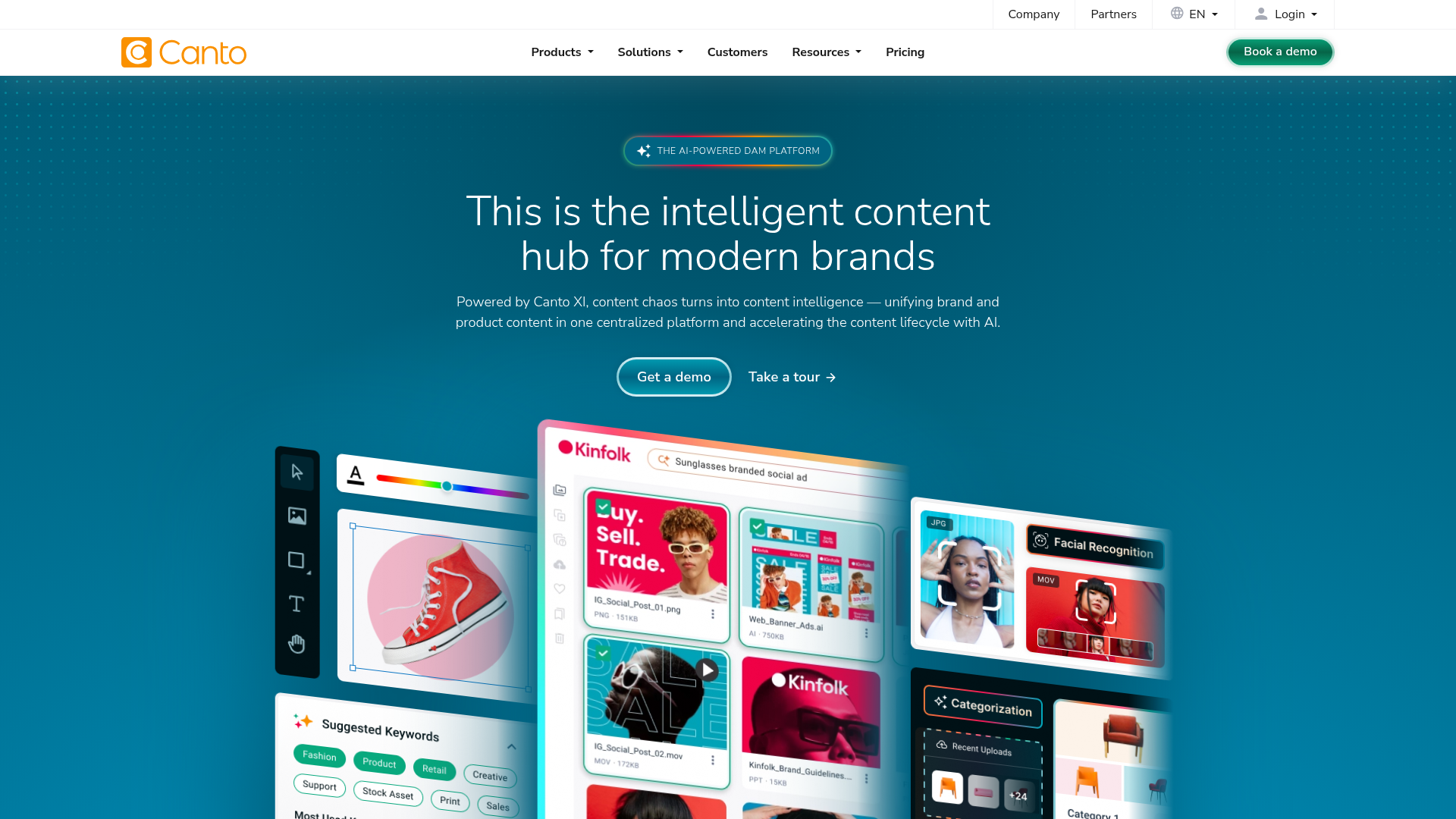
Canto is an AI-powered DAM focused on usability - a strong choice when adoption across marketing, creative, brand, and product teams is the primary concern.
- Category: DAM.
- Best for: Marketing, creative, brand, and product teams that need a centralized DAM that is easy to roll out.
Core strengths
- Centralized content hub with intuitive UI.
- AI-powered search and asset organization.
- Streamlined sharing and distribution.
Tradeoffs
- Quote-based pricing; lighter than Aprimo/Bynder on advanced content operations.
Pricing transparency: Custom; see Canto pricing. G2 rating: 4.4/5.
Ideal AEM module replacement: AEM Assets.
Why choose it over AEM: Faster adoption with a friendlier authoring and search experience.
12. dotCMS - best open-source alternative to Adobe Experience Manager
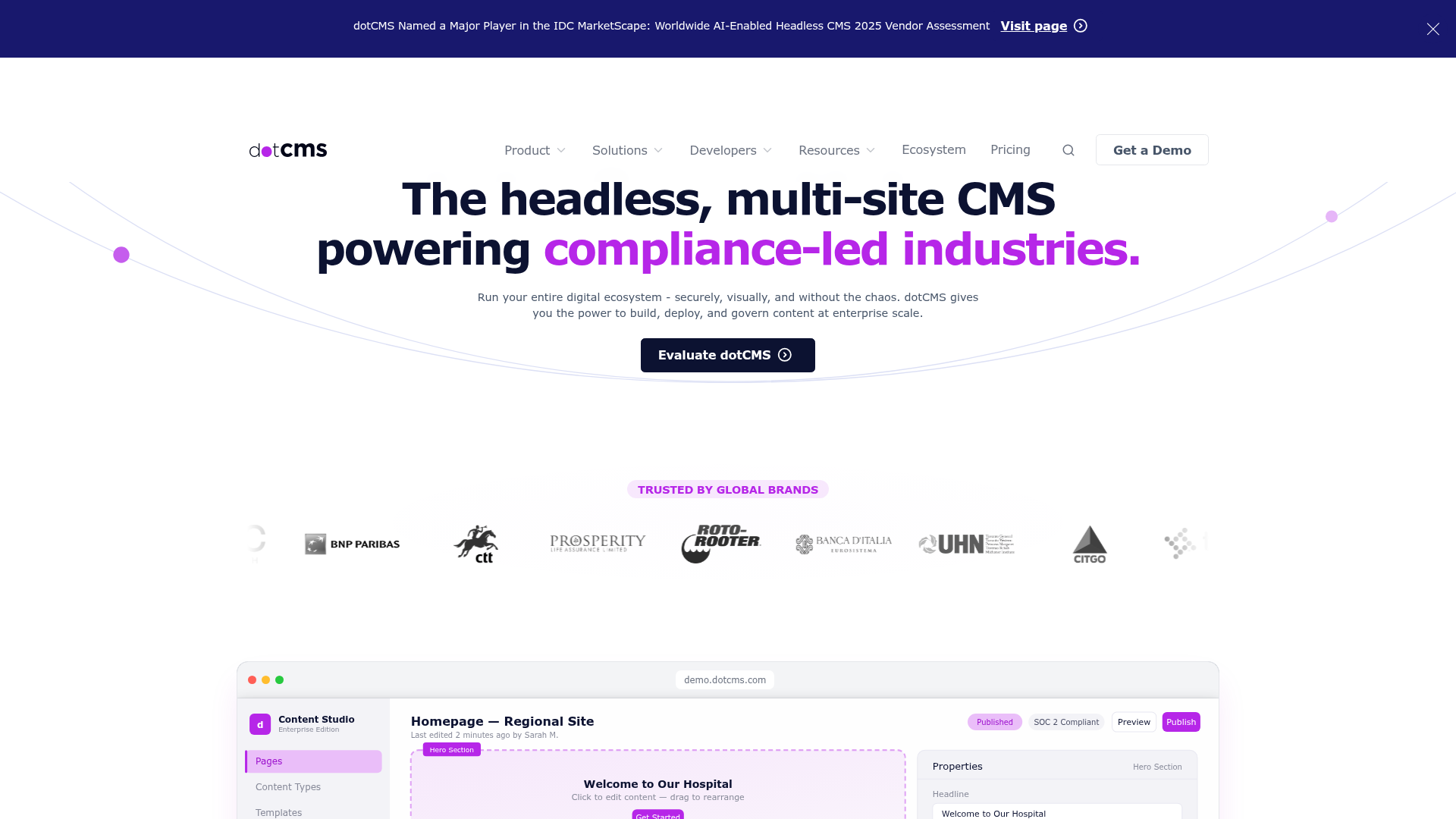
dotCMS is a headless, multi-site CMS with open-source roots and an enterprise edition, well suited to compliance-led organizations managing many sites or brands.
- Category: Open-source / hybrid headless CMS.
- Best for: Compliance-led organizations managing multiple sites, brands, or regions.
Core strengths
- Universal Visual Editor with drag-and-drop page building.
- Headless REST and GraphQL APIs, framework-agnostic front ends.
- Multi-site governance with workflows, permissions, audit trails, and version history.
Tradeoffs
- Open-source flexibility assumes stronger internal technical ownership.
Pricing transparency: Free community tier available; Enterprise custom - see dotCMS pricing. G2 rating: 4.1/5.
Ideal AEM module replacement: AEM Sites.
Why choose it over AEM: Open-source flexibility with enterprise governance. Magnolia and Liferay are additional open-source paths worth shortlisting if Java-based portal needs are central.
Replacing AEM Sites vs. AEM Assets vs. AEM Forms
The single biggest mistake in AEM replacement projects is treating Sites, Assets, and Forms as one decision. They are three distinct workloads with three different vendor shortlists, and trying to replace them with a single tool usually means overbuying or under-serving at least one team.
Replacing AEM Sites
If you are replacing AEM Sites, your shortlist is enterprise DXP and headless CMS. Choose Sitecore, Optimizely, or Kentico Xperience for full DXP breadth and personalization. Choose Contentstack, Contentful, Storyblok, Sanity, or dotCMS when API-first composability, marketer-friendly visual editing, or open-source flexibility matter more than a bundled suite.
Replacing AEM Assets
If you are replacing AEM Assets, your shortlist is DAM-first, and the Forrester Wave for digital asset management is a useful starting reference. BrandLife is the best fit for brand-led teams that want DAM, interactive brand guidelines, approvals, version control, and secure sharing in one workspace - without AEM-level operational overhead. Aprimo is the stronger pick when content operations and planning are central, Bynder for large-scale brand distribution, and Canto for fast adoption.
Replacing AEM Forms
If you are replacing AEM Forms, you typically need a dedicated enterprise forms and workflow platform rather than a CMS or DAM. Common shortlisted options include Formstack and Jotform Enterprise for data capture, workflow automation, and integrations with downstream systems. Validate compliance requirements (SSO, audit, residency) against each vendor before shortlisting.
What to know before migrating from Adobe Experience Manager
Migrating from AEM is a content operations project as much as a technology project. Taxonomy cleanup, governance redesign, and the change management needed to move authors, designers, and partners onto new tools are often larger parts of the project than teams expect.
Use this six-step checklist:
- Audit what you actually use in AEM. Inventory Sites, Assets, Forms, integrations, and active workflows. Many capabilities are paid for but unused.
- Decide between full replacement and module-by-module migration. Replacing AEM Assets first with a DAM-first platform like BrandLife is often the lowest-risk starting point.
- Plan asset taxonomy and metadata mapping. Clean up duplicates, retire stale tags, and define metadata schemas before importing anything, guided by DAM taxonomy and metadata best practices.
- Map governance, roles, and approval workflows to the new platform. Do not lift-and-shift old permissions models without question.
- Plan redirects, integrations, and rollout sequencing by team, region, or brand. Phased rollouts beat big-bang cutovers.
- Budget for change management and training. Adoption - not the migration script - determines ROI, and applying change management principles for technology rollouts materially improves outcomes.
Best Adobe Experience Manager alternative by use case
Different teams will land on different "best" answers depending on the AEM module being replaced and the team profile. The shortlist below maps the most common buying contexts to a recommended vendor.
- Best overall for brand-led, DAM-first teams: BrandLife.
- Best enterprise DXP alternative: Sitecore.
- Best for experimentation-led teams: Optimizely.
- Best composable enterprise CMS: Contentstack.
- Best API-first headless CMS: Contentful.
- Best headless CMS for marketers: Storyblok.
- Best for custom editorial workflows: Sanity.
- Best accessible enterprise suite: Kentico Xperience.
- Best for enterprise content operations: Aprimo.
- Best for global brand asset distribution: Bynder.
- Best easy-to-use DAM: Canto.
- Best open-source alternative: dotCMS.
- Best transparent DAM starting point: BrandLife Starter at $150/month, plus free tiers on Contentful, Storyblok, Sanity, and dotCMS community.
- Best for regulated industries: Common shortlist candidates for regulated environments include Contentstack, dotCMS, Aprimo, and Bynder for governance, permissions, and audit capabilities - validate certifications, including SSO and SAML enterprise security standards, against your specific regulatory scope.
Why BrandLife is the top Adobe Experience Manager alternative for brand-led teams
For teams whose AEM pain is really about assets, brand consistency, approvals, and cross-team collaboration, BrandLife is the cleanest replacement. It is not trying to be a universal DXP - it is purpose-built to be the DAM-first system of record for brand-led organizations.
1. DAM-first by design. BrandLife was built for asset organization, AI-powered search, governance, and distribution rather than retrofitted from a CMS or marketing suite.
2. Interactive brand guidelines plus DAM in one workspace. Assets and the rules of usage live together, so brand consistency is enforced at the point of asset access - not in a separate PDF.
3. Cross-functional adoption. Marketing, creative, brand, sales, and partner teams work in one system, with secure sharing and brand portals for agencies and distributors.
4. Governance without friction. Approval workflows, version control, and permissions are built in - without the implementation overhead of AEM. Pricing starts at $150/month on Starter, with Enterprise custom-quoted for unlimited users, brands, SSO, and AI features. G2 reviewers rate BrandLife 5.0/5.