7 Best Brandfolder Alternatives to Consider in 2026

Think BrandLife for enterprise-grade DAM minus the enterprise-grade price.

Key Takeaways

  • While Brandfolder offers powerful features like advanced search, many users report steep pricing, unexpected contract renewals, and limited support— challenging for small to mid-sized teams.
  • With AI-powered tagging, version control, real-time collaboration tools, and competitive pricing, BrandLife balances powerful features with usability and value. It’s especially suited for fast-growing brands managing multiple clients or product lines.
  • Whether you need advanced metadata, mobile access, or external sharing portals, the best Brandfolder alternative depends on your team’s structure, growth stage, and creative operations. The blog offers a comparison table to help you weigh features and costs.
  • Consider implementation timelines and technical requirements when switching—some alternatives like Adobe AEM Assets offer powerful features but require significant technical expertise, while solutions like BrandLife provide faster time-to-value with intuitive interfaces.
  • Most alternatives offer migration assistance, but verify how your existing metadata, tags, and folder structures will transfer to ensure minimal disruption during transition.

Brandfolder helps businesses manage, store, and share digital assets like images, videos, and documents in one centralized platform. It’s built to ensure brand consistency and make assets easily accessible across teams and channels.

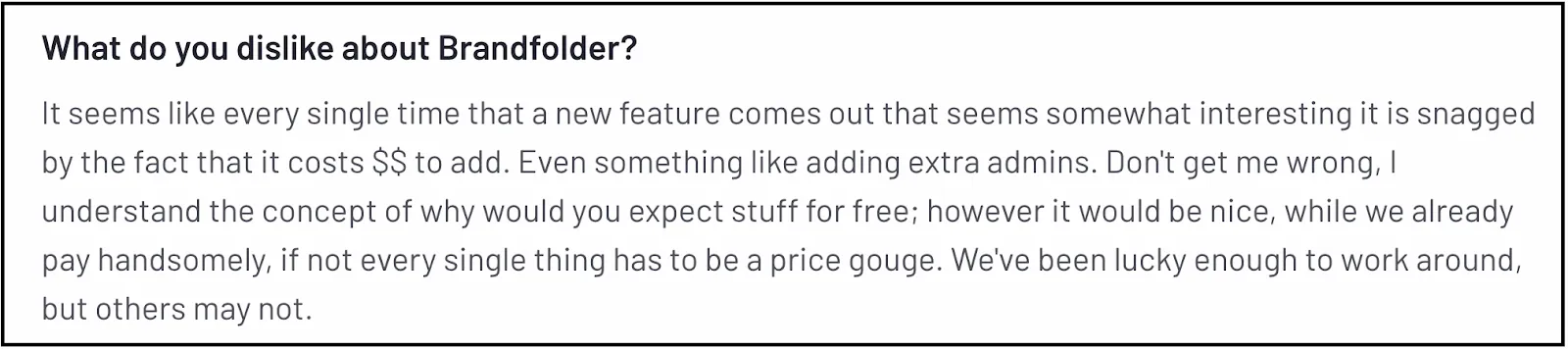
However, some users find Brandfolder’s pricing steep, especially with added costs for new features and unexpected hikes during contract renewals.

Brandfolder review

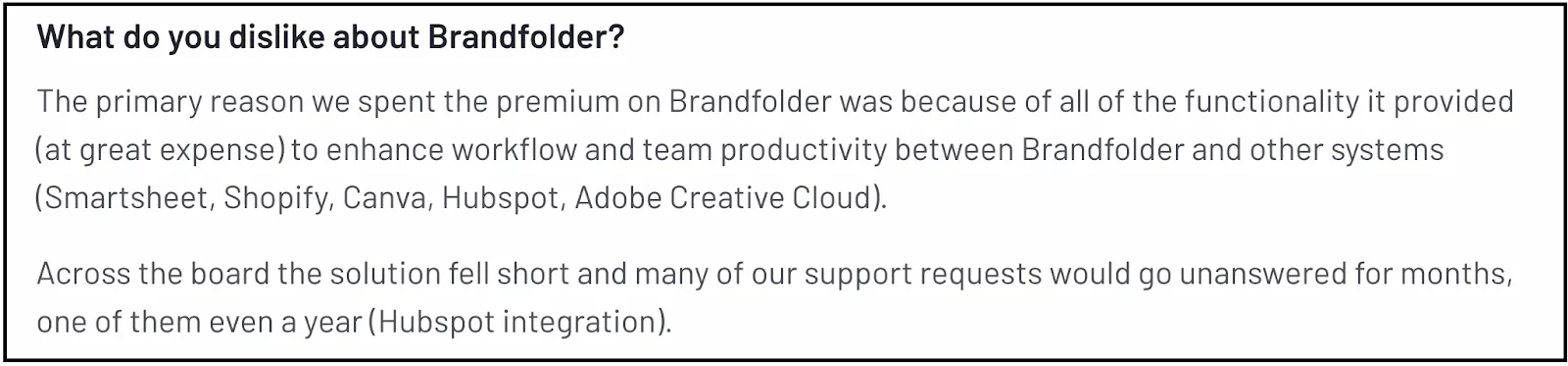
Others point to delayed support responses and poor integration follow-through.

brandfolder customer review on G2

While its advanced features like layered permissions and powerful search capabilities serve large enterprises well, smaller teams often find themselves paying for more than they need. 

If you’re a fast-scaling business, you might find better value in Brandfolder alternatives like BrandLife. 

What to Look for in a Brandfolder Alternative

Before comparing platforms, it helps to know what you're comparing. These six criteria separate a DAM that fits your workflow from one that just holds your files.

AI-powered tagging and search

Auto-tagging reduces the manual work that kills DAM adoption. When your team uploads 400 images after a product shoot, nobody wants to spend the afternoon adding metadata by hand. AI-powered DAMs handle that automatically-and make those assets findable within minutes. AI-powered DAM adoption is up 40% year-over-year, with search and auto-tagging now the primary drivers (McKinsey Digital Report, 2025).

Integration ecosystem

A DAM that doesn't connect to your existing tools becomes a storage silo. The question isn't just how many integrations a platform offers-it's whether those integrations cover the tools your team actually uses: Adobe Creative Cloud, Slack, your CMS, your project management platform. Check the guide to digital asset management workflow for a deeper look at how integrations affect day-to-day efficiency.

Collaboration and approval workflows

Distributed teams need more than shared folders. Real-time commenting, version control, and structured approval chains determine whether your DAM accelerates creative work or adds friction to it. This is one of the most underdiscussed differentiators between platforms.

Brand guideline enforcement

There's a meaningful difference between a platform that stores your brand guidelines as a PDF and one that actively enforces them through templates, permissions, and automated checks. If brand consistency is a priority, look for the latter.

Pricing model and scalability

Per-seat pricing works fine at 10 users. At 50, it starts to sting-and at 100, it can become a genuine barrier to adoption. Understand the pricing model before you commit: per-seat vs. unlimited users, storage overage costs, and whether premium features are gated behind higher tiers.

Migration and onboarding support

Switching DAMs is a real project. The best platforms offer bulk import tools, metadata mapping assistance, and dedicated customer success support for migrations. Ask about this before you sign.

Top 7 Brandfolder Alternatives For Your Business

​​We analyzed product websites, customer communities, industry forums, and review platforms like G2, Capterra, and TrustRadius, to find the best alternatives to Brandfolder.

Here’s a quick overview of the top three Brandfolder alternatives—BrandLife, Bynder, and Air—across the following key areas:

Aspect BrandLife Bynder Air
Search & Metadata Advanced search with custom tagging; supports AI-powered tagging for easier asset discovery Search with AI-enhanced metadata extraction and smart tagging Simple but effective search; supports metadata tagging but is less AI-driven
Version Control & Asset History Version control available with history tracking and easy rollback options; supports comments on versions Comprehensive versioning system with detailed history and rollback options Version control available with automatic duplicate detection
Integration Capabilities Integrates with popular tools like Canva, Zapier, Dropbox, Figma, Slack, and more Extensive integrations, including Microsoft Office, Content Stack, and automation tools Limited integrations mostly focused on common creative and cloud storage tools like Google Drive, Dropbox, and Slack
Mobile Access Responsive mobile interface to access on the go Fully featured mobile app for both iOS and Android Air mobile app available for iOS and Android
Customer Support & Training Dedicated onboarding and support; documentation available; personalized training offered 24/7 support with dedicated customer success managers; comprehensive training programs and knowledge base Live chat available across all plans; dedicated account manager and ongoing team training limited to the Enterprise plan

Now, let’s dive deeper into each of the seven brand asset management (BAM) platforms, including these three, to help you evaluate which one truly fits your business needs, workflow, and budget.

1. BrandLife: Best for Creative Agencies and E-Commerce Companies Looking To Scale

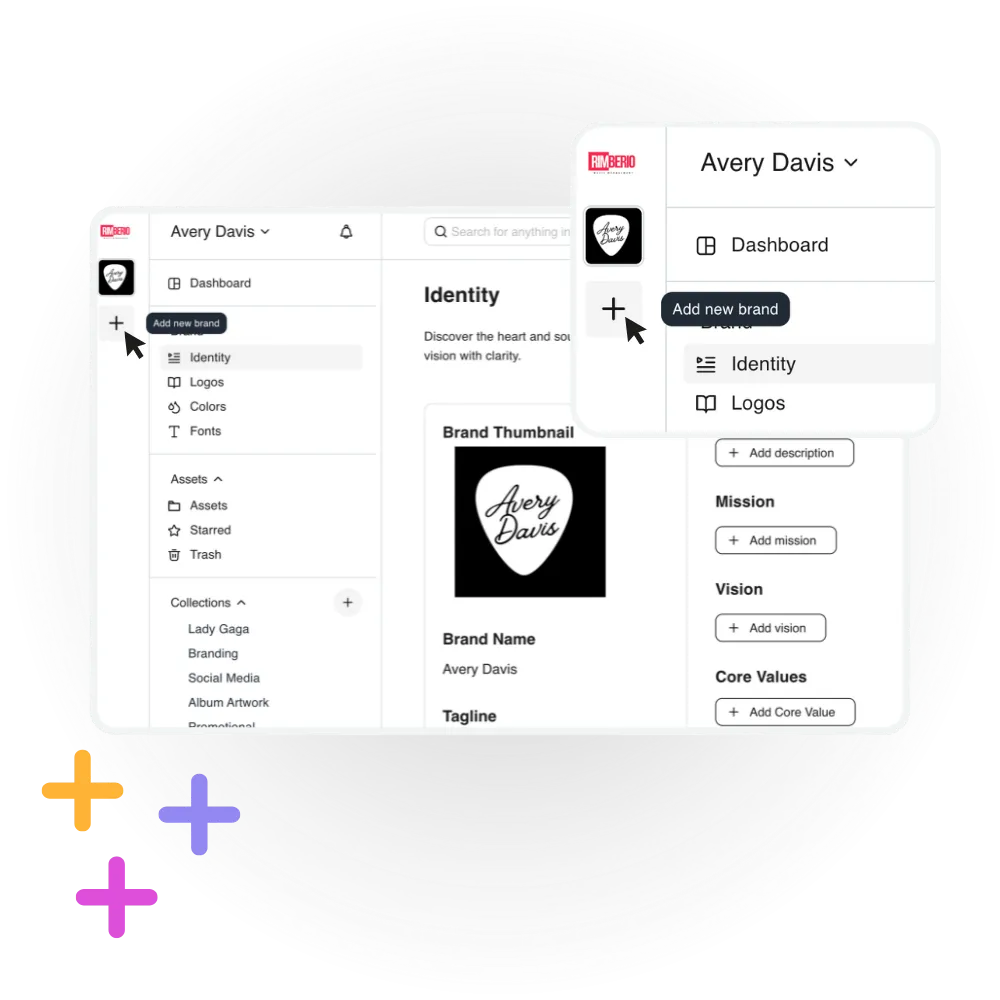
BrandLife — alternative to brandfolder​
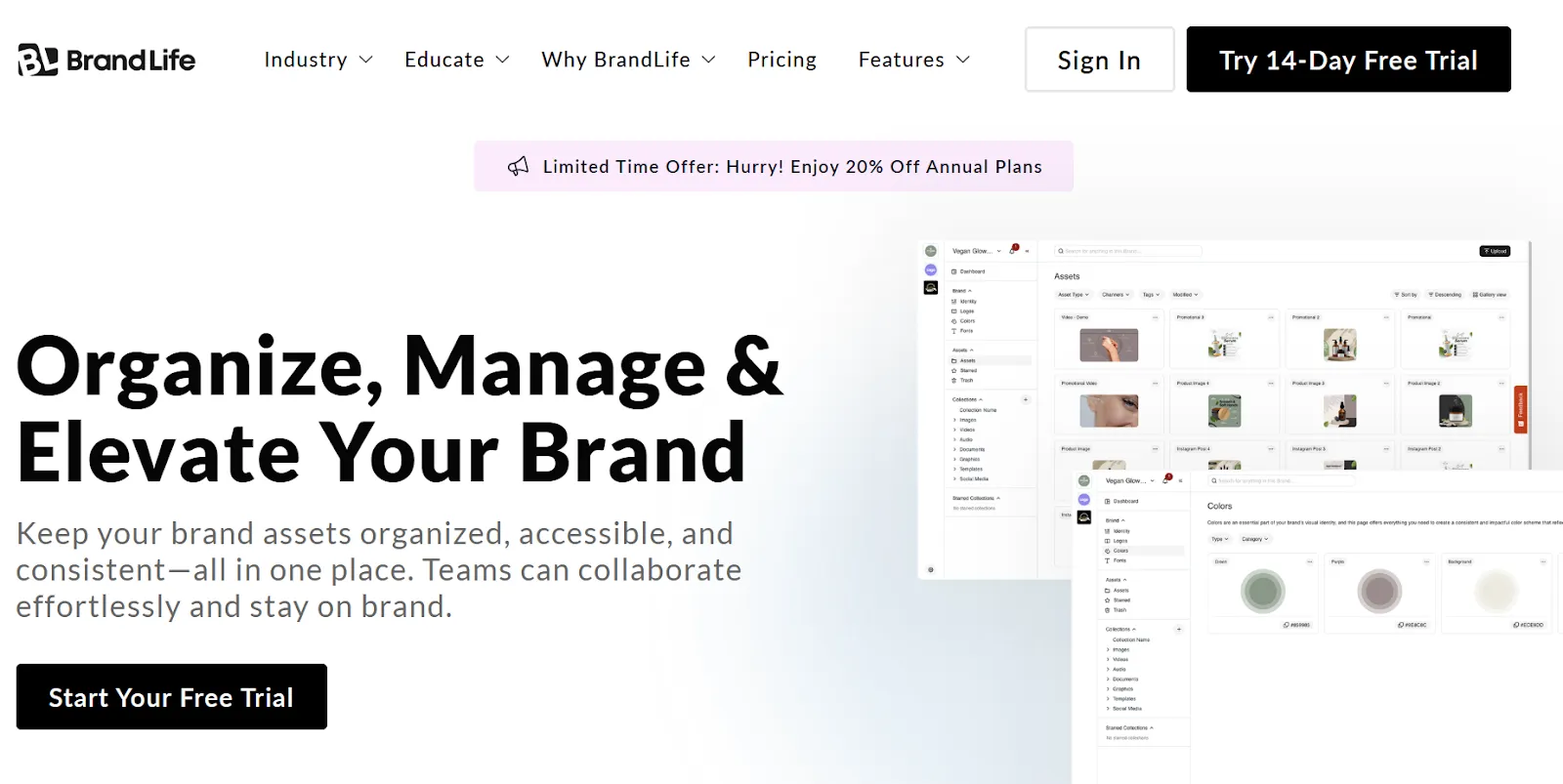
BrandLife’s home page

BrandLife stands out as a flexible and cost-effective Brandfolder alternative, built for teams that need smart digital asset management (DAM) without the enterprise-level price tag. It offers an intuitive platform to centralize and streamline the organization, access, and distribution of digital assets.

BrandLife’s Key Features

  • Centralized digital asset storage
brandlife centralized depository
BrandLife’s centralized repository for digital assets

Consolidate all your logos, videos, brand guidelines, and creative files into one organized, searchable hub. 

  • AI-powered tagging & searching
BrandLife’s AI-Powered Tagging feature
BrandLife’s AI-Generated Tags

Leverage advanced AI to automatically tag assets, making it easy to locate files using context, keywords, or visual cues. 

  • Version control and approval workflows
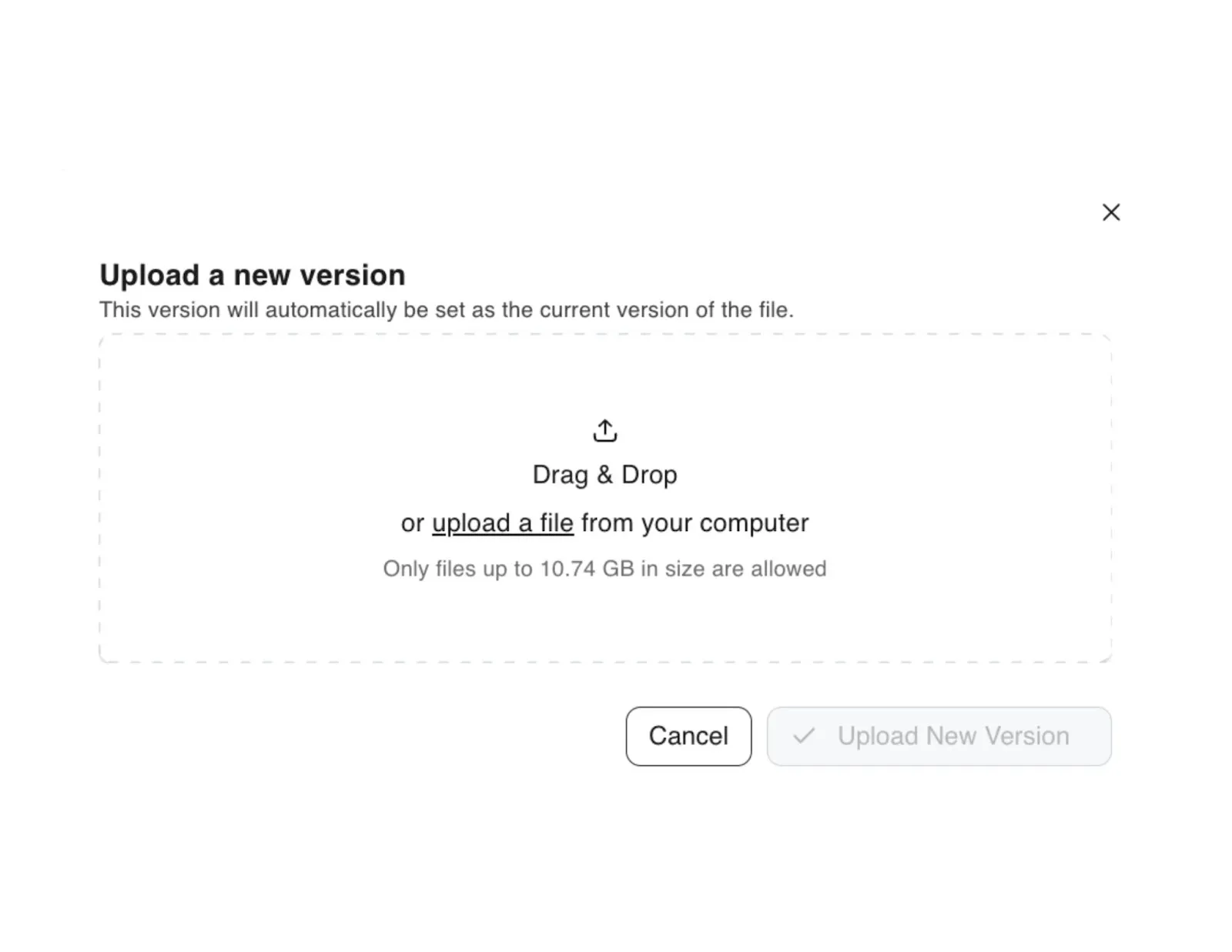
BrandLife’s version control screenshot
Manage your files versions with BrandLife

Maintain control over asset versions and approvals to ensure the use of up-to-date brand materials. 

  • Team collaboration tools
BrandLife’s collaboration tool
BrandLife’s
integrated client management tools 

Facilitate real-time collaboration with built-in sharing, commenting, and editing features—eliminating the need for scattered email threads or side chats.

  • Integration capabilities

BrandLife connects effortlessly with tools like Zapier, Slack, and Canva to reduce manual work and enable teams to access approved assets within their preferred workflows.

BrandLife’s pros and cons

Pros Cons
User-friendly interface for multi-brand management Integration options are currently limited, though the platform is actively working to expand its capabilities
Easily scalable for fast-growing brands to help maintain brand consistency Analytics features are less comprehensive compared to competitors at this stage

Unlike Brandfolder's complex enterprise approach, BrandLife delivers a more balanced experience that combines powerful features with intuitive design. Where Brandfolder users report struggling with complex search functionality that requires meticulous tagging, BrandLife's AI-powered tagging simplifies asset discovery. Additionally, BrandLife's pricing model offers predictability without the unexpected increases that Brandfolder customers frequently mentioned in reviews. For creative agencies and e-commerce companies managing multiple brands or clients, BrandLife provides purpose-built workflows that Brandfolder's one-size-fits-all approach often lacks.

BrandLife’s pricing

BrandLife offers tailored solutions built to grow with your business — whether you're a small team getting started or an enterprise managing brands at scale. From core DAM essentials to advanced capabilities like API access, custom roles, and dedicated support, we'll find the right fit for you. Request pricing to get started.

💡 Case Study: ABARA Marketing Group Shows 30% Decrease in Brand Inconsistencies with BrandLife

Before BrandLife, ABARA’s marketing team struggled with scattered assets and frequently used outdated logos or incorrect images. This resulted in a disjointed brand presence across social media, email campaigns, and advertisements. Without a centralized system, asset duplication and version control were ongoing issues.

After adopting BrandLife, the creative team reduced asset search time by 50% and brand inconsistencies by 30%.

BrandLife’s built-in brand guidelines made it easy to access up-to-date logos and materials, leading to consistent, polished content. Campaigns also launched faster, with one going to market a full week early thanks to streamlined collaboration.

2. Bynder: Best for Enterprise Businesses

Bynder – a Brandfolder competitor
Bynder’s homepage

Bynder is a comprehensive BAM platform tailored for mid-sized to large enterprises. It’s seen as a leading Brandfolder competitor due to its customizable brand portal and reporting tools that support brand consistency across teams and external partners.

Bynder’s key features

  • Creative project management with task assignment and approval workflows
  • Version control to track asset changes and ensure teams use the latest files
  • Brand portal for external access and sharing
  • Advanced analytics and reporting for asset performance tracking
  • Integrations with 130+ tools including Slack and Figma

Bynder’s pros and cons

Pros Cons
Customizable external-facing portals for brand asset access High pricing (starts at $450/month) may deter startups and small teams
Usage flow resembles Google Images or online shopping, making it intuitive for new users (source) Setup can be complex and time-consuming

Bynder’s pricing

Bynder’s offers custom package

Bynder offers custom pricing based on the organization’s needs. Contact sales to get a quote. 

3. Air: Best for Medium to Large Enterprises

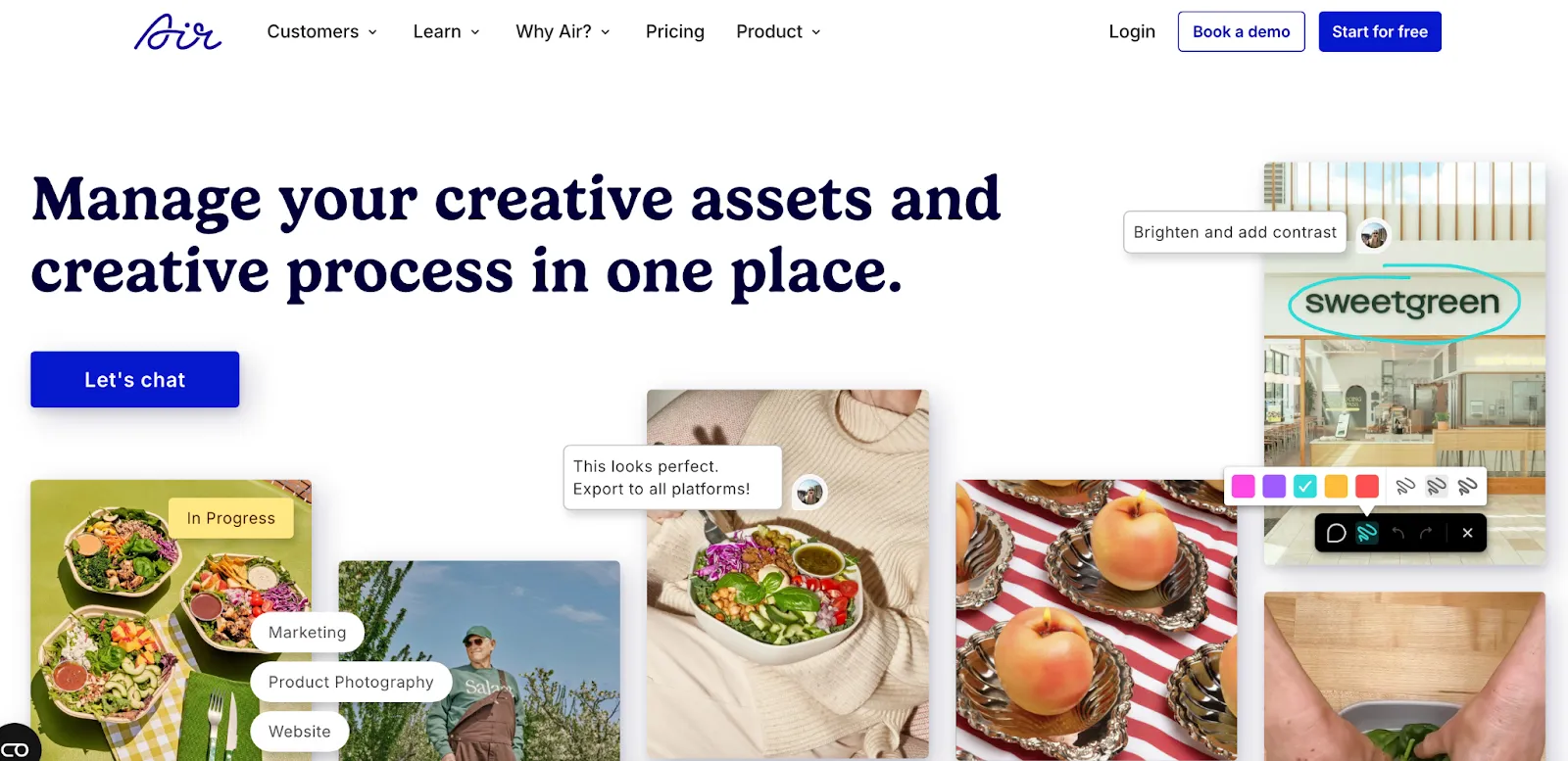
Air.inc, an alternative to Brandfolder BAM
Air homepage  

Air is a sleek, intuitive digital asset management platform purpose-built for creative teams and agencies. With a modern interface and real-time collaboration features, it streamlines workflows for enterprises that demand efficiency and visual clarity.

Air’s key features

  • Intuitive user interface with a short learning curve
  • Version control to keep track of all file updates and prevent redundancy
  • Advanced search & tagging with AI-powered metadata and visual search capabilities
  • Collaboration tools that allow real-time commenting and approval workflows
  • Platform integrations with Slack, Google Drive, and Dropbox (but not Adobe CC or Box)

Air’s pros and cons

Pros Cons
Excellent UI/UX for creative and design-oriented users Basic analytics limit visibility into asset usage
Active and responsive customer support (source) Limited customization for branding and folder structure

Air’s pricing

Air.inc pricing plans
Air.inc four pricing plans

4. Frontify: Best for Brand Consistency Across Large Teams

Frontify BAM platform
Frontify’s homepage

Frontify is a cloud-based digital asset management system tailored for enterprises that prioritize brand consistency. It stands out for its robust brand portal and guideline capabilities, allowing teams to create, manage, and share brand assets and standards at scale. 

Frontify’s key features

  • Brand guidelines and portals to create and maintain interactive, always-updated brand manuals
  • Digital asset management to store, organize, and share assets across departments
  • Template creation to help marketers create on-brand materials at scale
  • Collaborative workflows with real-time editing, feedback, and approvals
  • Integrations with Sketch, Figma, Adobe Creative Cloud, and more

Frontify’s pros and cons

Pros Cons
Highly customizable brand portals Pricing can be steep for smaller businesses
Collaboration features streamline creative workflows High learning curve for non-design teams (source)

Frontify’s pricing 

Frontify DAM's pricing plans
Frontify’s MAU pricing model 

Frontify offers value-based pricing based on the number of features you use and the number of monthly active users. It also offers a 30-day free trial period. 

5. Acquia DAM: Best for Enterprise-Grade Digital Asset Workflows 

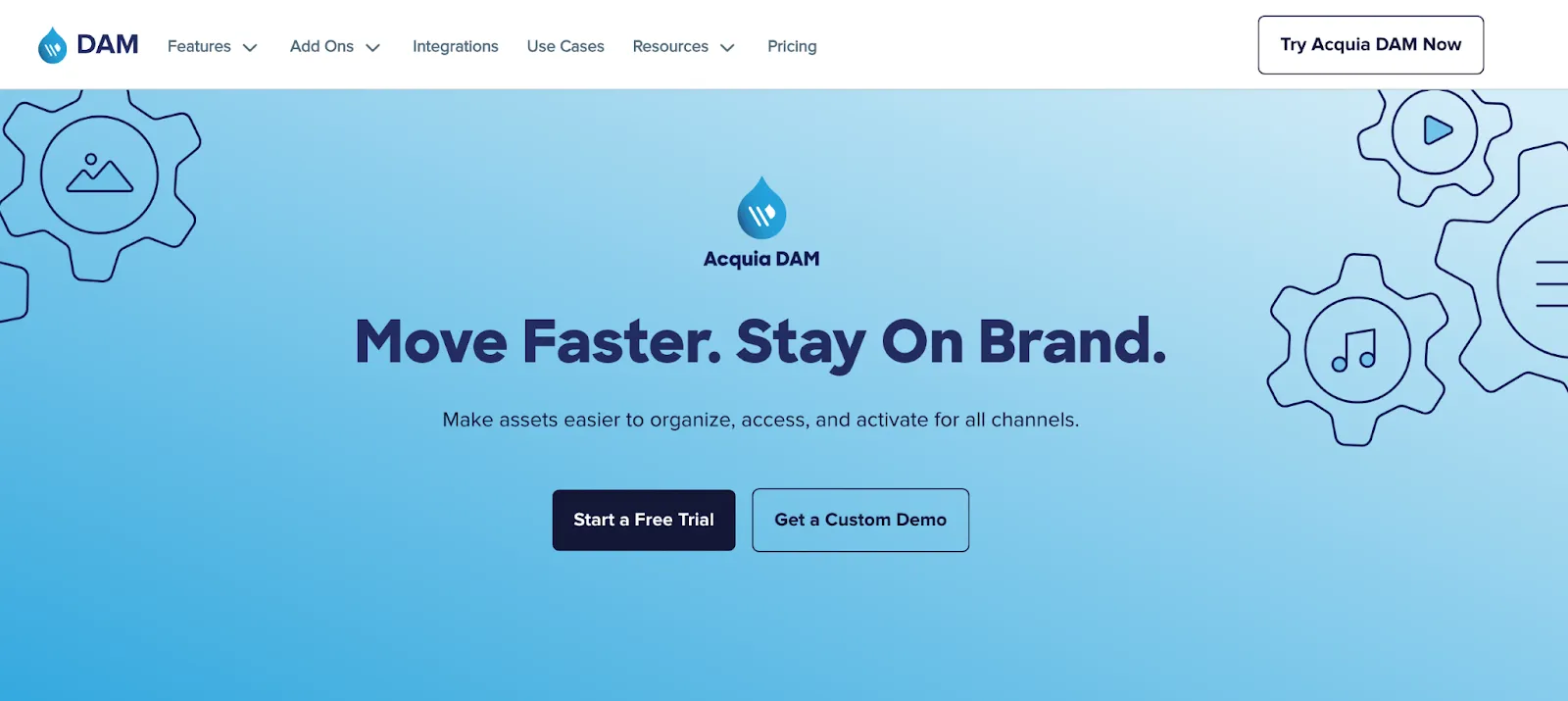
Acquia DAM – Brandfolder alternative
Acquia DAM's homepage

If you're looking for an enterprise-focused digital asset management solution, Acquia DAM (formerly Widen) is the perfect alternative to Brandfolder. It is designed to centralize and organize content across large organizations. 

Known for its scalability, Acquia DAM platform offers advanced metadata capabilities, extensive governance, and seamless integration into a broader MarTech ecosystem.

Acquia DAM’s key features

  • AI-driven metadata and auto-tagging for faster asset discovery
  • Powerful search tools using metadata, filters, and saved searches
  • Customizable workflows for managing content approval and publication
  • Robust user permissions and role-based access
  • Integration with Acquia DXP, Drupal, Adobe CC, Slack

Acquia DAM’s pros and cons 

Pros Cons
Excellent metadata management and tagging automation (source) Overbuilt for small to midsize teams
A wide selection of integrations with Acquia's DXP and other systems (source) Uploading metadata can be time-consuming (source)

Acquia DAM’s pricing

Acquia DAM pricing plans

Acquia DAM offers three pricing plans along with a 45-day free trial. To get a personalized quote, you'll need to contact their sales team.

6. Canto: Best for Brand-Focused Teams with Visual Content Needs

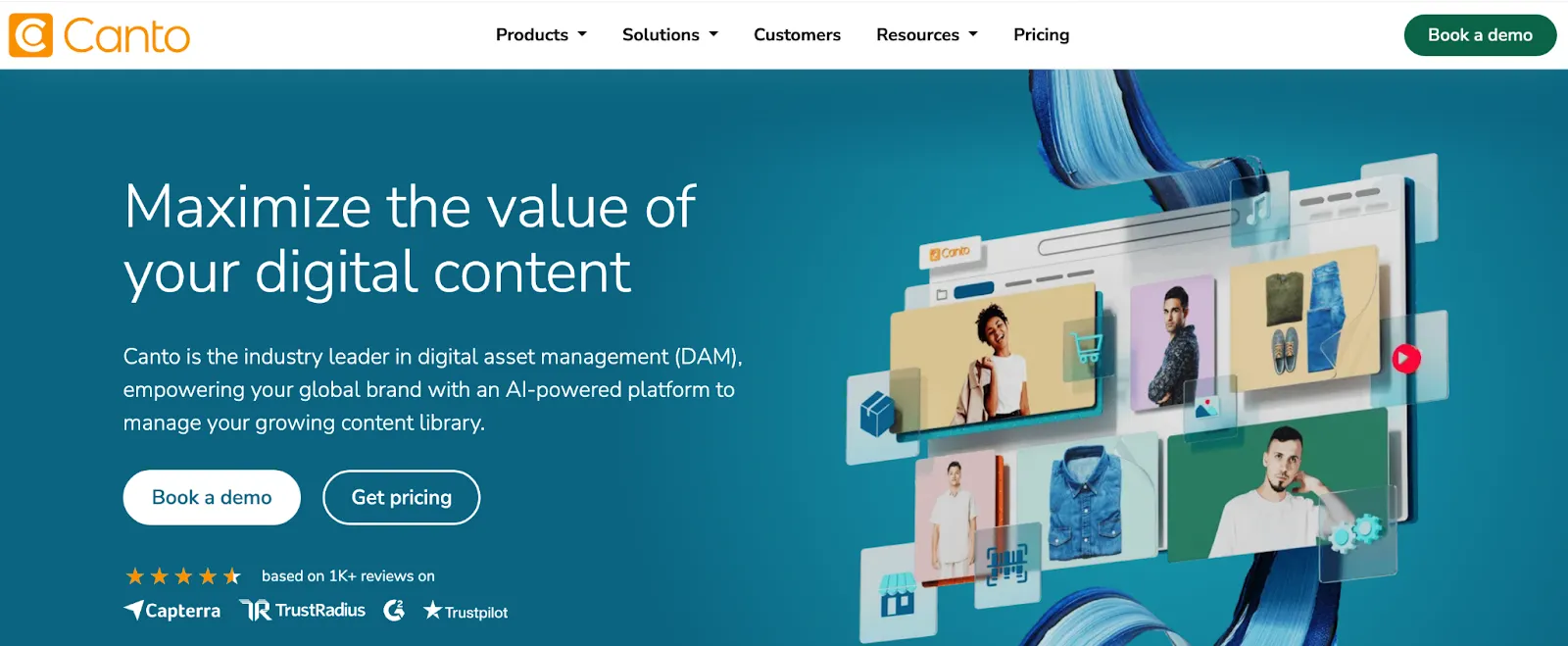
Canto – top brandfolder​ alternative
Canto’s homepage

Canto is a DAM system that caters primarily to mid-sized businesses, creative teams, and brand managers. With its clean interface and visual-first approach, Canto simplifies how marketing and creative professionals organize, collaborate on, and distribute visual content.

Canto’s key features

  • Custom branding portals for asset sharing with partners or clients
  • Facial recognition and visual search to find assets quickly
  • Approval workflows and annotations for real-time collaboration
  • Permission controls for user-based access levels
  • In-depth reports on user engagement, tracking top downloads and more

Canto’s pros and cons

Pros Cons
Highly visual and intuitive interface for creatives Analytics and reporting tools are limited (source)
Branded portals make it easy to share assets externally (source) Lack of real-time editing and limited document search capabilities (source)

Canto’s pricing

Canto's pricing plans
Canto’s pricing plans

Canto offers a customized pricing model tailored to the specific needs of each organization. It also offers a 7-day free trial to explore the platform.

7. PhotoShelter: Best for Visual-Centric Teams and Photographers

PhotoShelter as a Brandfolder alternative
PhotoShelter homepage

PhotoShelter is a digital asset management platform tailored primarily for photographers, creative teams, and organizations that rely heavily on visual storytelling. It helps teams centralize, tag, share, and distribute visual content with ease. 

PhotoShelter’s key features

  • Visual-first media library with intelligent tagging and AI-powered metadata
  • Granular access control and permission settings
  • Seamless social content distribution via integrations with Hootsuite, Slate, INFLCR, and more
  • Secure cloud storage with fast upload/download speeds
  • Reporting and analytics to help you better understand your brand’s content performance

PhotoShelter’s pros and cons

Pros Cons
Optimized for high-volume image and video libraries Not ideal for teams managing diverse content types beyond visual media (source)
Secure, fast file delivery to media partners and stakeholders (source) The interface could be more user-friendly (source)

PhotoShelter’s pricing

PhotoShelter’s pricing plans

PhotoShelter offers five plans tailored to meet various business needs. However, pricing details are not publicly available. You’ll need to contact their sales team for a quote.

How to Choose the Best Brandfolder Alternative

Selecting the right Brandfolder alternative requires careful consideration of your organization's specific needs, workflows, and growth trajectory. Use this decision framework to evaluate which solution will best serve your team:

1. Team Structure and Size

  • Small, agile team (1-10 users): Consider BrandLife, Pics.io, or Filecamp for straightforward interfaces and cost-effective pricing.
  • Mid-sized organization (10-100 users): BrandLife, Air, or Canto offer scalability with manageable learning curves.
  • Enterprise (100+ users): Bynder, Adobe AEM, or Acquia DAM provide the robust governance and security features needed at scale.

2. Asset Types and Volume

  • Primarily images and graphics: PhotoShelter, Canto, or BrandLife excel at visual asset management.
  • Video-heavy libraries: Cloudinary or Adobe AEM offer superior video handling capabilities.
  • Diverse asset types: BrandLife, Bynder, or Acquia DAM handle mixed media libraries effectively.
  • High-volume assets (100,000+): Nuxeo, Acquia DAM, or Adobe AEM are architected for massive scale.

3. Integration Requirements

  • Adobe Creative Cloud ecosystem: Adobe AEM Assets provides native integration.
  • Microsoft environment: MediaValet built on Azure offers seamless Microsoft integration.
  • Marketing automation tools: BrandLife, Bynder, or Frontify connect with major marketing platforms.
  • Custom/API needs: Nuxeo or Acquia DAM provide extensive customization capabilities.

4. Budget Considerations

  • Cost-sensitive: BrandLife ($250/mo starting), Pics.io ($12/user/mo), or Filecamp ($29/mo) offer the best value.
  • Mid-range budget: Air, Canto, or Frontify provide balanced feature sets at moderate pricing.
  • Enterprise budget: Bynder, Adobe AEM, or Acquia DAM deliver comprehensive capabilities at premium price points.

5. Implementation Timeline

  • Immediate needs (days): BrandLife, Air, or Pics.io offer quick setup and intuitive interfaces.
  • Short-term (weeks): Canto, Frontify, or Bynder require moderate configuration time.
  • Long-term strategic (months): Adobe AEM, Nuxeo, or Acquia DAM involve comprehensive implementation processes.

How to Switch from Brandfolder to a New DAM Platform

Switching DAMs is a real project-but it's manageable with the right preparation. Most migrations take 4–12 weeks depending on library size and team complexity. Here's how to approach it.

Audit your current asset library

Before you export anything, understand what you actually have. Identify which assets are actively used, which are archived but worth keeping, and which can be deleted entirely. A clean migration is faster and cheaper than migrating everything indiscriminately. This is also the right moment to review your metadata structure-if your current tagging is inconsistent, fix it before you move it to a new platform.

Map your integration dependencies

List every tool that currently connects to Brandfolder and confirm the new platform supports those integrations. Pay particular attention to your CMS, project management tools, and any automated workflows that pull assets from Brandfolder. Integration gaps discovered after migration are significantly more disruptive than those caught during evaluation.

Plan your migration timeline

A realistic timeline for most mid-market teams runs 4–8 weeks from signed contract to full adoption. Enterprise implementations with large libraries and complex integrations can run 8–16 weeks. Build in buffer for the unexpected-metadata mapping and user training almost always take longer than initial estimates suggest.

Onboard your team effectively

Phased rollouts tend to work better than big-bang launches. Start with a core group of power users who can become internal champions, then expand access as the platform proves itself. Platforms with unlimited user models-like BrandLife-remove the friction of deciding who gets a seat during rollout, which meaningfully accelerates adoption across larger teams.

Choosing the Right Brandfolder Alternative for Your Team

The right platform depends on where your team sits on three dimensions: size, budget, and workflow complexity.

For enterprise teams with high-volume content operations and complex governance needs, Bynder, Adobe AEM Assets, and Aprimo are the strongest options-each brings enterprise-grade capabilities, though at enterprise-grade price points and implementation complexity.

Mid-market teams prioritizing collaboration and brand consistency tend to find BrandLife and Canto the best fit. BrandLife's unlimited-user model and built-in brand guideline enforcement work particularly well for distributed teams; Canto's clean UI makes it the easier choice for teams that want fast onboarding over deep customization. Developers and e-commerce teams building media pipelines should evaluate Cloudinary first. Teams in regulated industries should look at IntelligenceBank before anything else. And for budget-conscious teams that need to get organized without a significant investment, Filecamp and Pics.io both offer genuine value at accessible price points.

The most important factor in any DAM decision isn't the feature list-it's adoption. A platform your team doesn't use is worse than no platform at all. Prioritize the combination of features that match your actual workflow, pricing that scales with your team, and integrations that fit your existing stack.

Ready to see how BrandLife handles digital asset management for collaborative teams? Book a Demo

Frequently Asked Questions

What is Brandfolder used for?

Brandfolder is a digital asset management (DAM) platform that helps businesses organize, store, manage, and share digital assets like images, videos, and documents in a centralized system.

Which businesses should choose Bynder over Brandfolder?

Bynder is best suited for mid-sized to large enterprises that need advanced brand governance, customizable portals, and a wide integration ecosystem.

Does Air work well for creative teams?

Yes. Air’s clean interface, real-time collaboration tools, and strong search features make it a great fit for creative and visual-focused teams looking for a modern DAM experience.

Why do people look for Brandfolder alternatives?

Many users find Brandfolder’s pricing high, with unexpected cost increases during contract renewals. Some also report delayed support responses and limited integration follow-through.

Why is BrandLife considered the best alternative to Brandfolder?

BrandLife offers a more cost-effective and flexible DAM solution with intuitive workflows, AI-powered search, and predictable pricing making it ideal for creative agencies, e-commerce teams, and growing businesses.

Related

See more

Ready to make your brand unstoppable?

Try it free or request a quote. Let’s build your brand’s next.

7 Best Brandfolder Alternatives to Consider in 2026

Think BrandLife for enterprise-grade DAM minus the enterprise-grade price.
Start Free TrialDownload Free PDF
7 Best Brandfolder Alternatives to Consider in 2026

Key Takeways

  • While Brandfolder offers powerful features like advanced search, many users report steep pricing, unexpected contract renewals, and limited support— challenging for small to mid-sized teams.
  • With AI-powered tagging, version control, real-time collaboration tools, and competitive pricing, BrandLife balances powerful features with usability and value. It’s especially suited for fast-growing brands managing multiple clients or product lines.
  • Whether you need advanced metadata, mobile access, or external sharing portals, the best Brandfolder alternative depends on your team’s structure, growth stage, and creative operations. The blog offers a comparison table to help you weigh features and costs.
  • Consider implementation timelines and technical requirements when switching—some alternatives like Adobe AEM Assets offer powerful features but require significant technical expertise, while solutions like BrandLife provide faster time-to-value with intuitive interfaces.
  • Most alternatives offer migration assistance, but verify how your existing metadata, tags, and folder structures will transfer to ensure minimal disruption during transition.

Brandfolder helps businesses manage, store, and share digital assets like images, videos, and documents in one centralized platform. It’s built to ensure brand consistency and make assets easily accessible across teams and channels.

However, some users find Brandfolder’s pricing steep, especially with added costs for new features and unexpected hikes during contract renewals.

Brandfolder review

Others point to delayed support responses and poor integration follow-through.

brandfolder customer review on G2

While its advanced features like layered permissions and powerful search capabilities serve large enterprises well, smaller teams often find themselves paying for more than they need. 

If you’re a fast-scaling business, you might find better value in Brandfolder alternatives like BrandLife. 

What to Look for in a Brandfolder Alternative

Before comparing platforms, it helps to know what you're comparing. These six criteria separate a DAM that fits your workflow from one that just holds your files.

AI-powered tagging and search

Auto-tagging reduces the manual work that kills DAM adoption. When your team uploads 400 images after a product shoot, nobody wants to spend the afternoon adding metadata by hand. AI-powered DAMs handle that automatically-and make those assets findable within minutes. AI-powered DAM adoption is up 40% year-over-year, with search and auto-tagging now the primary drivers (McKinsey Digital Report, 2025).

Integration ecosystem

A DAM that doesn't connect to your existing tools becomes a storage silo. The question isn't just how many integrations a platform offers-it's whether those integrations cover the tools your team actually uses: Adobe Creative Cloud, Slack, your CMS, your project management platform. Check the guide to digital asset management workflow for a deeper look at how integrations affect day-to-day efficiency.

Collaboration and approval workflows

Distributed teams need more than shared folders. Real-time commenting, version control, and structured approval chains determine whether your DAM accelerates creative work or adds friction to it. This is one of the most underdiscussed differentiators between platforms.

Brand guideline enforcement

There's a meaningful difference between a platform that stores your brand guidelines as a PDF and one that actively enforces them through templates, permissions, and automated checks. If brand consistency is a priority, look for the latter.

Pricing model and scalability

Per-seat pricing works fine at 10 users. At 50, it starts to sting-and at 100, it can become a genuine barrier to adoption. Understand the pricing model before you commit: per-seat vs. unlimited users, storage overage costs, and whether premium features are gated behind higher tiers.

Migration and onboarding support

Switching DAMs is a real project. The best platforms offer bulk import tools, metadata mapping assistance, and dedicated customer success support for migrations. Ask about this before you sign.

Top 7 Brandfolder Alternatives For Your Business

​​We analyzed product websites, customer communities, industry forums, and review platforms like G2, Capterra, and TrustRadius, to find the best alternatives to Brandfolder.

Here’s a quick overview of the top three Brandfolder alternatives—BrandLife, Bynder, and Air—across the following key areas:

Aspect BrandLife Bynder Air
Search & Metadata Advanced search with custom tagging; supports AI-powered tagging for easier asset discovery Search with AI-enhanced metadata extraction and smart tagging Simple but effective search; supports metadata tagging but is less AI-driven
Version Control & Asset History Version control available with history tracking and easy rollback options; supports comments on versions Comprehensive versioning system with detailed history and rollback options Version control available with automatic duplicate detection
Integration Capabilities Integrates with popular tools like Canva, Zapier, Dropbox, Figma, Slack, and more Extensive integrations, including Microsoft Office, Content Stack, and automation tools Limited integrations mostly focused on common creative and cloud storage tools like Google Drive, Dropbox, and Slack
Mobile Access Responsive mobile interface to access on the go Fully featured mobile app for both iOS and Android Air mobile app available for iOS and Android
Customer Support & Training Dedicated onboarding and support; documentation available; personalized training offered 24/7 support with dedicated customer success managers; comprehensive training programs and knowledge base Live chat available across all plans; dedicated account manager and ongoing team training limited to the Enterprise plan

Now, let’s dive deeper into each of the seven brand asset management (BAM) platforms, including these three, to help you evaluate which one truly fits your business needs, workflow, and budget.

1. BrandLife: Best for Creative Agencies and E-Commerce Companies Looking To Scale

BrandLife — alternative to brandfolder​
BrandLife’s home page

BrandLife stands out as a flexible and cost-effective Brandfolder alternative, built for teams that need smart digital asset management (DAM) without the enterprise-level price tag. It offers an intuitive platform to centralize and streamline the organization, access, and distribution of digital assets.

BrandLife’s Key Features

  • Centralized digital asset storage
brandlife centralized depository
BrandLife’s centralized repository for digital assets

Consolidate all your logos, videos, brand guidelines, and creative files into one organized, searchable hub. 

  • AI-powered tagging & searching
BrandLife’s AI-Powered Tagging feature
BrandLife’s AI-Generated Tags

Leverage advanced AI to automatically tag assets, making it easy to locate files using context, keywords, or visual cues. 

  • Version control and approval workflows
BrandLife’s version control screenshot
Manage your files versions with BrandLife

Maintain control over asset versions and approvals to ensure the use of up-to-date brand materials. 

  • Team collaboration tools
BrandLife’s collaboration tool
BrandLife’s
integrated client management tools 

Facilitate real-time collaboration with built-in sharing, commenting, and editing features—eliminating the need for scattered email threads or side chats.

  • Integration capabilities

BrandLife connects effortlessly with tools like Zapier, Slack, and Canva to reduce manual work and enable teams to access approved assets within their preferred workflows.

BrandLife’s pros and cons

Pros Cons
User-friendly interface for multi-brand management Integration options are currently limited, though the platform is actively working to expand its capabilities
Easily scalable for fast-growing brands to help maintain brand consistency Analytics features are less comprehensive compared to competitors at this stage

Unlike Brandfolder's complex enterprise approach, BrandLife delivers a more balanced experience that combines powerful features with intuitive design. Where Brandfolder users report struggling with complex search functionality that requires meticulous tagging, BrandLife's AI-powered tagging simplifies asset discovery. Additionally, BrandLife's pricing model offers predictability without the unexpected increases that Brandfolder customers frequently mentioned in reviews. For creative agencies and e-commerce companies managing multiple brands or clients, BrandLife provides purpose-built workflows that Brandfolder's one-size-fits-all approach often lacks.

BrandLife’s pricing

BrandLife offers tailored solutions built to grow with your business — whether you're a small team getting started or an enterprise managing brands at scale. From core DAM essentials to advanced capabilities like API access, custom roles, and dedicated support, we'll find the right fit for you. Request pricing to get started.

💡 Case Study: ABARA Marketing Group Shows 30% Decrease in Brand Inconsistencies with BrandLife

Before BrandLife, ABARA’s marketing team struggled with scattered assets and frequently used outdated logos or incorrect images. This resulted in a disjointed brand presence across social media, email campaigns, and advertisements. Without a centralized system, asset duplication and version control were ongoing issues.

After adopting BrandLife, the creative team reduced asset search time by 50% and brand inconsistencies by 30%.

BrandLife’s built-in brand guidelines made it easy to access up-to-date logos and materials, leading to consistent, polished content. Campaigns also launched faster, with one going to market a full week early thanks to streamlined collaboration.

2. Bynder: Best for Enterprise Businesses

Bynder – a Brandfolder competitor
Bynder’s homepage

Bynder is a comprehensive BAM platform tailored for mid-sized to large enterprises. It’s seen as a leading Brandfolder competitor due to its customizable brand portal and reporting tools that support brand consistency across teams and external partners.

Bynder’s key features

  • Creative project management with task assignment and approval workflows
  • Version control to track asset changes and ensure teams use the latest files
  • Brand portal for external access and sharing
  • Advanced analytics and reporting for asset performance tracking
  • Integrations with 130+ tools including Slack and Figma

Bynder’s pros and cons

Pros Cons
Customizable external-facing portals for brand asset access High pricing (starts at $450/month) may deter startups and small teams
Usage flow resembles Google Images or online shopping, making it intuitive for new users (source) Setup can be complex and time-consuming

Bynder’s pricing

Bynder’s offers custom package

Bynder offers custom pricing based on the organization’s needs. Contact sales to get a quote. 

3. Air: Best for Medium to Large Enterprises

Air.inc, an alternative to Brandfolder BAM
Air homepage  

Air is a sleek, intuitive digital asset management platform purpose-built for creative teams and agencies. With a modern interface and real-time collaboration features, it streamlines workflows for enterprises that demand efficiency and visual clarity.

Air’s key features

  • Intuitive user interface with a short learning curve
  • Version control to keep track of all file updates and prevent redundancy
  • Advanced search & tagging with AI-powered metadata and visual search capabilities
  • Collaboration tools that allow real-time commenting and approval workflows
  • Platform integrations with Slack, Google Drive, and Dropbox (but not Adobe CC or Box)

Air’s pros and cons

Pros Cons
Excellent UI/UX for creative and design-oriented users Basic analytics limit visibility into asset usage
Active and responsive customer support (source) Limited customization for branding and folder structure

Air’s pricing

Air.inc pricing plans
Air.inc four pricing plans

4. Frontify: Best for Brand Consistency Across Large Teams

Frontify BAM platform
Frontify’s homepage

Frontify is a cloud-based digital asset management system tailored for enterprises that prioritize brand consistency. It stands out for its robust brand portal and guideline capabilities, allowing teams to create, manage, and share brand assets and standards at scale. 

Frontify’s key features

  • Brand guidelines and portals to create and maintain interactive, always-updated brand manuals
  • Digital asset management to store, organize, and share assets across departments
  • Template creation to help marketers create on-brand materials at scale
  • Collaborative workflows with real-time editing, feedback, and approvals
  • Integrations with Sketch, Figma, Adobe Creative Cloud, and more

Frontify’s pros and cons

Pros Cons
Highly customizable brand portals Pricing can be steep for smaller businesses
Collaboration features streamline creative workflows High learning curve for non-design teams (source)

Frontify’s pricing 

Frontify DAM's pricing plans
Frontify’s MAU pricing model 

Frontify offers value-based pricing based on the number of features you use and the number of monthly active users. It also offers a 30-day free trial period. 

5. Acquia DAM: Best for Enterprise-Grade Digital Asset Workflows 

Acquia DAM – Brandfolder alternative
Acquia DAM's homepage

If you're looking for an enterprise-focused digital asset management solution, Acquia DAM (formerly Widen) is the perfect alternative to Brandfolder. It is designed to centralize and organize content across large organizations. 

Known for its scalability, Acquia DAM platform offers advanced metadata capabilities, extensive governance, and seamless integration into a broader MarTech ecosystem.

Acquia DAM’s key features

  • AI-driven metadata and auto-tagging for faster asset discovery
  • Powerful search tools using metadata, filters, and saved searches
  • Customizable workflows for managing content approval and publication
  • Robust user permissions and role-based access
  • Integration with Acquia DXP, Drupal, Adobe CC, Slack

Acquia DAM’s pros and cons 

Pros Cons
Excellent metadata management and tagging automation (source) Overbuilt for small to midsize teams
A wide selection of integrations with Acquia's DXP and other systems (source) Uploading metadata can be time-consuming (source)

Acquia DAM’s pricing

Acquia DAM pricing plans

Acquia DAM offers three pricing plans along with a 45-day free trial. To get a personalized quote, you'll need to contact their sales team.

6. Canto: Best for Brand-Focused Teams with Visual Content Needs

Canto – top brandfolder​ alternative
Canto’s homepage

Canto is a DAM system that caters primarily to mid-sized businesses, creative teams, and brand managers. With its clean interface and visual-first approach, Canto simplifies how marketing and creative professionals organize, collaborate on, and distribute visual content.

Canto’s key features

  • Custom branding portals for asset sharing with partners or clients
  • Facial recognition and visual search to find assets quickly
  • Approval workflows and annotations for real-time collaboration
  • Permission controls for user-based access levels
  • In-depth reports on user engagement, tracking top downloads and more

Canto’s pros and cons

Pros Cons
Highly visual and intuitive interface for creatives Analytics and reporting tools are limited (source)
Branded portals make it easy to share assets externally (source) Lack of real-time editing and limited document search capabilities (source)

Canto’s pricing

Canto's pricing plans
Canto’s pricing plans

Canto offers a customized pricing model tailored to the specific needs of each organization. It also offers a 7-day free trial to explore the platform.

7. PhotoShelter: Best for Visual-Centric Teams and Photographers

PhotoShelter as a Brandfolder alternative
PhotoShelter homepage

PhotoShelter is a digital asset management platform tailored primarily for photographers, creative teams, and organizations that rely heavily on visual storytelling. It helps teams centralize, tag, share, and distribute visual content with ease. 

PhotoShelter’s key features

  • Visual-first media library with intelligent tagging and AI-powered metadata
  • Granular access control and permission settings
  • Seamless social content distribution via integrations with Hootsuite, Slate, INFLCR, and more
  • Secure cloud storage with fast upload/download speeds
  • Reporting and analytics to help you better understand your brand’s content performance

PhotoShelter’s pros and cons

Pros Cons
Optimized for high-volume image and video libraries Not ideal for teams managing diverse content types beyond visual media (source)
Secure, fast file delivery to media partners and stakeholders (source) The interface could be more user-friendly (source)

PhotoShelter’s pricing

PhotoShelter’s pricing plans

PhotoShelter offers five plans tailored to meet various business needs. However, pricing details are not publicly available. You’ll need to contact their sales team for a quote.

How to Choose the Best Brandfolder Alternative

Selecting the right Brandfolder alternative requires careful consideration of your organization's specific needs, workflows, and growth trajectory. Use this decision framework to evaluate which solution will best serve your team:

1. Team Structure and Size

  • Small, agile team (1-10 users): Consider BrandLife, Pics.io, or Filecamp for straightforward interfaces and cost-effective pricing.
  • Mid-sized organization (10-100 users): BrandLife, Air, or Canto offer scalability with manageable learning curves.
  • Enterprise (100+ users): Bynder, Adobe AEM, or Acquia DAM provide the robust governance and security features needed at scale.

2. Asset Types and Volume

  • Primarily images and graphics: PhotoShelter, Canto, or BrandLife excel at visual asset management.
  • Video-heavy libraries: Cloudinary or Adobe AEM offer superior video handling capabilities.
  • Diverse asset types: BrandLife, Bynder, or Acquia DAM handle mixed media libraries effectively.
  • High-volume assets (100,000+): Nuxeo, Acquia DAM, or Adobe AEM are architected for massive scale.

3. Integration Requirements

  • Adobe Creative Cloud ecosystem: Adobe AEM Assets provides native integration.
  • Microsoft environment: MediaValet built on Azure offers seamless Microsoft integration.
  • Marketing automation tools: BrandLife, Bynder, or Frontify connect with major marketing platforms.
  • Custom/API needs: Nuxeo or Acquia DAM provide extensive customization capabilities.

4. Budget Considerations

  • Cost-sensitive: BrandLife ($250/mo starting), Pics.io ($12/user/mo), or Filecamp ($29/mo) offer the best value.
  • Mid-range budget: Air, Canto, or Frontify provide balanced feature sets at moderate pricing.
  • Enterprise budget: Bynder, Adobe AEM, or Acquia DAM deliver comprehensive capabilities at premium price points.

5. Implementation Timeline

  • Immediate needs (days): BrandLife, Air, or Pics.io offer quick setup and intuitive interfaces.
  • Short-term (weeks): Canto, Frontify, or Bynder require moderate configuration time.
  • Long-term strategic (months): Adobe AEM, Nuxeo, or Acquia DAM involve comprehensive implementation processes.

How to Switch from Brandfolder to a New DAM Platform

Switching DAMs is a real project-but it's manageable with the right preparation. Most migrations take 4–12 weeks depending on library size and team complexity. Here's how to approach it.

Audit your current asset library

Before you export anything, understand what you actually have. Identify which assets are actively used, which are archived but worth keeping, and which can be deleted entirely. A clean migration is faster and cheaper than migrating everything indiscriminately. This is also the right moment to review your metadata structure-if your current tagging is inconsistent, fix it before you move it to a new platform.

Map your integration dependencies

List every tool that currently connects to Brandfolder and confirm the new platform supports those integrations. Pay particular attention to your CMS, project management tools, and any automated workflows that pull assets from Brandfolder. Integration gaps discovered after migration are significantly more disruptive than those caught during evaluation.

Plan your migration timeline

A realistic timeline for most mid-market teams runs 4–8 weeks from signed contract to full adoption. Enterprise implementations with large libraries and complex integrations can run 8–16 weeks. Build in buffer for the unexpected-metadata mapping and user training almost always take longer than initial estimates suggest.

Onboard your team effectively

Phased rollouts tend to work better than big-bang launches. Start with a core group of power users who can become internal champions, then expand access as the platform proves itself. Platforms with unlimited user models-like BrandLife-remove the friction of deciding who gets a seat during rollout, which meaningfully accelerates adoption across larger teams.

Choosing the Right Brandfolder Alternative for Your Team

The right platform depends on where your team sits on three dimensions: size, budget, and workflow complexity.

For enterprise teams with high-volume content operations and complex governance needs, Bynder, Adobe AEM Assets, and Aprimo are the strongest options-each brings enterprise-grade capabilities, though at enterprise-grade price points and implementation complexity.

Mid-market teams prioritizing collaboration and brand consistency tend to find BrandLife and Canto the best fit. BrandLife's unlimited-user model and built-in brand guideline enforcement work particularly well for distributed teams; Canto's clean UI makes it the easier choice for teams that want fast onboarding over deep customization. Developers and e-commerce teams building media pipelines should evaluate Cloudinary first. Teams in regulated industries should look at IntelligenceBank before anything else. And for budget-conscious teams that need to get organized without a significant investment, Filecamp and Pics.io both offer genuine value at accessible price points.

The most important factor in any DAM decision isn't the feature list-it's adoption. A platform your team doesn't use is worse than no platform at all. Prioritize the combination of features that match your actual workflow, pricing that scales with your team, and integrations that fit your existing stack.

Ready to see how BrandLife handles digital asset management for collaborative teams? Book a Demo

Frequently Asked Questions

What is Brandfolder used for?

Brandfolder is a digital asset management (DAM) platform that helps businesses organize, store, manage, and share digital assets like images, videos, and documents in a centralized system.

Which businesses should choose Bynder over Brandfolder?

Bynder is best suited for mid-sized to large enterprises that need advanced brand governance, customizable portals, and a wide integration ecosystem.

Does Air work well for creative teams?

Yes. Air’s clean interface, real-time collaboration tools, and strong search features make it a great fit for creative and visual-focused teams looking for a modern DAM experience.

Why do people look for Brandfolder alternatives?

Many users find Brandfolder’s pricing high, with unexpected cost increases during contract renewals. Some also report delayed support responses and limited integration follow-through.

Why is BrandLife considered the best alternative to Brandfolder?

BrandLife offers a more cost-effective and flexible DAM solution with intuitive workflows, AI-powered search, and predictable pricing making it ideal for creative agencies, e-commerce teams, and growing businesses.

Professional Branding Start Here

Everything you need to launch and maintain a consistent brand.

Try Free TrialLearn More

Related Resources

Transform the way you

manage your assets

8.8 hours/ week are wasted just looking for files and content